Introduction
Modern homes often spend most of their time surrounded by concrete, glass and artificial lighting. Biophilic interior design offers a way to bring elements of nature back into everyday living.
It doesn’t simply mean adding a few indoor plants.
A well-planned biophilic interior can combine natural light, ventilation, plants, natural materials, organic forms, colours, textures and views of greenery to create a more connected and comfortable home.
For Indian homes, this approach can be particularly practical because balconies, courtyards, windows, terraces and natural materials can all become part of the design.
What Is Biophilic Interior Design?
Biophilic design is an approach to architecture and interiors that aims to strengthen people’s connection with nature.
In an interior, this can be achieved through:
-
Indoor plants
-
Natural daylight
-
Fresh air and ventilation
-
Wood and natural stone
-
Natural textures
-
Earth-inspired colours
-
Views of greenery
-
Water elements
-
Organic shapes
-
Indoor-outdoor connections
The objective isn’t to make the home look like a jungle.
It is to introduce natural elements in a way that feels intentional, comfortable and practical.
1. Bring in More Natural Light
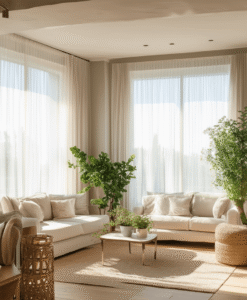
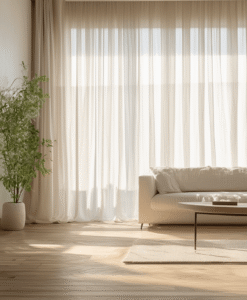
Natural daylight is one of the simplest ways to introduce a connection with the outdoors.
Where the architecture permits, make better use of existing windows and openings.
Consider:
-
Avoiding unnecessary obstruction of windows
-
Using lighter curtains where appropriate
-
Positioning seating near daylight
-
Using mirrors carefully to reflect available light
-
Keeping frequently used areas connected to natural light
Natural light can also reduce dependence on artificial lighting during the day.
2. Introduce Indoor Plants
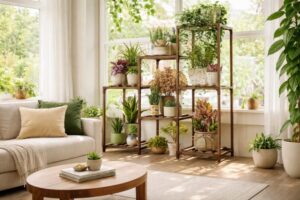
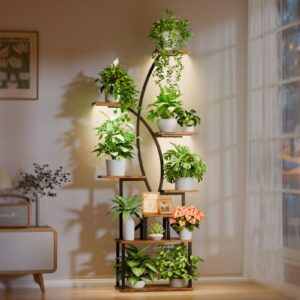
Plants are probably the most recognizable element of biophilic interiors.
But plant selection should be based on the actual conditions of your home.
Consider:
-
Amount of sunlight
-
Humidity
-
Maintenance requirements
-
Available space
-
Watering needs
-
Location of air-conditioning vents
Instead of placing plants randomly, use them as part of the interior composition.
For example, plants can be integrated into:
-
Living-room corners
-
Balcony transitions
-
Entry areas
-
Kitchen windows
-
Shelving
-
Home offices
A few well-positioned plants can often have more visual impact than filling every available surface with greenery.
3. Use Natural Materials
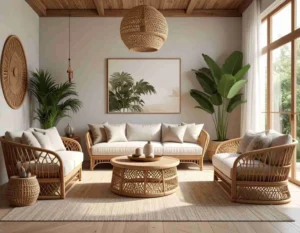
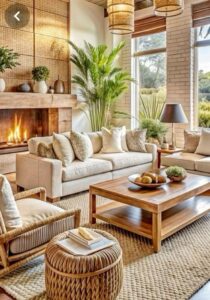
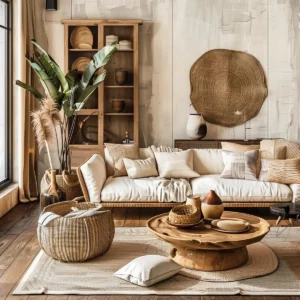
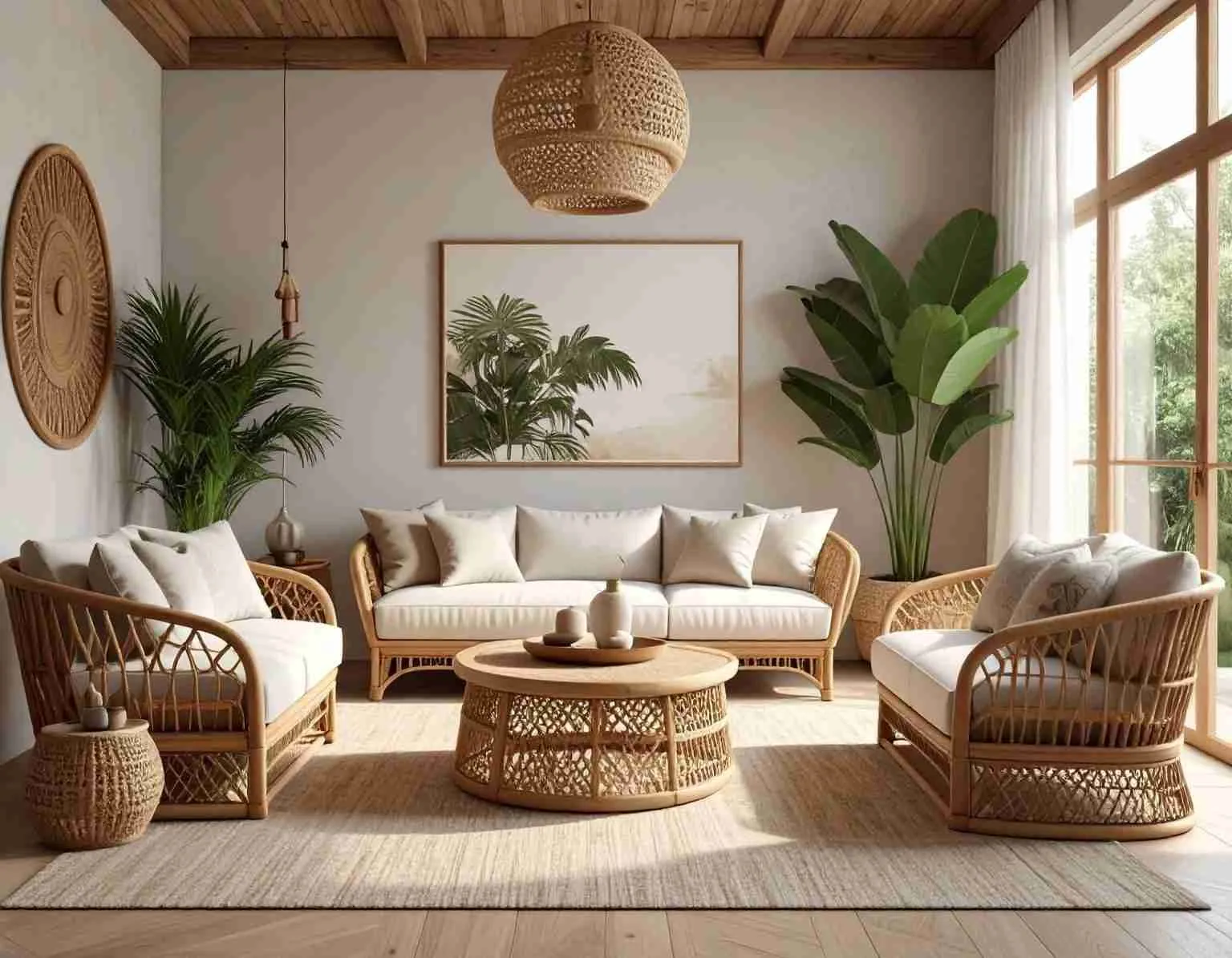
Natural materials can introduce warmth and tactile variety into an interior.
Depending on the design, consider:
-
Wood
-
Natural stone
-
Cane
-
Rattan
-
Bamboo
-
Terracotta
-
Natural fabrics
These materials can be combined with contemporary finishes rather than forcing the home into a completely rustic style.
For example, a modern living room can combine clean-lined furniture with wood, stone and woven textures.
4. Use Nature-Inspired Colours
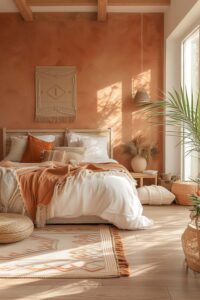
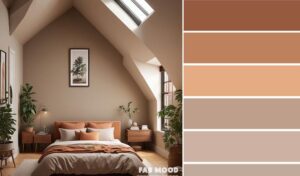
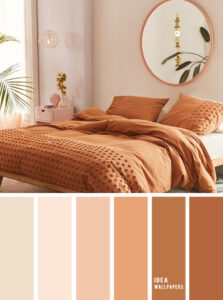
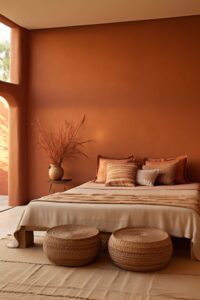
A biophilic colour palette doesn’t have to be green everywhere.
Consider colours inspired by nature, such as:
-
Soft greens
-
Beige
-
Sand
-
Terracotta
-
Brown
-
Warm white
-
Muted blue
-
Earthy neutrals
These colours can be introduced through walls, furniture, fabrics, artwork and accessories.
The key is to create a balanced palette rather than making every surface the same shade of green or brown.
5. Connect the Interior With the Balcony
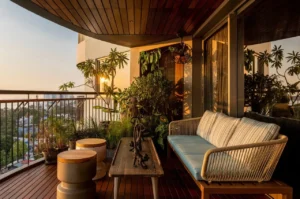
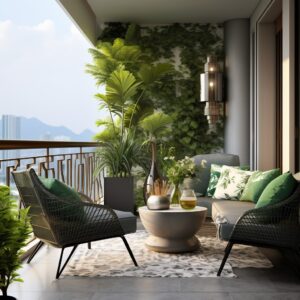
For Indian apartments, the balcony can become an important part of a biophilic design strategy.
Instead of treating the balcony as a completely separate space, create visual continuity between the interior and exterior.
This can be achieved through:
-
Similar flooring tones
-
Repeated materials
-
Plants visible from inside
-
Large openings where available
-
Similar colour palettes
-
Natural textures
Even a small balcony can create a stronger connection with nature when it becomes visually integrated with the living area.
6. Make Use of Natural Ventilation
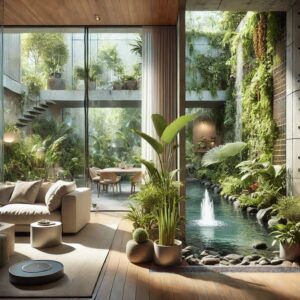
Fresh air is another important connection to the outdoors.
Where the building allows it, design furniture and interior elements so they do not unnecessarily obstruct windows or ventilation paths.
Depending on the home’s architecture and climate, consider:
-
Cross ventilation
-
Operable windows
-
Ceiling fans
-
Appropriate shading
-
Breathable window treatments
However, ventilation strategies should always respond to the local climate. A home in humid coastal India has different requirements from one in a hot and dry region.
7. Add Natural Textures
Biophilic design is not only visual.
Texture can create a more tactile connection with natural materials.
Consider:
-
Woven fabrics
-
Cane
-
Linen-like textiles
-
Stone surfaces
-
Wood grain
-
Handmade ceramics
-
Textured wall finishes
These details can make a minimalist interior feel warmer without adding visual clutter.
8. Use Organic Forms
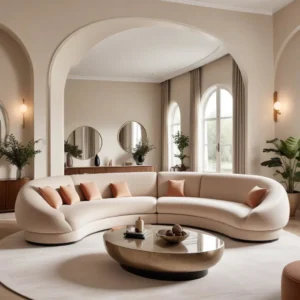
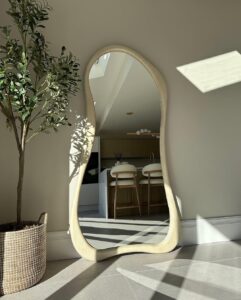
Nature rarely consists entirely of perfectly straight lines and rigid geometric shapes.
Introducing some softer forms can make an interior feel more natural.
For example:
-
Curved furniture
-
Arched openings
-
Rounded mirrors
-
Organic-shaped rugs
-
Sculptural lighting
-
Curved partitions
These elements don’t need to dominate the room. Even one or two organic forms can soften a highly geometric interior.
9. Create Views of Greenery
If your home has access to a garden, balcony, terrace or landscaped area, make the most of the view.
Avoid unnecessarily blocking the visual connection with:
-
Tall furniture
-
Heavy curtains
-
Opaque partitions
-
Poorly positioned storage
Even when there is no garden, a carefully planned balcony or vertical planting area can create a visual connection with greenery.
10. Biophilic Design Doesn’t Mean High Maintenance
This is particularly important for busy Indian households.
You don’t need dozens of plants or complicated water features to create a biophilic home.
A practical approach could be:
Natural daylight + a few suitable plants + wood + natural textures + earthy colours + outdoor connection
This can create a strong effect without turning the home into a maintenance-heavy project.
Biophilic Design Ideas Room by Room
Living Room
Use indoor plants, natural wood, stone, earthy colours and views towards the balcony or garden.
Bedroom
Use softer colours, natural fabrics, wood textures and plants that are appropriate for the available light and maintenance level.
Kitchen
Introduce wood finishes, natural textures, herbs or suitable plants near areas with adequate daylight.
Home Office
Position the workspace near natural light where possible and introduce plants or views of greenery without creating visual distractions.
Balcony
Use plants, natural materials, comfortable seating and appropriate lighting to create a stronger indoor-outdoor connection.
Common Biophilic Interior Design Mistakes
Treating plants as the entire concept
Biophilic design is much broader than indoor plants.
Adding too many plants
Too much greenery can create maintenance problems and visual clutter.
Ignoring natural light
Plants and natural materials cannot compensate for a poorly lit space.
Choosing unsuitable natural materials
A material may look beautiful but perform poorly in a particular climate or application.
Blocking windows
Large storage units or heavy curtains can unnecessarily reduce daylight and outdoor views.
Creating a “jungle” instead of an interior
Biophilic design should complement the architecture rather than overwhelm it.
Biophilic Interior Design Checklist
Before finalizing your design, consider:
-
Natural daylight
-
Ventilation
-
Indoor plants
-
Natural materials
-
Earth-inspired colours
-
Natural textures
-
Outdoor views
-
Balcony connection
-
Organic forms
-
Climate suitability
-
Plant maintenance
-
Easy-to-maintain materials
Final Thoughts
Biophilic interior design is not about making a home look like a forest.
It is about creating a stronger relationship between the home, its occupants and the natural environment.
For Indian homes, this can be achieved through relatively simple decisions: maximize useful daylight, maintain ventilation, introduce suitable plants, use natural materials and textures, and create visual connections with balconies, gardens or outdoor spaces.
The most successful biophilic interiors are not necessarily the ones with the most greenery.
They are the ones where nature feels naturally integrated into everyday living.
At Design Within, we believe a beautiful interior should not only look good when it is completed — it should also perform well for years.
Before we dive into more details about designing your furniture, it might be helpful to estimate how much your interior design project could cost. Understanding your budget can help you make more informed decisions about what features to prioritize. To get a better idea, you can use our ‘interior design budget calculator’ budget calculator and start planning your dream home today.
Frequently Asked Questions
1. What is biophilic interior design?
Biophilic interior design is an approach that incorporates natural elements and experiences into indoor spaces through plants, daylight, ventilation, natural materials, textures, colours, organic forms and connections to outdoor areas.
2. Is biophilic design suitable for Indian homes?
Yes. Balconies, terraces, courtyards, windows, natural ventilation and locally available natural materials can all be incorporated into biophilic interiors.
3. Does biophilic design mean having lots of indoor plants?
No. Plants are only one part of biophilic design. Natural light, ventilation, materials, textures, colours, views and organic forms can also contribute to the overall approach.
4. What are the best materials for biophilic interiors?
Wood, natural stone, cane, rattan, bamboo, terracotta and natural-looking textiles can work well. The material should also be selected according to durability, maintenance and the specific application.
5. How can I create a biophilic interior in a small apartment?
Focus on a few high-impact elements such as indoor plants, natural daylight, wood textures, earthy colours and a visual connection to the balcony. You don’t need a large area to introduce biophilic elements.
6. How do I choose plants for my home?
Consider the amount of sunlight, humidity, available space and maintenance you can realistically provide. Choose plants suited to the conditions of the specific location rather than selecting them only for appearance.
7. Can a modern or luxury home have biophilic interiors?
Absolutely. Biophilic design is an approach rather than a particular interior style. Natural stone, wood, greenery, glass and carefully selected textures can work equally well in modern, minimalist or luxury interiors.
8. Is biophilic interior design expensive?
Not necessarily. Some of the simplest solutions—such as improving daylight, adding suitable plants, using natural textures and creating better connections to existing outdoor spaces—can be incorporated without a major renovation.
9. How can I connect my living room with the balcony?
Use visual continuity through similar colours, materials and flooring tones, and keep views towards the balcony as open as practical. Plants can also help visually connect the two spaces.
10. What is the simplest way to introduce biophilic design?
Start with natural light, suitable plants, natural textures and a few earthy colours. Then build on these elements according to your home’s architecture, climate and lifestyle.