Introduction :
Best Terrace Waterproofing Methods for Indian Homes: PU Coating vs APP Membrane vs Brick-Bat Coba
Terrace leakage is a common concern for homeowners, particularly during the Indian monsoon. Water stagnation, cracks, damaged waterproofing layers and poorly sealed joints can allow moisture to penetrate the roof and damage ceilings, plaster and interior finishes.
Choosing the right waterproofing system is essential, but there is no single solution that works for every terrace.
Three commonly considered options are polyurethane (PU) waterproofing, APP bituminous membrane and traditional brick-bat coba. Each has different installation requirements, advantages and limitations.
In this guide, Design Within compares these methods to help homeowners make informed decisions during construction, maintenance or renovation.
1. PU Coating Waterproofing
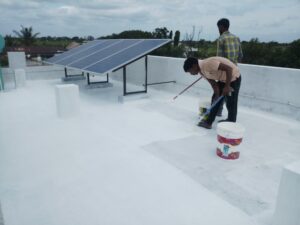
Polyurethane waterproofing is a liquid-applied system that forms a flexible membrane after curing. Depending on the product, it can accommodate certain levels of substrate movement and create a continuous waterproofing layer.
Advantages
- Forms a seamless membrane when correctly applied.
- Can accommodate some movement, depending on the formulation.
- Useful around suitably detailed corners, joints and roof penetrations.
- Available in systems designed for different roof exposures.
Limitations
- Requires careful surface preparation and application.
- Some products require a UV-resistant topcoat or protective layer.
- Moisture conditions during application can be critical.
- Material and skilled-labour costs may be relatively high.
Suitable for: Concrete terraces where the selected PU system is compatible with the substrate, exposure conditions and intended use.
2. APP Bituminous Membrane Waterproofing
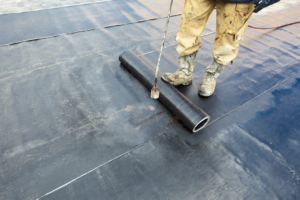
APP stands for atactic polypropylene, a modifier used in bituminous waterproofing membranes. These membranes are supplied in rolls and installed with properly detailed overlaps, edges and junctions.
Advantages
- Creates a continuous sheet membrane when installed correctly.
- Available in different thicknesses and specifications.
- Suitable for certain flat-roof assemblies.
- Can provide durable protection when correctly specified and protected.
Limitations
- Seams, outlets and penetrations require careful detailing.
- Torch-applied products require trained installers and strict fire-safety precautions.
- Some applications require a protective screed or other finishing layer.
- Repairs may be needed if the membrane is punctured or installation details fail.
Suitable for: Appropriate flat-roof assemblies where a sheet membrane is compatible with the existing construction and the installation conditions.
3. Brick-Bat Coba Waterproofing
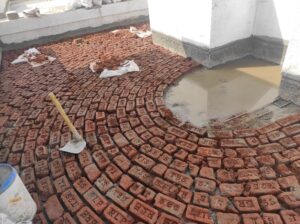
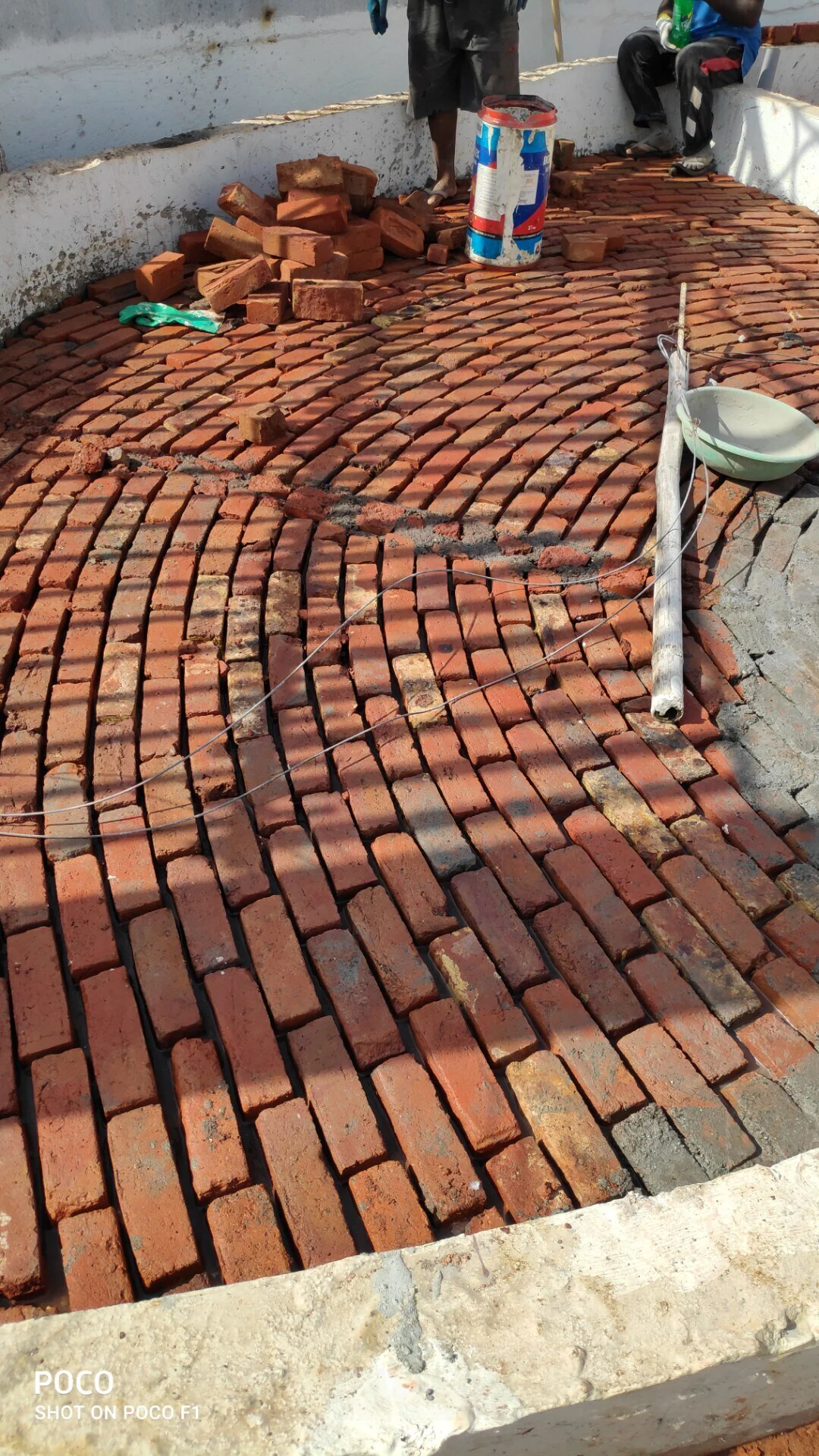
Brick-bat coba is a traditional terrace treatment involving brick pieces embedded in cementitious mortar. It is commonly used to form a protective layer and help establish the required roof slope.
Advantages
- Can help correct an inadequate terrace slope.
- Provides a substantial protective layer.
- Can be integrated into suitable traditional terrace assemblies.
- May be useful when a terrace requires broader civil-work improvements.
Limitations
- Adds dead load to the structure.
- Requires skilled workmanship and adequate curing.
- May involve more labour and construction time.
- Cracks, poor drainage and defective junctions can still lead to leakage.
Suitable for: Terraces that require slope formation or reconstruction, provided the structural implications and waterproofing details are properly assessed.
4. PU vs APP Membrane vs Brick-Bat Coba: Quick Comparison
| Feature | PU Coating | APP Membrane | Brick-Bat Coba |
|---|---|---|---|
| Application | Liquid-applied membrane | Sheet membrane | Brick and cementitious construction |
| Flexibility | Depends on formulation | Depends on membrane and assembly | Generally more rigid |
| Seams | Seamless when correctly applied | Overlaps and seams require detailing | Construction joints require attention |
| Slope correction | Not its primary function | Not its primary function | Can help form the required slope |
| UV exposure | Product-dependent; topcoat may be needed | Protection depends on product and assembly | Depends on the finished construction |
| Structural load | Generally low relative to a rebuilt layer | Generally low relative to a rebuilt layer | Adds significant dead load |
| Installation complexity | Requires precise application | Requires skilled membrane installation | Requires civil work and curing |
The table provides a general comparison. Actual performance depends on the specific product, roof assembly, substrate condition and installation quality.
5. Which Terrace Waterproofing Method Is Best for Your Home?
The most suitable method depends on the problem you are trying to solve.
- For a sound concrete terrace: A compatible liquid-applied membrane may be worth considering after proper surface preparation.
- For a roof requiring a sheet membrane: An APP system may be appropriate if the roof design and installation details support it.
- For a terrace with poor slope: Brick-bat coba or another properly designed slope-correction system may be considered after assessing structural loading and drainage.
- For recurring leakage: Investigate the original failure, cracks, joints, drain outlets and concealed defects before installing another layer.
Do not select a waterproofing method based only on its price or a contractor’s general recommendation. The existing terrace should be inspected before the system is finalised.
6. What Affects Terrace Waterproofing Cost in Pune?
The total cost depends on several factors:
- Terrace area and accessibility.
- Condition of the concrete and existing waterproofing.
- Surface preparation and removal of damaged layers.
- Material specification and application thickness.
- Crack repairs and treatment around outlets or parapets.
- Slope correction and protective finishing.
- Labour, testing, taxes and warranty terms.
For an accurate estimate, ask contractors to provide an itemised quotation explaining the material system, preparation work, number of coats or membrane layers, finishing and exclusions.
You can also read our related guide: Terrace Waterproofing Cost per Sq. Ft. in Pune (2026) for a more detailed discussion of budgeting.
7. Common Mistakes to Avoid
Avoid these common mistakes when waterproofing a terrace:
- Applying a new system over a weak or unsuitable surface.
- Ignoring water stagnation and drainage problems.
- Selecting a product without checking its suitability for UV exposure.
- Overlooking parapet junctions, drain outlets and pipe penetrations.
- Ignoring the additional structural load from heavy terrace treatments.
- Skipping curing, inspection or water testing where required.
- Choosing a contractor solely on the lowest quoted rate.
A properly selected system can still fail if the underlying problem is not corrected or the installation is defective.
Conclusion
PU coating, APP membrane and brick-bat coba are different approaches to terrace waterproofing, each with its own applications and limitations.
PU systems can provide flexible liquid-applied protection, APP membranes offer a sheet-based waterproofing solution, and brick-bat coba can help form a protective layer and establish terrace slope. The right choice depends on the roof’s condition, drainage, exposure, structural requirements and intended use.
For homeowners in Pune, a site assessment and a clearly itemised quotation can help determine which approach is suitable before work begins.
At Design Within, we believe that thoughtful renovation planning involves more than selecting finishes. Understanding concealed construction details and addressing waterproofing correctly can help protect the home and its interior finishes.
At Design Within, we believe a beautiful interior should not only look good when it is completed — it should also perform well for years.
Before we dive into more details about designing your furniture, it might be helpful to estimate how much your interior design project could cost. Understanding your budget can help you make more informed decisions about what features to prioritize. To get a better idea, you can use our ‘interior design budget calculator’ budget calculator and start planning your dream home today.
Frequently Asked Questions
1. Which is better: PU coating or APP membrane?
Neither is universally better. PU coating forms a liquid-applied membrane, while APP provides a sheet membrane. The right option depends on the roof assembly, exposure, detailing and installation conditions.
2. Is brick-bat coba a waterproofing solution?
Brick-bat coba can form part of a traditional terrace treatment and help establish slope. Its effectiveness depends on correct construction, drainage and detailing; it should not automatically be assumed to replace every required waterproofing component.
3. Can PU waterproofing be left exposed to sunlight?
Some PU products are designed for exposed conditions, while others require a UV-resistant topcoat or protection. Always follow the specific product’s technical datasheet.
4. Does APP membrane waterproofing require demolition?
Not always. The work depends on the existing roof condition and the proposed system. Failed layers, unsuitable substrates or required surface repairs may need removal before installation.
5. How do I choose a waterproofing contractor in Pune?
Look for a contractor who inspects the terrace, explains the proposed system, specifies the materials, includes critical detailing and testing, and provides written warranty terms.
Website: https://designwithin.in/
Suggested CTA: Planning terrace repairs or a home renovation in Pune? Contact Design Within to discuss your project requirements and plan the work before finalising materials and finishes.
Disclaimer: Waterproofing performance depends on product selection, substrate condition, workmanship, drainage and maintenance. Costs and system suitability should be confirmed through current quotations and a professional site assessment.