Introduction:
Choosing the right false ceiling material is an important part of interior design.
The material affects the ceiling’s appearance, design flexibility, maintenance, moisture resistance and overall budget.
While gypsum, POP and PVC are commonly used, modern residential interiors also use plywood, veneer, laminate, metal and combinations of different materials.
Here is a simple guide to the most commonly used false ceiling materials.
1. Gypsum False Ceiling
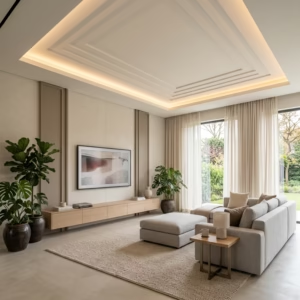
Gypsum board is one of the most popular choices for modern residential interiors.
It provides a smooth, clean surface and works particularly well with:
-
Cove lighting
-
Recessed downlights
-
Profile lights
-
Minimal designs
-
Multi-level ceilings
Gypsum is commonly used in living rooms, bedrooms, dining areas and passages.
Best for: Modern, contemporary and minimalist interiors.
2. POP False Ceiling

POP, or Plaster of Paris, is a versatile material that can be moulded into customised shapes.
It is particularly useful for:
-
Curves
-
Decorative borders
-
Cornices
-
Mouldings
-
Intricate ceiling designs
POP requires skilled workmanship and is particularly suitable when the ceiling itself is intended to be a decorative feature.
Best for: Decorative and customised ceiling designs.
3. PVC False Ceiling
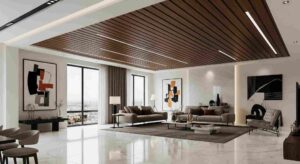
PVC ceilings are made from lightweight panels and are particularly useful where moisture resistance and easy maintenance are important.
They can be considered for:
-
Utility areas
-
Balconies
-
Kitchens
-
Certain moisture-prone spaces
PVC generally offers less design flexibility than gypsum or POP, but its practical qualities can make it useful in the right application.
Best for: Moisture-prone and utility areas.
4. Plywood + Veneer False Ceiling
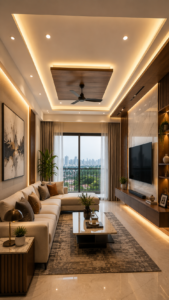
Plywood can be used as the base and finished with natural veneer to create a genuine wood appearance.
This is a premium option and can add warmth, texture and character to a room.
It works particularly well as a feature in:
-
Living rooms
-
Dining areas
-
Master bedrooms
-
Luxury interiors
Best for: Premium natural-wood appearance.
5. Plywood + Laminate False Ceiling
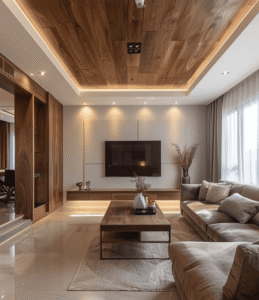
Instead of natural veneer, plywood can be finished with laminate.
Laminate offers a wide variety of:
-
Wood finishes
-
Colours
-
Textures
-
Patterns
-
Matt and glossy surfaces
It provides greater consistency in appearance and can be used to create contemporary feature ceilings.
Best for: Contemporary decorative and wood-look ceilings.
6. Gypsum + Plywood Combination
A false ceiling does not have to use one material throughout.
One of the most effective approaches is combining gypsum and plywood.
For example:
Main ceiling → Gypsum
Feature section → Plywood + veneer
Lighting → Cove or profile lighting
This creates contrast and allows premium materials to be used selectively rather than across the entire ceiling.
Best for: Premium modern interiors.
7. Gypsum + Wallpaper

Wallpaper can also be used as the final finish over a properly prepared gypsum surface.
This allows the ceiling to become a decorative feature through:
-
Patterns
-
Textures
-
Colours
-
Printed designs
It can work particularly well in bedrooms and selected feature areas.
The gypsum surface must be properly finished before wallpaper application.
Best for: Decorative and personalised bedroom ceilings.
8. Wooden / Slatted Ceiling
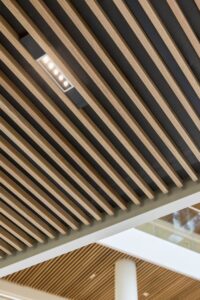
Wooden or wood-finished slats can be used to create a warm architectural feature.
Instead of covering the complete ceiling, wood can be introduced selectively over a gypsum background.
This approach works particularly well with:
-
Warm lighting
-
Contemporary furniture
-
Natural materials
-
Luxury interiors
Best for: Feature ceilings and warm contemporary interiors.
9. Metal False Ceiling
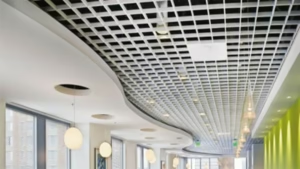
Metal ceilings are available in materials such as aluminium and other metal systems.
They are durable and can provide a distinctly modern architectural appearance.
However, they are more commonly used in commercial, hospitality and specialised applications than in typical residential bedrooms and living rooms.
Best for: Commercial, contemporary and specialised spaces.
Quick Comparison
| Material | Main Advantage | Best Suited For |
|---|---|---|
| Gypsum | Versatile & smooth finish | Living rooms, bedrooms |
| POP | Highly mouldable | Decorative designs |
| PVC | Moisture resistance | Utility, balconies |
| Plywood + Veneer | Natural wood appearance | Luxury interiors |
| Plywood + Laminate | Wide finish selection | Contemporary interiors |
| Gypsum + Plywood | Material combination | Premium feature ceilings |
| Gypsum + Wallpaper | Decorative finish | Bedrooms, feature areas |
| Wood / Slats | Warm architectural character | Feature ceilings |
| Metal | Durable & distinctive | Commercial/specialised spaces |
Which False Ceiling Material Is Best?
There is no single material that is best for every room.
For modern interiors
Gypsum is one of the most versatile choices.
For decorative designs
POP offers excellent flexibility.
For moisture-prone areas
PVC can be a practical option.
For a premium natural-wood look
Plywood + veneer is an excellent choice.
For contemporary wood-look finishes
Plywood + laminate provides many design possibilities.
For premium mixed-material interiors
Gypsum + plywood can create an elegant contrast.
For a decorative ceiling surface
Gypsum + wallpaper can create a distinctive feature.
The right choice depends on the room, design, ceiling height, lighting, maintenance requirements and budget.
Can Different False Ceiling Materials Be Combined?
Yes—and this is increasingly useful in modern interior design.
For example, a living room could have:
Gypsum main ceiling + veneer feature + profile lighting
while a bedroom could use:
Gypsum ceiling + wallpaper + warm cove lighting
and a utility area could use:
PVC ceiling
Using different materials in different areas allows the design to be both functional and visually interesting.
What Should You Consider Before Choosing a Material?
Before finalising your false ceiling material, consider:
1. Room
A living room may need a different solution from a balcony or utility area.
2. Moisture
Areas exposed to humidity or water require appropriate materials and detailing.
3. Ceiling height
Heavy multi-level designs may not be suitable for rooms with limited height.
4. Design style
Minimal, luxury, traditional and contemporary interiors can require different material approaches.
5. Lighting
Cove, profile and recessed lighting should be planned together with the ceiling material.
6. Budget
A simple gypsum ceiling and a plywood-and-veneer feature ceiling can have very different budgets.
How Design Within Selects False Ceiling Materials
At Design Within, the ceiling material is selected according to the overall interior rather than choosing the same material for every room.
A project may combine:
Gypsum + veneer
Gypsum + laminate
Gypsum + wallpaper
or
Gypsum + plywood + integrated lighting
The goal is to use each material where it provides the best combination of design, function and value.
Final Thoughts
False ceiling materials are no longer limited to gypsum, POP and PVC.
Modern interiors can combine gypsum, POP, PVC, plywood, veneer, laminate, wallpaper, wood and metal to create highly customised ceiling designs.
The best approach is not to ask:
“Which material is the best?”
Instead, ask:
“Which material is best for this particular space?”
That small change in approach can result in a ceiling that looks better, functions better and fits the overall interior much more naturally.
If you are planning a home interior in Pune, Design Within can help you select the right ceiling materials and coordinate them with the lighting, furniture and complete interior design.
At Design Within, we believe a beautiful interior should not only look good when it is completed — it should also perform well for years.
Before we dive into more details about designing your furniture, it might be helpful to estimate how much your interior design project could cost. Understanding your budget can help you make more informed decisions about what features to prioritize. To get a better idea, you can use our ‘interior design budget calculator’ budget calculator and start planning your dream home today.
Frequently Asked Questions
Which material is best for a false ceiling?
Gypsum is one of the most versatile choices for modern residential interiors, but the best material depends on the room, design, moisture conditions and budget.
Is gypsum better than POP?
Gypsum is particularly suitable for clean modern designs, while POP offers greater freedom for curves and intricate decorative detailing.
Can plywood be used for a false ceiling?
Yes. Plywood can be finished with natural veneer or laminate and used as a complete or partial feature ceiling.
Can gypsum and plywood be combined?
Yes. Combining gypsum with plywood is an effective way to create premium feature ceilings while keeping most of the ceiling simple.
Can wallpaper be applied to a gypsum false ceiling?
Yes. A properly prepared gypsum surface can be finished with wallpaper to create a decorative ceiling.
Is PVC suitable for a living room?
It can be used, but gypsum generally offers greater design flexibility and a more architectural finish for premium living rooms.
Which material is best for a wooden false ceiling?
Plywood finished with natural veneer is a good option when you want an authentic wood appearance. Laminate can be considered when you want a wider range of decorative finishes.
Can different ceiling materials be used in the same house?
Absolutely. In fact, using different materials according to the function and design of each room can produce a more cohesive and practical interior.