Introduction : Waterproofing Cost in India (2026): Rates per Sq. Ft., Methods and Factors
Water leakage, damp walls, peeling paint and terrace seepage are common problems in Indian homes, particularly during the monsoon. Waterproofing helps protect your property from moisture damage, but the cost varies depending on the affected area, the source of leakage, the treatment method and the condition of the existing surface.
If you are planning a renovation or dealing with water seepage, this guide explains the major factors affecting waterproofing cost in India, with practical considerations for homeowners in Pune.
1. Waterproofing Cost in India per Sq. Ft. (2026)
Waterproofing costs depend on the surface, material, preparation work and application method. The following figures are indicative budgeting ranges, not verified live quotations. Actual rates may differ by city, contractor and project conditions.
| Waterproofing work | Indicative cost |
|---|---|
| Terrace waterproofing | ₹30–₹120/sq. ft. |
| Bathroom waterproofing | ₹40–₹120/sq. ft. |
| Internal wall dampness treatment | ₹25–₹100/sq. ft. |
| Exterior wall waterproofing | ₹30–₹100/sq. ft. |
| Basement waterproofing | ₹80–₹250+/sq. ft. |
| Water tank waterproofing | ₹40–₹150/sq. ft. |
Important: These are broad preliminary estimates. Some quotations include surface preparation and labour, while others exclude plaster removal, screed, tiles, plumbing repairs, scaffolding or finishing work. Compare the scope of work before comparing prices.
2. What Affects Waterproofing Cost?
Area and accessibility
Larger areas may benefit from a lower rate per square foot, but small repairs can still have a higher unit cost because of minimum labour charges. Difficult-to-access terraces, high-rise exterior walls and confined spaces may require additional equipment or safety arrangements.
Type of leakage
The visible damp patch is not always the actual source of water entry. Leakage may originate from a cracked terrace slab, failed bathroom waterproofing, plumbing joints, exterior cracks or a poorly sealed water tank.
Identifying the source before starting repairs helps prevent spending money on a temporary surface treatment.
Waterproofing material
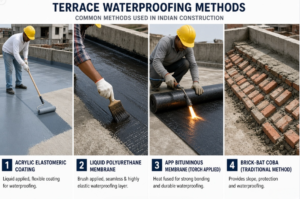
Different materials serve different purposes. Cementitious coatings are commonly used in suitable wet areas, while PU coatings and APP membranes may be considered for terraces depending on the substrate and project requirements. Injection grouting may be appropriate for certain cracks or water-entry paths.
The correct choice depends on the site condition, movement, exposure and required detailing—not simply the lowest material price.
Surface preparation and restoration
Removing loose plaster, repairing cracks, correcting slopes, treating joints and restoring tiles or paint can add significantly to the final bill. A quotation that looks cheaper may exclude these essential activities.
3. Waterproofing Cost by Area
Terrace waterproofing
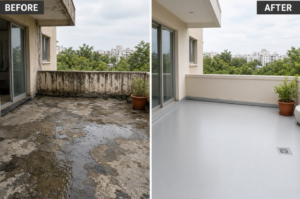
Terrace leakage can result from cracks, deteriorated coatings, poor drainage or failed joints. Common solutions include suitable liquid-applied coatings, APP membranes and brick-bat coba systems.
The final cost depends on the existing surface, required slope correction, drainage details, number of layers and whether the old treatment must be removed.
Read more: Terrace Waterproofing Cost per Sq. Ft. in Pune (2026).
Bathroom waterproofing
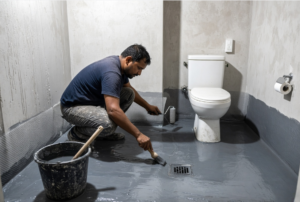
Bathroom waterproofing requires careful treatment of the floor, wall-floor junctions, pipe penetrations and other vulnerable details. If leakage has already damaged the ceiling below, the repair may also involve plumbing inspection, tile removal and restoration.
For new bathrooms, waterproofing should be completed and tested at the appropriate stage before tiling. For existing bathrooms, investigate the source of leakage before deciding how much demolition is necessary.
Read more: Bathroom Waterproofing: Sunk Slab Leakage Causes, Methods and Repair Costs in Pune.
Internal wall dampness
Dampness on an interior wall may be caused by external rainwater penetration, concealed plumbing leaks, rising moisture or condensation. Painting over the affected patch without correcting the cause usually provides only a temporary cosmetic improvement.
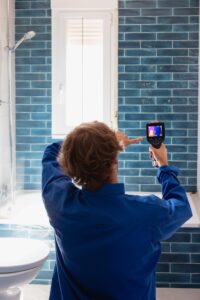
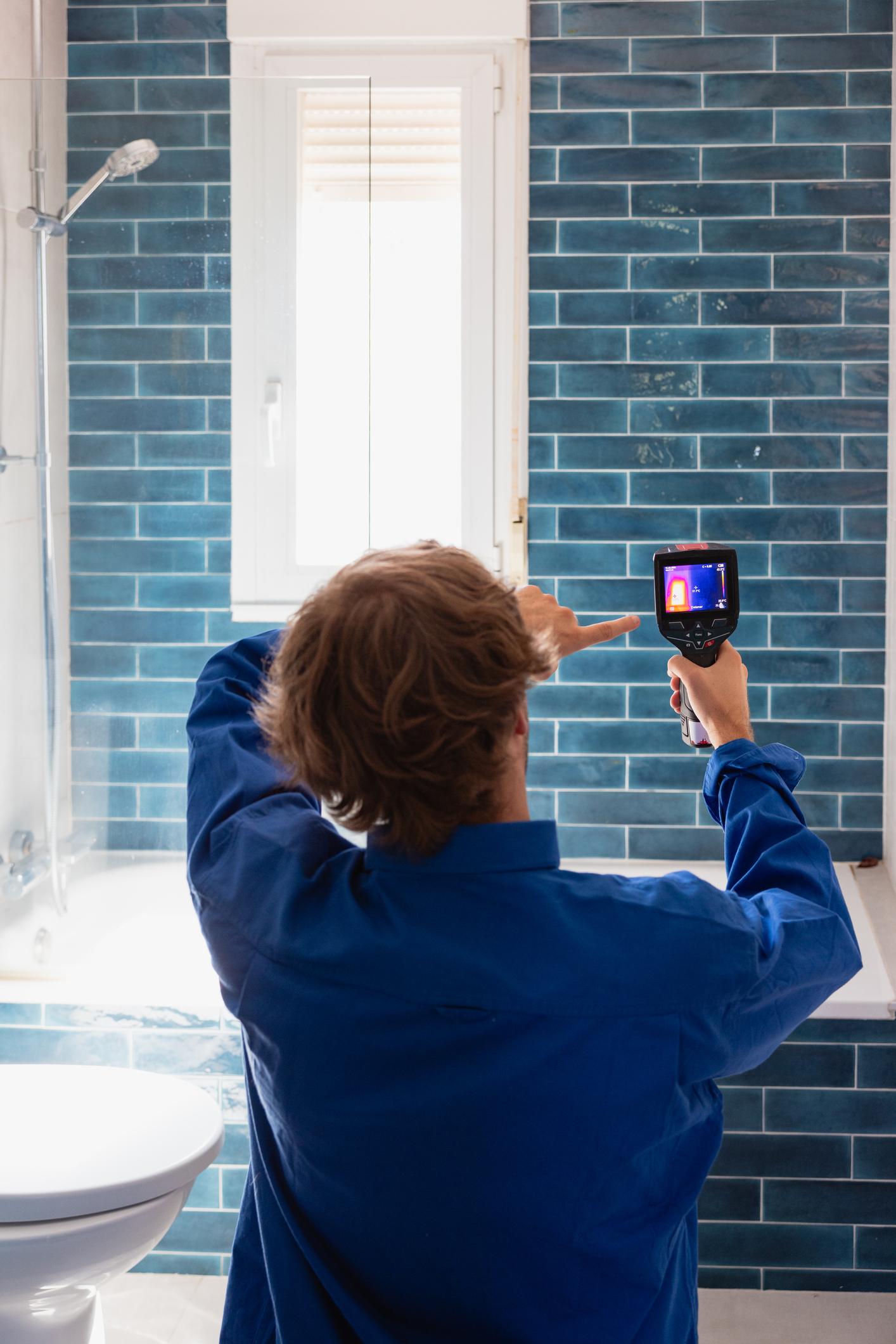
Where the source is unclear, a trained professional may use moisture meters, thermal imaging and plumbing tests to narrow down the area requiring investigation. Thermal imaging can reveal temperature patterns associated with moisture, but it does not independently guarantee the exact leak location.
Exterior wall waterproofing
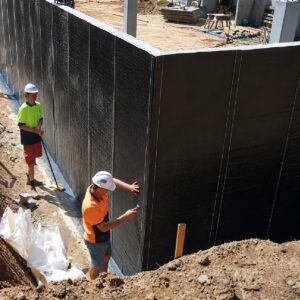
Exterior walls are exposed to rain, cracks, deteriorated paint and gaps around windows or service penetrations. Depending on the cause, repairs may require crack treatment, suitable exterior coatings, joint sealing or restoration of damaged plaster.
The cost may increase for high-rise buildings where scaffolding, rope access or other safety systems are needed.
Basement waterproofing
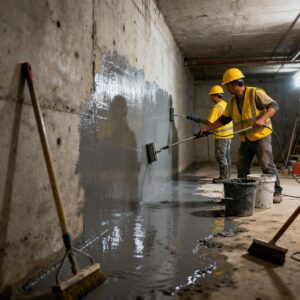
Basement waterproofing is often more complex because water can enter through retaining walls, construction joints, floor slabs or cracks under external water pressure. Treatment may involve positive-side or negative-side systems, drainage improvements, crack injection or a combination of methods.
A site inspection is particularly important before budgeting for basement work.
4. How to Estimate Your Waterproofing Budget
A preliminary estimate can be calculated using:
Estimated cost = Measured area × Applicable rate + additional repair and restoration costs
For example, if a terrace measures 800 sq. ft. and the proposed treatment is quoted at ₹60 per sq. ft., the basic calculated amount would be ₹48,000.
This is only an illustration. Confirm whether the quotation includes preparation, crack repairs, slope correction, material layers, labour, taxes, testing and restoration.
For areas measured by running metre, number of joints or a lump-sum repair scope, the contractor may use a different pricing method.
5. How to Choose the Right Waterproofing Method
Do not select a waterproofing system on price alone. Consider:
-
Source of leakage: Identify where water is entering and why.
-
Surface condition: Check cracks, loose plaster, existing coatings and slope.
-
Exposure: Consider direct sunlight, rain, standing water and water pressure.
-
Compatibility: Ensure the selected system suits the substrate and any existing treatment.
-
Application details: Check joints, corners, pipe penetrations and drainage outlets.
-
Testing and warranty: Ask what testing is included and what the warranty covers.
For example, a terrace coating cannot reliably solve an unresolved plumbing leak, and repainting a damp wall will not fix water entering through an exterior crack.
6. Common Waterproofing Mistakes to Avoid
-
Choosing a contractor solely because the quotation is cheapest.
-
Applying a coating without identifying the cause of leakage.
-
Ignoring cracks, joints, pipe penetrations and drainage outlets.
-
Applying new materials over an unsuitable or poorly prepared surface.
-
Skipping the recommended curing and testing process.
-
Assuming every waterproofing job includes tile removal, plaster repair and repainting.
-
Accepting a warranty without understanding its exclusions and maintenance requirements.
A clear written scope of work helps reduce misunderstandings and unexpected expenses.
7. How Design Within Can Help
At Design Within, we understand that waterproofing is an important part of protecting a home and planning a successful renovation. The right approach begins with understanding the affected area, investigating the likely source of moisture and selecting a suitable repair strategy.
For homeowners planning bathroom renovations, terrace repairs or broader interior upgrades in Pune, coordinated planning can help account for waterproofing, plumbing, tiling and finishing requirements together.
Before approving a quotation, ask for a clear breakdown of materials, preparation, labour, testing, restoration and warranty terms.
Planning a renovation or dealing with leakage in your Pune home? Visit Design Within to explore interior-design and renovation support.
At Design Within, we believe a beautiful interior should not only look good when it is completed — it should also perform well for years.
Before we dive into more details about designing your furniture, it might be helpful to estimate how much your interior design project could cost. Understanding your budget can help you make more informed decisions about what features to prioritize. To get a better idea, you can use our ‘interior design budget calculator’ budget calculator and start planning your dream home today.
Frequently Asked Questions
1. What is the average waterproofing cost in India in 2026?
There is no single rate for every project. Costs vary by area and method. As an initial budgeting guide, many common applications may fall within approximately ₹25–₹150 per sq. ft., while specialist basement systems can cost considerably more. Obtain a site-specific quotation before committing.
2. What is the waterproofing cost per sq. ft. in Pune?
Rates in Pune depend on the type of surface, accessibility, material, preparation and restoration required. Request itemised quotations based on the same scope of work so that you can compare them fairly.
3. Which waterproofing method is best for Indian homes?
The appropriate method depends on the problem. PU coatings, APP membranes, cementitious systems, exterior coatings and injection grouting have different uses. No single system is suitable for every surface or leakage condition.
4. Is waterproofing cheaper during construction or after leakage develops?
Waterproofing planned at the correct construction stage can help avoid some later demolition and restoration expenses. Repairing an existing leak may involve removing finishes, fixing concealed plumbing or restoring damaged surfaces.
5. Can waterproofing stop dampness permanently?
A properly selected and installed system can provide long-term protection, but results depend on identifying the actual cause, correct application, compatible materials and maintenance. Treating only the visible damp patch may not solve the underlying issue.
6. Does waterproofing cost include tiles, plaster and painting?
Not necessarily. Some quotations cover only the waterproofing system, while others include surface preparation and restoration. Confirm the exact inclusions and exclusions in writing.
7. How do I know whether a wall is damp because of a plumbing leak or rainwater?
The pattern of dampness can offer clues, but it is not conclusive. A professional may combine visual inspection, moisture measurements, thermal imaging and plumbing tests to narrow down the cause and determine the next investigation step.
Final Thoughts
Waterproofing is not just about applying a coating; it is about identifying the source of moisture and choosing a suitable system for the affected area. A well-defined scope of work, proper surface preparation and appropriate testing can help reduce repeat repairs and protect your home over the long term.
If you are budgeting for waterproofing in Pune, use per-square-foot rates only as a starting point and obtain a detailed quotation after the site has been assessed.