Introduction : Terrace Waterproofing Cost per Sq. Ft. in Pune (2026): Methods, Materials & Labour Charges
Terrace leakage is a common concern for homeowners in Pune, particularly when heavy monsoon showers expose cracks, damaged waterproofing layers, and drainage problems. Water seepage from the roof can lead to damp ceilings, peeling paint, damaged plaster, and repeated repair expenses.
If you are planning terrace waterproofing, one of the first questions is simple: How much does terrace waterproofing cost per square foot in Pune?
The answer depends on the existing terrace condition, the waterproofing method selected, the extent of surface preparation, and whether the work requires crack repairs, slope correction, or a new protective layer.
As a starting point, homeowners may encounter quotations ranging from a few tens of rupees per sq. ft. for relatively straightforward coating applications to well over ₹100 per sq. ft. for more involved systems and restoration work. These are broad budgeting indications, not verified October 2026 market rates or guaranteed quotations. Actual costs must be confirmed through current local estimates.
In this guide, Design Within explains the main terrace waterproofing methods, their cost components, how to estimate your budget, and what to check before hiring a contractor.
1. Terrace Waterproofing Cost per Sq. Ft. in Pune
The total cost of terrace waterproofing varies according to the treatment required. Applying a coating to a sound, prepared surface is very different from removing a failed waterproofing layer, repairing cracks, correcting the slope, and rebuilding the terrace finish.
The following table provides broad preliminary budgeting ranges for homeowners. These figures are illustrative estimates, not verified local quotations. Confirm current material and labour rates with contractors before making a decision.
| Waterproofing Method | Indicative Budget Range per Sq. Ft. | Suitable Application |
|---|---|---|
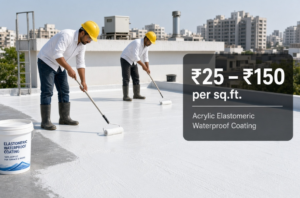
| Acrylic or elastomeric waterproof coating | ₹25–₹60 | Compatible existing roof surfaces requiring a protective coating |
| Cementitious or polymer-modified waterproofing | ₹30–₹70 | Suitable concrete and cement-based substrates |
| PU liquid waterproofing membrane | ₹50–₹120+ | Systems requiring a flexible, continuous waterproofing layer |
| APP bituminous membrane | ₹50–₹100+ | Suitable flat-roof assemblies with compatible detailing |
| Brick-bat coba or traditional terrace treatment | ₹70–₹150+ | Terraces requiring slope formation or a rebuilt protective layer |
Important: These ranges are indicative planning allowances only. They may exclude GST, major crack repairs, removal of existing layers, extensive slope correction, protective screed, tiles, scaffolding, or other site-specific work. Some quotations may include several of these items. Always compare the complete scope rather than the headline rate.
What does the quoted price usually include?
Before accepting a quotation, ask whether it covers:
- Cleaning and preparation of the existing terrace.
- Removal of loose material and repair of minor cracks.
- Primer, where required by the selected system.
- Waterproofing material and the specified number of coats or membrane layers.
- Reinforcement mesh or detailing at vulnerable joints, where specified.
- Treatment around drain outlets, pipe penetrations, parapet walls, and corners.
- Protective screed or finishing layers, if applicable.
- Labour, curing, testing, debris disposal, and applicable taxes.
- Written workmanship warranty and product documentation.
Two contractors can quote very different rates for what they call the same waterproofing method. The difference may be the quality of preparation, material specification, number of coats, included repairs, and final protection.
2. Cost of Waterproofing a 500 Sq. Ft. and 1,000 Sq. Ft. Terrace
Once you know the approximate area of your terrace, you can estimate the initial budget.
The following examples use assumed rates purely to demonstrate the calculation. They are not actual contractor quotations.
| Terrace Area | At ₹40 per Sq. Ft. | At ₹70 per Sq. Ft. | At ₹100 per Sq. Ft. |
|---|---|---|---|
| 300 sq. ft. | ₹12,000 | ₹21,000 | ₹30,000 |
| 500 sq. ft. | ₹20,000 | ₹35,000 | ₹50,000 |
| 750 sq. ft. | ₹30,000 | ₹52,500 | ₹75,000 |
| 1,000 sq. ft. | ₹40,000 | ₹70,000 | ₹1,00,000 |
These calculations assume the stated rate applies to the entire measured area. Additional repairs or excluded work must be added separately.
Example: Waterproofing a 500 Sq. Ft. Terrace
Suppose your terrace measures 500 sq. ft. and a contractor quotes ₹70 per sq. ft. for the agreed waterproofing system.
Estimated waterproofing cost = 500 × ₹70 = ₹35,000.
If crack repairs, drain modifications, or slope correction are quoted separately, the final project cost will be higher.
For a more accurate estimate, obtain an itemised quotation that separates the waterproofing system from additional civil work.
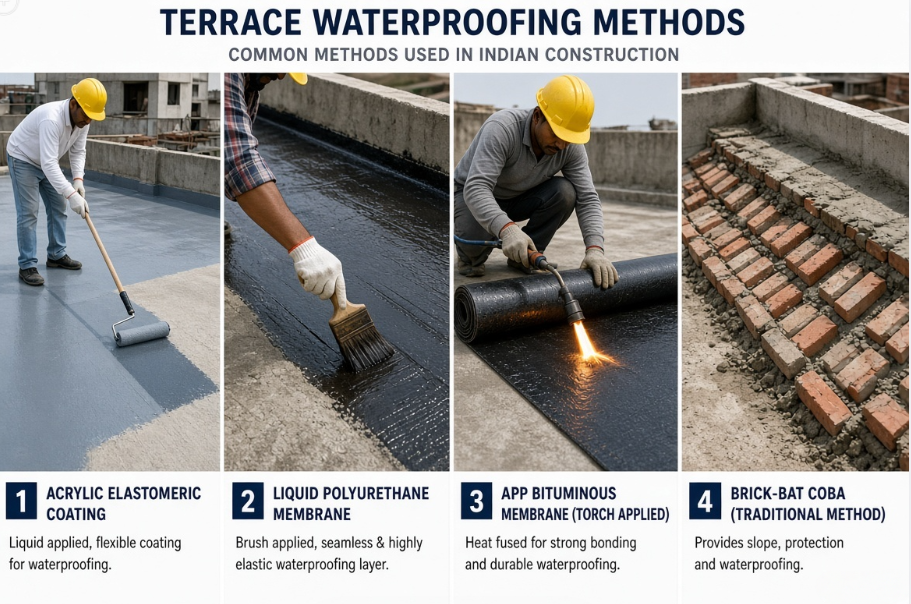
3. Different Terrace Waterproofing Methods and Their Costs
A. Acrylic and Elastomeric Waterproofing Coatings
Acrylic and elastomeric coatings form a protective layer over compatible roof surfaces. Depending on the specific product, they can offer flexibility and resistance to weather exposure.
Advantages:
- Can be suitable for selected existing roof finishes.
- Application may involve less demolition than rebuilding the terrace.
- Some formulations provide reflective properties that help reduce solar heat absorption.
- Can be useful for maintenance when the existing substrate is sound.
Limitations:
- Not every coating is suitable for permanent ponding water.
- The substrate must be properly prepared.
- Active cracks, failed joints, and drainage problems need appropriate treatment.
- The required primer, coats, reinforcement, and coverage depend on the product.
Best suited for: Compatible terrace surfaces where the underlying structure and drainage are in acceptable condition.
B. Cementitious and Polymer-Modified Waterproofing
Cementitious waterproofing systems use cement-based formulations, sometimes modified with polymers to improve their properties.
They are commonly considered for compatible concrete and cement-based surfaces. However, flexibility, crack-bridging ability, and suitability for an exposed terrace vary by product.
Advantages:
- Compatible with many cement-based substrates.
- Can be useful in suitable waterproofing assemblies.
- Some systems can be integrated with protective screeds or subsequent finishes.
Limitations:
- Product suitability for exposed, sun-facing terraces must be verified.
- Substrate preparation and curing are important.
- Movement joints and active cracks require appropriate detailing.
Best suited for: Applications in which the specified cementitious system is compatible with the substrate and exposure conditions.
C. PU (Polyurethane) Waterproofing
Polyurethane waterproofing systems create a flexible membrane when applied and cured according to the manufacturer’s instructions. Depending on the formulation, they can accommodate certain levels of substrate movement.
PU systems differ considerably in their UV resistance, moisture tolerance during application, and suitability for exposed roofs. Some require a compatible UV-resistant topcoat or protective layer.
Advantages:
- Flexible membrane formation in suitable systems.
- Useful for detailing complex roof junctions when correctly specified.
- Available in formulations designed for different exposure conditions.
Limitations:
- Material and application costs may be higher.
- Moisture conditions during application can be critical for some products.
- Thickness, reinforcement, curing, and topcoat requirements must be followed.
- A poorly prepared substrate can compromise performance.
Best suited for: Terraces where the selected PU system is designed for the actual roof conditions and is applied according to its technical specifications.
D. APP Bituminous Membrane Waterproofing
APP-modified bituminous membranes are supplied in rolls and are installed using the method specified for the particular membrane system.
They are commonly used in suitable flat-roof assemblies where the substrate, drainage, detailing, and protection are properly designed.
Advantages:
- Provides a continuous membrane when installed correctly.
- Available in different thicknesses and specifications.
- Can be suitable for larger roof areas.
Limitations:
- Laps, edges, drain outlets, and penetrations need careful detailing.
- Torch-applied systems require trained installers and strict fire-safety precautions.
- The membrane may require a protective layer depending on its specification and intended use.
Best suited for: Roof assemblies where a sheet membrane is appropriate and the installer can execute the detailing correctly.
E. Brick-Bat Coba and Traditional Terrace Treatments
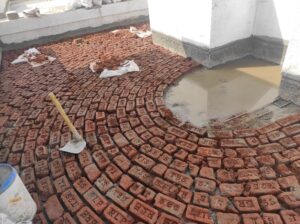
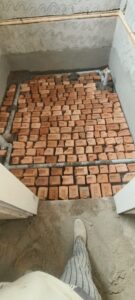
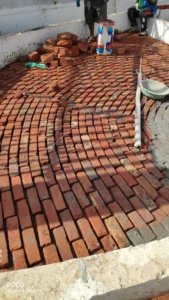
Brick-bat coba is a traditional terrace treatment involving brick pieces embedded in a cementitious mortar arrangement, commonly used to form a protective layer and help establish the required slope.
Its performance depends on workmanship, detailing, drainage, and the condition of the underlying construction.
Advantages:
- Can help establish a suitable slope where the existing terrace requires rebuilding.
- Creates a substantial protective layer.
- Can be integrated into certain traditional terrace assemblies.
Limitations:
- Adds dead load to the structure.
- May require significant civil work.
- Can involve longer execution time and curing.
- Cracks, poor drainage, and failed junctions can still cause leakage.
Best suited for: Terraces where slope correction or rebuilding is genuinely required and the structural implications have been considered.
4. Which Terrace Waterproofing Method Should You Choose?
There is no universally best waterproofing method for every home. The right choice depends on the source of leakage and the existing terrace construction.
| Terrace Condition | What to Assess Before Selecting a Treatment |
|---|---|
| Minor leakage with an otherwise sound surface | Check cracks, joints, drainage, and whether a compatible coating system is sufficient. |
| Water stagnation after rain | Assess the slope, drain capacity, outlet blockage, and low-lying areas. |
| Repeated leakage despite previous coating | Investigate the failed layer, concealed defects, and vulnerable junctions before applying another product. |
| Extensive cracking or damaged screed | Determine whether local repairs or removal and reconstruction are necessary. |
| Existing terrace tiles or brick-bat coba | Check adhesion, hollow or loose areas, moisture conditions, and compatibility with an overlay system. |
| Terrace used regularly by residents | Consider foot traffic, mechanical protection, and the finish required after waterproofing. |
A site inspection can help establish whether the problem needs a local repair, a new waterproofing system, or more extensive civil work.
5. Labour Charges vs Material Costs for Terrace Waterproofing
A waterproofing quotation includes more than the chemical or membrane used on the terrace. Labour, preparation, detailing, and finishing can substantially influence the total amount.
Material costs
Depending on the selected system, material expenses may include:
- Waterproofing coating or membrane.
- Primer and bonding agents.
- Crack-filling or repair compounds.
- Reinforcement mesh and compatible sealants.
- Protective screed or finishing materials.
- Drainage and joint-detailing components.
Labour charges
Labour costs depend on the preparation required, the system’s application process, site access, and the skill needed for critical detailing.
Work may include:
- Cleaning and removing loose material.
- Grinding or preparing the substrate.
- Repairing cracks and defective joints.
- Applying primer and waterproofing layers.
- Treating parapets, corners, outlets, and pipe penetrations.
- Forming or correcting the drainage slope.
- Carrying out water testing where appropriate.
- Applying protective or finishing layers.
How to compare two quotations
Ask both contractors to quote for the same system and scope. Compare material specifications, coverage, the number of coats, surface preparation, included civil work, testing, taxes, and warranty terms.
A cheaper quotation is not necessarily more economical if it excludes the work needed to address the actual leakage source.
6. Factors That Affect Terrace Waterproofing Cost in Pune
Several factors can increase or decrease the final cost of terrace waterproofing.
1. Existing terrace condition
A sound surface may need limited preparation, whereas a deteriorated terrace may require removal of loose screed, extensive crack repairs, or reconstruction.
2. Area of the terrace
Larger areas can increase the total cost while sometimes reducing the average cost per square foot. Small terraces may still involve minimum mobilisation and labour charges.
3. Severity of leakage
A visible ceiling stain does not always indicate a minor problem. Water may travel along the slab before appearing indoors, so the source needs to be identified.
4. Drainage and slope
Water should flow towards suitable outlets rather than remain ponded for long periods. Blocked drains, inadequate slope, and poorly detailed outlets may need corrective work.
5. Choice of waterproofing system
Coatings, liquid membranes, sheet membranes, and traditional terrace treatments have different material, installation, and protection requirements.
6. Existing tiles or waterproofing layers
Removing failed layers can add labour, debris disposal, and reconstruction costs. In some cases, a compatible overlay may be possible, but only after the existing surface has been assessed.
7. Height and accessibility
High-rise buildings, difficult access, safety arrangements, and material movement can affect labour and equipment costs.
8. Warranty and quality control
Ask what the warranty covers, how long it lasts, what maintenance is required, and whether exclusions apply to structural movement, plumbing defects, or ponding water.
7. How to Calculate Your Terrace Waterproofing Budget
Use this simple formula to prepare an initial estimate:
Total estimated cost = Terrace area × Quoted rate per sq. ft. + Additional work + Applicable taxes
For example, consider a 750 sq. ft. terrace:
- Measured terrace area: 750 sq. ft.
- Assumed quoted rate: ₹60 per sq. ft.
- Base waterproofing estimate: ₹45,000.
- Additional crack repairs, if required: to be quoted separately.
- Slope correction, protective screed, or other excluded work: to be quoted separately.
- Applicable taxes: add as specified in the quotation.
The base estimate is ₹45,000 before additional work and taxes. It should not be treated as the final project budget until the scope has been confirmed.
For the most reliable comparison, ask contractors to measure the terrace and provide a written, itemised quotation.
8. Common Terrace Waterproofing Mistakes to Avoid
Waterproofing failure is not always caused by the chemical or membrane itself. Application quality, detailing, and drainage also matter.
Avoid these common mistakes:
- Applying a new coating over loose, dusty, or unsuitable surfaces.
- Ignoring the source of active leakage.
- Applying a coating without treating cracks and critical joints as specified.
- Leaving parapet junctions, drain outlets, or pipe penetrations untreated.
- Ignoring water stagnation and inadequate slope.
- Using a product that is not designed for the terrace’s exposure conditions.
- Applying fewer coats or less material than the manufacturer specifies.
- Covering the waterproofing layer before it has cured or been tested as required.
- Choosing a contractor solely on the lowest price.
- Accepting verbal warranty promises without written terms.
Proper preparation and quality checks should be part of the scope, not optional extras added after work begins.
9. When Should You Waterproof Your Terrace in Pune?
The best time to undertake terrace waterproofing depends on the weather, surface condition, and product requirements.
Planning the work during a suitable dry-weather window can make it easier to prepare the substrate, apply the specified layers, and allow the system to cure before heavy rain.
However, the work should not be scheduled by season alone. Check the manufacturer’s requirements for substrate moisture, temperature, curing, and rain exposure.
Homeowners should inspect their terrace periodically, particularly before the monsoon, and address blocked outlets, deteriorated joints, visible cracks, and early signs of leakage.
If water is already entering the rooms below, arrange an inspection rather than waiting for the next rainy season.
10. How to Choose a Terrace Waterproofing Contractor in Pune
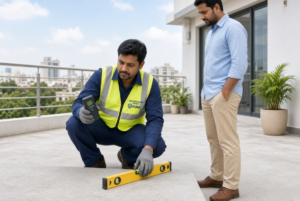
Before finalising a contractor, consider the following checklist:
- Has the contractor inspected the terrace and investigated the leakage source?
- Is the proposed waterproofing system suitable for the existing surface?
- Does the quotation identify the exact product or membrane specification?
- Are surface preparation and crack repairs included?
- Are drain outlets, parapet junctions, and pipe penetrations covered in the scope?
- Is slope correction necessary, and if so, is it included?
- Will the contractor follow the manufacturer’s application and curing instructions?
- Is water testing specified where appropriate?
- Is a written warranty provided with clear coverage and exclusions?
- Are taxes, debris removal, and finishing work included in the quoted price?
A reliable quotation should explain both the treatment being proposed and the reason it is suitable for your terrace.
Conclusion
Terrace waterproofing is an important part of maintaining a home, especially when repeated rainwater exposure leads to seepage, peeling paint, damp ceilings, or damaged finishes.
The terrace waterproofing cost in Pune depends on the size and condition of the terrace, the selected system, surface preparation, drainage requirements, and the quality of installation.
Before comparing prices, identify the source of leakage and obtain an itemised quotation that clearly states what is included. The right treatment is the one that addresses the actual problem and is installed according to the system’s technical requirements.
At Design Within, we believe renovation decisions should be made with careful planning, clear cost expectations, and attention to long-term performance. If terrace leakage is affecting your home or you are planning a renovation, seek an appropriate site assessment before finalising the repair.
Disclaimer: The cost ranges in this article are preliminary budgeting estimates, not live market quotations. Prices can vary by location, product specification, site conditions, labour, taxes, and project scope. Waterproofing selection and application should follow the manufacturer’s technical guidance and an appropriate site assessment.
At Design Within, we believe a beautiful interior should not only look good when it is completed — it should also perform well for years.
Before we dive into more details about designing your furniture, it might be helpful to estimate how much your interior design project could cost. Understanding your budget can help you make more informed decisions about what features to prioritize. To get a better idea, you can use our ‘interior design budget calculator’ budget calculator and start planning your dream home today.
Frequently Asked Questions (FAQs)
1. What is the terrace waterproofing cost per sq. ft. in Pune?
The cost varies according to the waterproofing method, surface condition, material specification, labour, and additional civil work. Broad preliminary budgeting allowances may range from a few tens of rupees per sq. ft. to ₹100 or more for more involved systems. Obtain current, itemised local quotations for an accurate estimate.
2. What is the best waterproofing method for a terrace?
There is no single best method for every terrace. Acrylic coatings, cementitious systems, PU membranes, APP membranes, and traditional treatments have different applications. The choice should depend on the existing substrate, leakage source, drainage, roof exposure, and intended use.
3. Can terrace waterproofing be done without removing existing tiles?
Sometimes. A compatible overlay system may be possible if the existing tiles and underlying layers are sound and properly bonded. Loose tiles, trapped moisture, failed joints, or drainage problems may require more extensive work. An inspection is necessary before deciding.
4. How much does it cost to waterproof a 1,000 sq. ft. terrace?
The cost depends on the quoted rate and what the work includes. For example, at an assumed rate of ₹60 per sq. ft., the base estimate would be ₹60,000. Additional repairs, slope correction, protective layers, and taxes may increase the final amount.
5. Is PU waterproofing better than acrylic waterproofing?
Neither is automatically better for every application. PU and acrylic products differ in flexibility, weather resistance, application requirements, and compatibility with the substrate. Select a system designed for the actual roof conditions and follow its technical datasheet.
6. How long does terrace waterproofing last?
Service life depends on the specific product, installation quality, substrate condition, weather exposure, drainage, and maintenance. Ask the manufacturer and contractor for system-specific performance information and written warranty terms instead of relying on a universal lifespan.
7. Does terrace waterproofing stop leakage permanently?
A correctly specified and installed system can significantly reduce leakage risk, but no method should be promised as permanently effective under all conditions. Structural movement, plumbing defects, damaged joints, poor drainage, and inadequate maintenance can cause future problems.
8. What should be included in a terrace waterproofing quotation?
A quotation should identify the system and materials, surface preparation, crack repairs, application layers, junction detailing, labour, testing, protective finishes, taxes, and warranty conditions. Confirm exclusions in writing before approving the work.