Introduction :
Choosing tiles for a home often comes down to two popular options: ceramic tiles and vitrified tiles.
Both are made from clay-based materials and are available in a wide variety of colours, patterns, sizes and finishes. However, their manufacturing process, strength, water absorption and typical applications are different.
So, which one should you choose?
The answer depends on where the tile will be used, how much traffic the area receives, your budget and the look you want to achieve.
This guide compares ceramic and vitrified tiles to help you make the right choice for an Indian home.
What Are Ceramic Tiles?
Ceramic tiles are made primarily from clay and other natural materials. They are shaped and fired in a kiln to create the finished tile.
They are available in many designs and are commonly used for:
- Bathroom walls
- Kitchen backsplashes
- Wall cladding
- Low-traffic floors
- Decorative applications
Ceramic tiles are generally easier to cut and work with during installation.
What Are Vitrified Tiles?
Vitrified tiles are manufactured using a mixture containing clay, silica, quartz and other materials. They are fired at high temperatures, creating a dense tile with very low water absorption.
Vitrified tiles are widely used for residential flooring because of their strength, durability and low porosity.
Common varieties include:
- Full-body vitrified tiles
- Double-charge vitrified tiles
- Glazed vitrified tiles (GVT)
- Polished glazed vitrified tiles (PGVT)
- Soluble-salt vitrified tiles
Ceramic Tiles vs Vitrified Tiles: At a Glance
| Feature | Ceramic Tiles | Vitrified Tiles |
|---|---|---|
| Strength | Moderate | Higher |
| Water absorption | Higher | Very low |
| Density | Lower | Higher |
| Durability | Good for suitable applications | Excellent |
| Design variety | Very good | Excellent |
| Flooring suitability | Good for selected areas | Excellent |
| Wall applications | Excellent | Good |
| Maintenance | Easy | Easy |
| Typical cost | Lower | Higher |
| Heavy-traffic suitability | Moderate | Excellent |
1. Strength and Durability
One of the biggest differences between the two is strength.
Vitrified tiles are denser and generally more resistant to wear, making them particularly suitable for floors that receive regular foot traffic.
Ceramic tiles can also be durable, but their suitability depends heavily on the particular product and application.
Winner for high-traffic flooring: Vitrified tiles
2. Water Resistance
Vitrified tiles have very low water absorption because of their dense structure.
This makes them particularly useful for flooring applications where moisture resistance is important.
Ceramic tiles generally have higher water absorption, although some ceramic tiles are specifically manufactured for wet areas.
For bathroom walls and kitchen backsplashes, ceramic tiles remain a practical option.
Winner for low water absorption: Vitrified tiles
3. Appearance and Design
Both ceramic and vitrified tiles offer excellent design possibilities.
Ceramic tiles are available in numerous colours, textures, patterns and decorative designs.
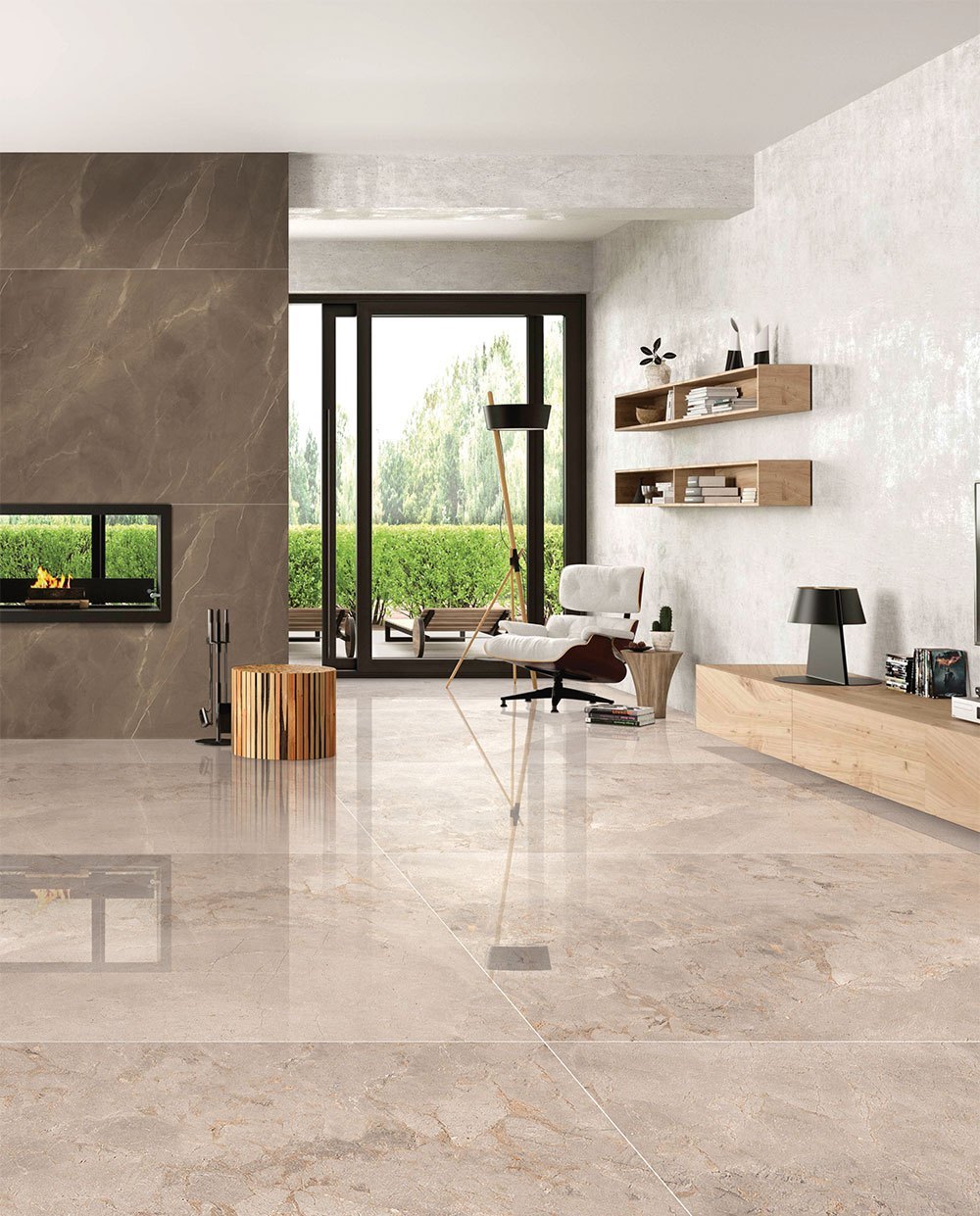
Vitrified tiles have become particularly popular because they can reproduce the appearance of:
- Marble
- Natural stone
- Concrete
- Wood
- Terrazzo
- Decorative patterns
Large-format vitrified tiles can also create fewer visible joints, giving contemporary interiors a more seamless appearance.
Winner: Tie
The better choice depends on the design you want.
4. Maintenance
Both materials are relatively easy to maintain compared with many natural stones.
Vitrified tiles have a dense surface that makes everyday cleaning straightforward.
Ceramic tiles are also easy to clean, although grout lines and the specific surface finish can influence maintenance.
For either material, regular cleaning and appropriate grout maintenance are important.
Winner: Tie
5. Cost
Ceramic tiles are generally more affordable than premium vitrified tiles.
However, vitrified tiles are available across a broad price range, so the difference is not always large.
Indicative material prices can vary approximately as follows:
| Tile Type | Indicative Price Range |
|---|---|
| Standard Ceramic Tiles | ₹30–₹100+/sq. ft. |
| Standard Vitrified Tiles | ₹50–₹150+/sq. ft. |
| Premium GVT/PGVT | ₹80–₹250+/sq. ft. |
Actual prices depend on brand, size, finish, design, quality and location. Installation, adhesive, grout, cutting and wastage can add to the final cost.
Winner for lower initial material cost: Ceramic
6. Flooring Suitability
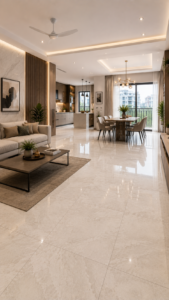
For most main residential flooring applications, vitrified tiles are usually the more practical choice.
They work particularly well in:
- Living rooms
- Dining areas
- Passages
- Kitchens
- Common areas
- High-traffic zones
Ceramic tiles can be used for flooring too, but product specifications should be checked carefully before selecting them for high-traffic areas.
Winner for general residential flooring: Vitrified tiles
7. Wall Applications
Ceramic tiles are extremely popular for wall applications because they are available in many decorative formats and are generally easier to cut.
They are commonly used for:
- Kitchen backsplashes
- Bathroom walls
- Utility areas
- Decorative wall surfaces
Vitrified tiles can also be used on walls, especially when a continuous flooring-and-wall design is desired.
Winner for traditional wall applications: Ceramic tiles
Which Is Better for Different Rooms?
Living Room
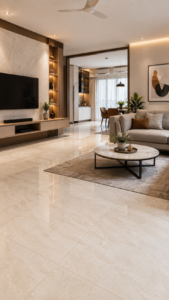
Vitrified tiles are generally the better choice because living rooms experience regular foot traffic and benefit from durable, low-maintenance flooring.
Bedroom
Both can work, but vitrified tiles are commonly preferred for flooring where durability and easy maintenance are priorities.
For a warmer atmosphere, homeowners may also consider wooden flooring, laminate or SPC.
Kitchen
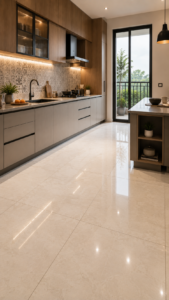
Vitrified tiles are suitable for kitchen floors because of their low water absorption and durability.
Ceramic tiles are particularly useful for backsplashes and walls.
Bathroom
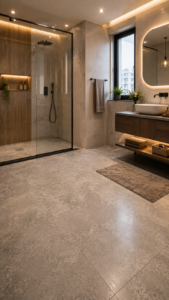
Ceramic tiles are commonly used for bathroom walls.
For bathroom floors, choose a tile specifically rated for wet areas with an appropriate anti-skid surface, rather than selecting solely on appearance.
Balcony
Use tiles specifically designed for outdoor conditions, with suitable weather resistance and slip resistance. The choice should depend on the manufacturer’s application rating rather than simply whether the tile is ceramic or vitrified.
Ceramic vs Vitrified Tiles for 2BHK, 3BHK, 4BHK & Villas
The size of the home does not automatically determine which tile is better.
2BHK
For a typical 2BHK, vitrified tiles can provide a practical common flooring solution, while ceramic tiles can be used selectively for walls and backsplashes.
3BHK
A 3BHK can benefit from vitrified flooring across the main common areas, with ceramic tiles used for bathrooms and kitchen walls.
4BHK
In a larger 4BHK, different flooring materials can be combined according to the function of each space instead of using one tile throughout.
Villa
Villas provide more scope for material variation. Vitrified tiles can be used in common areas, while specialised outdoor tiles, natural stone or other flooring materials can be selected for terraces, balconies and landscape-connected spaces.
Pros and Cons of Ceramic Tiles
Advantages
- Generally lower cost
- Excellent design variety
- Good for wall applications
- Easy to clean
- Suitable for bathrooms and kitchen walls
- Relatively easy to cut and install
Disadvantages
- Generally higher water absorption than vitrified tiles
- Not always the best choice for heavy-traffic flooring
- Some varieties can be more susceptible to wear or chipping
- Product quality varies significantly
Pros and Cons of Vitrified Tiles
Advantages
- High strength
- Very low water absorption
- Excellent for residential flooring
- Wide variety of designs
- Easy to maintain
- Available in large formats
- Can reproduce marble, stone and wood appearances
Disadvantages
- Usually costs more than basic ceramic tiles
- Cutting and installation can require greater care
- Some polished surfaces can become slippery when wet
- Damaged tiles can be more difficult to replace if the exact design is discontinued
Common Mistakes to Avoid
Choosing Only by Appearance
A beautiful tile is not necessarily appropriate for every application.
Always check whether the tile is suitable for the intended location.
Ignoring Slip Resistance
Bathroom and outdoor flooring require special attention to surface grip.
Comparing Only Tile Prices
The final cost includes installation, adhesive, grout, cutting, transportation and wastage.
Using the Same Tile Everywhere
A home does not necessarily need one tile throughout.
Different spaces have different performance requirements.
Ignoring Tile Size
Large-format tiles can create a clean contemporary look, but they require appropriate installation conditions and a properly prepared substrate.
So, Which Is Better: Ceramic or Vitrified Tiles?
For main residential flooring, vitrified tiles are generally the more versatile choice because of their strength, low water absorption and wide range of finishes.
For walls, backsplashes and decorative applications, ceramic tiles can offer excellent value and design flexibility.
Therefore, the answer is not simply that one material is better than the other.
Choose vitrified tiles when performance and durable flooring are the priority. Choose ceramic tiles when affordability, decorative variety and wall applications are more important.
Final Thoughts
The right tile should be selected based on the function of the space, expected traffic, moisture exposure, maintenance requirements, design and budget.
For a complete home, a combination of materials often produces a better result than using one tile everywhere.
At Design Within, flooring and wall materials are considered as part of the overall interior design. Tile selection needs to coordinate with furniture, lighting, wall finishes, kitchen design and the way the family uses each space.
The objective is not simply to choose a good tile—it is to choose the right tile for the right space.
At Design Within, we believe a beautiful interior should not only look good when it is completed — it should also perform well for years.
Before we dive into more details about designing your furniture, it might be helpful to estimate how much your interior design project could cost. Understanding your budget can help you make more informed decisions about what features to prioritize. To get a better idea, you can use our ‘interior design budget calculator’ budget calculator and start planning your dream home today.
FAQs
Which is better, ceramic or vitrified tiles?
For most residential flooring applications, vitrified tiles are generally the more durable and moisture-resistant option. Ceramic tiles are excellent for many wall and decorative applications.
Are vitrified tiles more expensive than ceramic tiles?
Generally, yes. However, pricing varies according to size, quality, finish, brand and design.
Can ceramic tiles be used for flooring?
Yes. Ceramic tiles can be used for flooring when the selected product is specifically suitable for the intended application and traffic level.
Are vitrified tiles suitable for bathrooms?
Yes, but bathroom flooring should have an appropriate anti-skid surface. Do not choose a highly polished tile simply because it looks attractive.
Which tiles are better for a living room?
Vitrified tiles are generally a practical choice for living-room flooring because of their durability, low water absorption and design options.
Can ceramic and vitrified tiles be used together?
Yes. Using vitrified tiles for floors and ceramic tiles for selected walls or backsplashes is a common and practical combination.