Introduction :
SPC flooring has become increasingly popular in modern 2BHK, 3BHK & 4BHK Indian homes, particularly among homeowners looking for a wood or stone-like floor without choosing traditional wooden flooring.
Its rigid construction, wide range of designs and relatively quick installation make it an interesting option for both new interiors and renovation projects.
But is SPC flooring actually suitable for Indian homes?
The answer depends on the quality of the product, the room, the existing floor, installation conditions and your expectations.
This guide explains what SPC flooring is, its advantages and disadvantages, approximate cost, applications and what you should check before buying it.
What Is SPC Flooring?
SPC stands for Stone Plastic Composite, sometimes also referred to as Stone Polymer Composite.
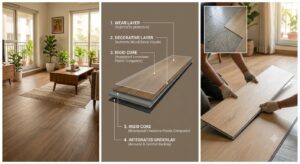
Unlike conventional ceramic or vitrified tiles, SPC is generally manufactured as a multi-layer flooring product with a rigid core, decorative layer and protective wear layer.
The decorative layer can reproduce the appearance of:
- Natural wood
- Stone
- Marble
- Concrete
- Other contemporary finishes
This makes SPC particularly popular in modern and minimalist interiors.
How Is SPC Flooring Made?
A typical SPC flooring plank can contain several layers:
1. Wear Layer
The transparent protective layer helps resist everyday wear.
2. Decorative Layer
This provides the visual appearance, such as wood grain or stone.
3. SPC Core
The rigid composite core gives the flooring its structure and dimensional stability.
4. Backing Layer
Depending on the product, a backing or underlay layer may be provided for additional support and acoustic performance.
The exact construction varies between manufacturers, so specifications should always be checked before purchase.
Advantages of SPC Flooring
1. Wood-Look Appearance
SPC can reproduce timber-inspired patterns in a wide range of colours and textures.
This makes it useful when you want a warm, contemporary appearance without using natural wood.
2. Moisture Resistance
Many SPC products have strong resistance to moisture, making them suitable for several residential applications where conventional wood flooring may require greater caution.
However, moisture-resistant does not mean that every SPC product is suitable for every wet area. Always follow the manufacturer’s installation and usage specifications.
3. Quick Installation
Many SPC systems use click-lock installation, which can make installation relatively fast compared with some conventional flooring methods.
4. Easy Maintenance
Routine cleaning is generally straightforward.
Regular sweeping or vacuuming followed by appropriate damp cleaning is usually sufficient for everyday maintenance.
5. Wide Design Selection
SPC is available in many wood, stone and contemporary patterns.
It can therefore work with modern, minimalist, Scandinavian, Japandi and contemporary interiors.
6. Useful for Renovation
Depending on the existing floor and site conditions, SPC can sometimes be installed over an existing surface after suitable preparation.
This can make it attractive for renovation projects.
Disadvantages of SPC Flooring
SPC is practical, but it is not the perfect flooring solution.
1. Subfloor Preparation Is Important
A rigid floor does not eliminate the need for a suitable base.
Unevenness in the existing floor can affect the appearance, stability and performance of the finished flooring.
2. Quality Varies
Not all SPC flooring is manufactured to the same specification.
Thickness, wear layer, core construction, locking system and backing can vary significantly.
Therefore, comparing products only by price per square foot can be misleading.
3. Harder Than Some Other Resilient Flooring
SPC has a rigid core, so it can feel harder underfoot than some softer flooring systems.
4. Can Be Damaged
SPC is resistant to everyday wear, but it is not indestructible.
Dragging heavy furniture, sharp objects or severe impact can damage the surface.
5. Expansion and Installation Requirements
SPC flooring can expand and contract with temperature changes. Proper installation, perimeter gaps and manufacturer’s recommendations are important.
Where Can You Use SPC Flooring?
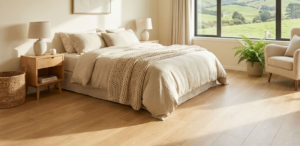
SPC can work particularly well in:
Bedrooms
Its wood-look appearance can create a warm and comfortable visual character.
Living Rooms
It can be used where a timber-inspired contemporary look is desired.
Study Rooms
The natural-looking surface works well with workspaces and home offices.
Children’s Rooms
Suitable products can provide a practical alternative to harder flooring surfaces.
Renovation Projects
Its installation system can be useful when an existing floor is suitable for overlay installation.
For kitchens, bathrooms and other areas exposed to significant water, always verify the manufacturer’s suitability and installation requirements rather than assuming every SPC product is appropriate.
SPC Flooring Cost in India
SPC flooring prices vary significantly according to:
- Thickness
- Wear-layer thickness
- Core quality
- Brand
- Surface texture
- Design
- Underlay
- Installation system
As a broad indicative range, SPC flooring may cost approximately ₹100–₹250+ per sq. ft. for the material, while the installed cost can be higher depending on the product and site conditions.
Premium products can cost more.
Additional costs may include:
- Underlay
- Installation labour
- Skirting
- Floor preparation
- Removal of existing flooring
- Transportation
Always compare the complete installed cost, rather than only the plank price.
What Should You Check Before Buying SPC Flooring?
Don’t choose SPC only because it looks like wood.
Check the technical specifications.
Thickness
Thicker products may offer greater rigidity, but thickness alone doesn’t determine overall quality.
Wear Layer
The wear layer is important for resistance to everyday surface wear.
Core Construction
Ask about the actual SPC core and product specifications.
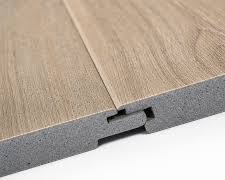
Locking System
For click flooring, the quality and precision of the locking system matter.
Surface Finish
Choose between realistic wood textures, matte finishes and other available surfaces based on the desired interior.
Warranty
Check what the manufacturer’s warranty actually covers.
Installation Requirements
Confirm whether the existing floor is suitable and what preparation is required.
SPC vs Traditional Wooden Flooring
| Factor | SPC Flooring | Wooden Flooring |
|---|---|---|
| Appearance | Wood-look | Natural wood |
| Moisture resistance | Generally higher | Depends on wood/product |
| Maintenance | Generally easier | Requires more care |
| Installation | Often quicker | More involved depending on system |
| Natural character | Printed/recreated | Genuine wood |
| Repair | Damaged plank may be replaced | Can sometimes be refinished |
| Cost | Wide range | Generally higher for premium wood |
| Feel | Rigid | More natural/warm |
SPC wins on practicality in many situations.
Wood wins when authentic natural material and character are the priority.
SPC vs Vitrified Tiles
Both can be excellent choices, but they create very different interiors.
Choose SPC when:
- You want a wood-look floor
- You prefer a warmer visual appearance
- You want relatively quick installation
- You are considering a renovation-friendly flooring system
Choose vitrified tiles when:
- You want maximum design variety
- You prefer a hard, durable surface
- You want marble, stone or concrete-look options
- You want a conventional tile floor across multiple areas
Is SPC Flooring Good for Indian Homes?
For many residential applications, yes.
But it should not be treated as a universal replacement for tiles, marble or wood.
SPC is particularly useful when the homeowner wants:
Wood-like aesthetics + relatively easy maintenance + practical installation.
It may be less suitable when the priority is:
Authentic natural wood + a softer natural feel + the ability to refinish the floor.
The quality of the product and installation also matter enormously.
Common Mistakes When Buying SPC Flooring
Choosing the cheapest product
Price alone tells you very little about SPC quality.
Ignoring the wear layer
Two products with similar appearance can have very different specifications.
Installing over an unsuitable floor
The existing surface must be properly assessed and prepared.
Assuming all SPC is waterproof
Check the actual manufacturer’s specifications and installation conditions.
Ignoring sunlight and temperature
Large temperature variations and direct sunlight can affect flooring, so installation guidelines should be followed.
Not checking the warranty
Understand what is covered before purchasing.
Final Thoughts
SPC flooring has become an interesting alternative for homeowners who want the appearance of wood or stone with a practical, modern flooring system.
Its biggest strengths are design flexibility, moisture resistance, relatively quick installation and easy routine maintenance.
However, SPC should not be selected purely because it is trending.
The right product needs to be evaluated based on construction, wear layer, installation requirements, room conditions, expected use and overall quality.
At Design Within, flooring selection is considered as part of the complete interior design. The flooring needs to work with the room’s furniture, colour palette, lighting, materials and lifestyle.
SPC can be a smart flooring choice—but only when the right product is selected for the right space.
At Design Within, we believe a beautiful interior should not only look good when it is completed — it should also perform well for years.
Before we dive into more details about designing your furniture, it might be helpful to estimate how much your interior design project could cost. Understanding your budget can help you make more informed decisions about what features to prioritize. To get a better idea, you can use our ‘interior design budget calculator’ budget calculator and start planning your dream home today.
Frequently Asked Questions
Is SPC flooring good for Indian homes?
Yes. SPC can be suitable for many residential applications, particularly bedrooms, living areas, studies and renovation projects, provided the product and installation conditions are appropriate.
Is SPC flooring waterproof?
Many SPC products offer strong water resistance, but homeowners should not assume every product is suitable for prolonged water exposure. Always check the manufacturer’s specifications.
How much does SPC flooring cost in India?
A broad indicative material range is approximately ₹100–₹250+ per sq. ft., depending on thickness, wear layer, quality, design and brand. Installation and other site costs can increase the final price.
Is SPC better than wooden flooring?
Not universally. SPC is generally easier to maintain and more resistant to moisture, while genuine wood provides a natural material, feel and character that SPC cannot reproduce completely.
Can SPC flooring be installed over existing tiles?
In some renovation situations, yes. However, the existing floor must be sufficiently level, stable, clean and suitable for the specific SPC product and installation system.
How long does SPC flooring last?
Its service life depends on product quality, wear layer, installation, traffic and maintenance. Always consider the manufacturer’s warranty and technical specifications rather than relying on a generic lifespan claim.
Is SPC flooring suitable for bedrooms?
Yes. Bedrooms are one of the applications where SPC can work particularly well, especially when a wood-look interior is desired.