Introduction :
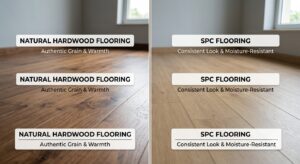
Wooden flooring has long been associated with warmth, elegance and premium interiors. SPC flooring, on the other hand, has become a popular modern alternative for homeowners having 2bhk, 3bhk or 4bhk, who want a wood-look floor with easier maintenance and practical installation.
At first glance, the two can look quite similar.
But they are very different flooring systems.
Wood is a natural material, while SPC is a manufactured flooring product designed to reproduce the appearance of wood and other materials.
So which one is better for an Indian home?
The answer depends on what matters most to you: natural character, maintenance, moisture resistance, comfort, budget or installation.
Wooden Flooring vs SPC: At a Glance
| Factor | Wooden Flooring | SPC Flooring |
|---|---|---|
| Material | Natural wood / engineered wood | Composite manufactured flooring |
| Appearance | Genuine wood | Wood-look |
| Natural variation | Yes | No |
| Moisture resistance | Depends on product | Generally high |
| Maintenance | Medium | Generally low |
| Installation | Depends on system | Often quick |
| Comfort | Warm and natural | More rigid |
| Design | Natural wood varieties | Wide range of wood-look designs |
| Repair | Some products can be refinished | Damaged planks generally replaced |
| Cost | Usually higher for premium wood | Wide range |
| Best suited to | Premium interiors | Practical modern interiors |
1. Appearance
This is where wooden flooring has an obvious advantage.
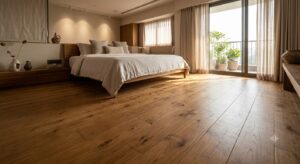
Real wood has natural grain, variation and depth. No two pieces are exactly alike.
SPC flooring uses a decorative layer to reproduce the appearance of wood. Modern products can look remarkably realistic, but they remain a manufactured representation.
Choose wood if:
You value authentic natural material and character.
Choose SPC if:
You want a consistent wood-look appearance with more design options.
Winner for authenticity: Wooden flooring
2. Maintenance
Wood requires more care.
Depending on the type of wood flooring, homeowners may need to be careful about moisture, spills, cleaning products and surface damage.
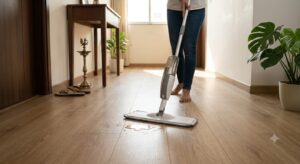
SPC is generally easier to maintain and can be cleaned with routine sweeping and appropriate damp cleaning.
Winner for low maintenance: SPC
3. Moisture Resistance
This is one of the biggest practical differences.
Natural wood can react to moisture, while engineered wood products may offer improved stability depending on their construction.
SPC flooring is generally much more resistant to moisture.
However, not every SPC product should automatically be treated as suitable for prolonged water exposure. Product specifications and installation guidelines should always be checked.
Winner: SPC
4. Comfort and Feel
Wood has a natural warmth and tactile quality that manufactured flooring cannot completely reproduce.
SPC has a rigid core and generally feels harder underfoot.
An appropriate underlay or backing system can influence the feel and acoustic performance, but it does not turn SPC into natural wood.
Winner for natural feel: Wooden flooring
5. Durability
Both can be durable when the right product is selected.
Wood can develop scratches and marks, but certain wooden floors can be sanded or refinished depending on their construction and thickness.
SPC is designed to withstand everyday residential wear, but it can still be damaged by sharp objects, heavy impact or inappropriate use.
The actual quality of the product matters more than simply choosing “wood” or “SPC.”
Winner: Depends on product and application.
6. Installation
SPC flooring commonly uses click-lock systems, which can make installation relatively quick.
Wooden flooring can involve more specialised installation depending on whether it is engineered, floating, glued or otherwise installed.
The existing floor condition is also important.
Winner for simpler installation: SPC
7. Cost
Cost varies significantly within both categories.
Premium engineered or natural wood can be considerably more expensive than many SPC products.
However, premium SPC can also be expensive.
Don’t compare only the material price.
Consider:
- Installation
- Underlay
- Skirting
- Floor preparation
- Transportation
- Wastage
- Finishing
- Maintenance
Winner for budget flexibility: SPC
Which Is Better for Different Rooms?
| Room | Recommended Options | Main Consideration |
|---|---|---|
| Bedroom | Wood / SPC | Comfort & appearance |
| Living Room | Wood / SPC | Design & usage |
| Study | Wood / SPC | Warmth & aesthetics |
| Children’s Room | SPC / suitable wood | Maintenance |
| Kitchen | SPC / tiles | Moisture |
| Bathroom | Suitable tiles | Water & slip resistance |
| Balcony | Outdoor flooring | Weather exposure |
The room should always be considered before selecting the material.
When Should You Choose Wooden Flooring?
Wooden flooring makes sense if you want:
- Genuine natural material
- Warmth and character
- Premium appearance
- Unique grain and variation
- The possibility of refinishing certain products
It is particularly attractive in bedrooms, studies and premium residences.
However, you should be comfortable with the additional care that natural wood may require.
When Should You Choose SPC Flooring?
SPC can make more sense if you want:
- Wood-look aesthetics
- Easier maintenance
- Better moisture resistance
- Relatively quick installation
- More predictable appearance
- A practical solution for selected renovation projects
It can be particularly useful when the design calls for timber aesthetics but the homeowner does not want the maintenance requirements associated with natural wood.
What About Engineered Wood?
This is an important middle ground.
Engineered wood is genuine wood, but its construction is different from solid wood.
It can offer some advantages in dimensional stability compared with solid wood, depending on the product.
Therefore, if you are comparing:
Natural character + performance
you should not automatically limit the choice to solid wood vs SPC.
Engineered wood may be worth considering for premium residential interiors.
Common Mistakes When Choosing Between Wood and SPC
Choosing SPC only because it is cheaper
The cheapest SPC product may not provide the appearance or performance you expect.
Choosing wood without considering moisture
Wood flooring needs to be selected according to the room and environmental conditions.
Comparing products only by thickness
Thickness alone does not determine flooring quality.
Ignoring installation
Poor installation can affect the performance and appearance of either flooring system.
Expecting SPC to feel exactly like wood
SPC can reproduce the appearance of wood, but its physical feel is different.
So, Which Is Better?
There is no universal winner.
Choose wooden flooring if your priority is:
Natural beauty + warmth + authenticity + premium character
Choose SPC flooring if your priority is:
Practicality + moisture resistance + easier maintenance + wood-look aesthetics
And if you want a balance between natural material and dimensional stability, engineered wood deserves consideration.
Final Thoughts
The decision between wooden flooring and SPC is ultimately a decision between authenticity and practicality.
Wood gives you a natural material with genuine grain, warmth and character.
SPC gives you a practical flooring system with wood-look aesthetics, easier maintenance and strong resistance to moisture.
Neither should automatically be labelled “better.”
The better flooring is the one that fits the room, lifestyle, maintenance expectations and budget.
At Design Within, material selection is considered as part of the complete interior rather than as an isolated purchase. Flooring should complement the furniture, lighting, wall finishes and overall character of the home.
Choose wood when you want to experience wood. Choose SPC when you want the look of wood with greater practicality.
At Design Within, we believe a beautiful interior should not only look good when it is completed — it should also perform well for years.
Before we dive into more details about designing your furniture, it might be helpful to estimate how much your interior design project could cost. Understanding your budget can help you make more informed decisions about what features to prioritize. To get a better idea, you can use our ‘interior design budget calculator’ budget calculator and start planning your dream home today.
Frequently Asked Questions
Is SPC better than wooden flooring?
Not universally. SPC is generally easier to maintain and more moisture-resistant, while genuine wood offers natural character and a warmer feel.
Is SPC flooring cheaper than wood?
Often, but not always. Both categories have wide price ranges depending on quality, brand, construction and installation.
Which is more durable, wood or SPC?
Both can perform well when properly selected and installed. The product specification, traffic and maintenance have a major influence on durability.
Is SPC suitable for bedrooms?
Yes. Bedrooms are one of the common applications for SPC, particularly when a wood-look interior is desired.
Can SPC look like real wood?
Yes. High-quality SPC products can reproduce wood grain, colour and texture convincingly, although the material remains manufactured flooring.
Is wooden flooring difficult to maintain in India?
It can require more care than tile or SPC flooring, particularly where moisture and spills are concerns. The specific wood flooring system also makes a significant difference.
What is the best alternative to wooden flooring?
There is no single alternative. SPC and laminate can provide wood-look aesthetics, while engineered wood provides genuine wood with a different construction and performance profile.