Introduction : Roof Waterproofing and Heat Reduction: Can Cool-Roof Coatings Make Your Home Cooler?
Does your home become uncomfortably hot during summer, even when the terrace receives no direct sunlight inside the rooms? A roof exposed to strong sunlight can absorb significant heat and transfer some of it into the spaces below.
For homeowners in Pune, roof treatments that address both rainwater protection and solar heat absorption can be worth considering. However, roof waterproofing and heat reduction are two different functions. The right solution depends on your roof’s condition, existing construction and comfort requirements.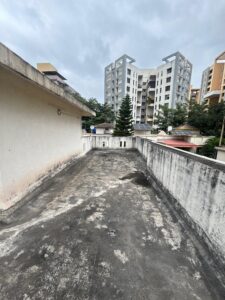
1. Why Does Your Terrace Make Your Home Hot?
A roof receives direct solar radiation throughout the day. Dark or heat-absorbing surfaces can become considerably hotter than the surrounding air.
Heat can then travel through the roof slab and increase indoor temperatures, particularly in top-floor rooms with limited insulation or ventilation.
Common contributing factors include:
-
Direct sunlight on an exposed concrete terrace.
-
Dark roof finishes that absorb solar energy.
-
Limited thermal insulation.
-
Poor ventilation and heat buildup indoors.
-
Large exposed roof areas above bedrooms and living spaces.
The roof is not always the only source of indoor heat. Windows, exterior walls, ventilation and internal heat sources also influence comfort.
2. What Is a Cool-Roof Coating?
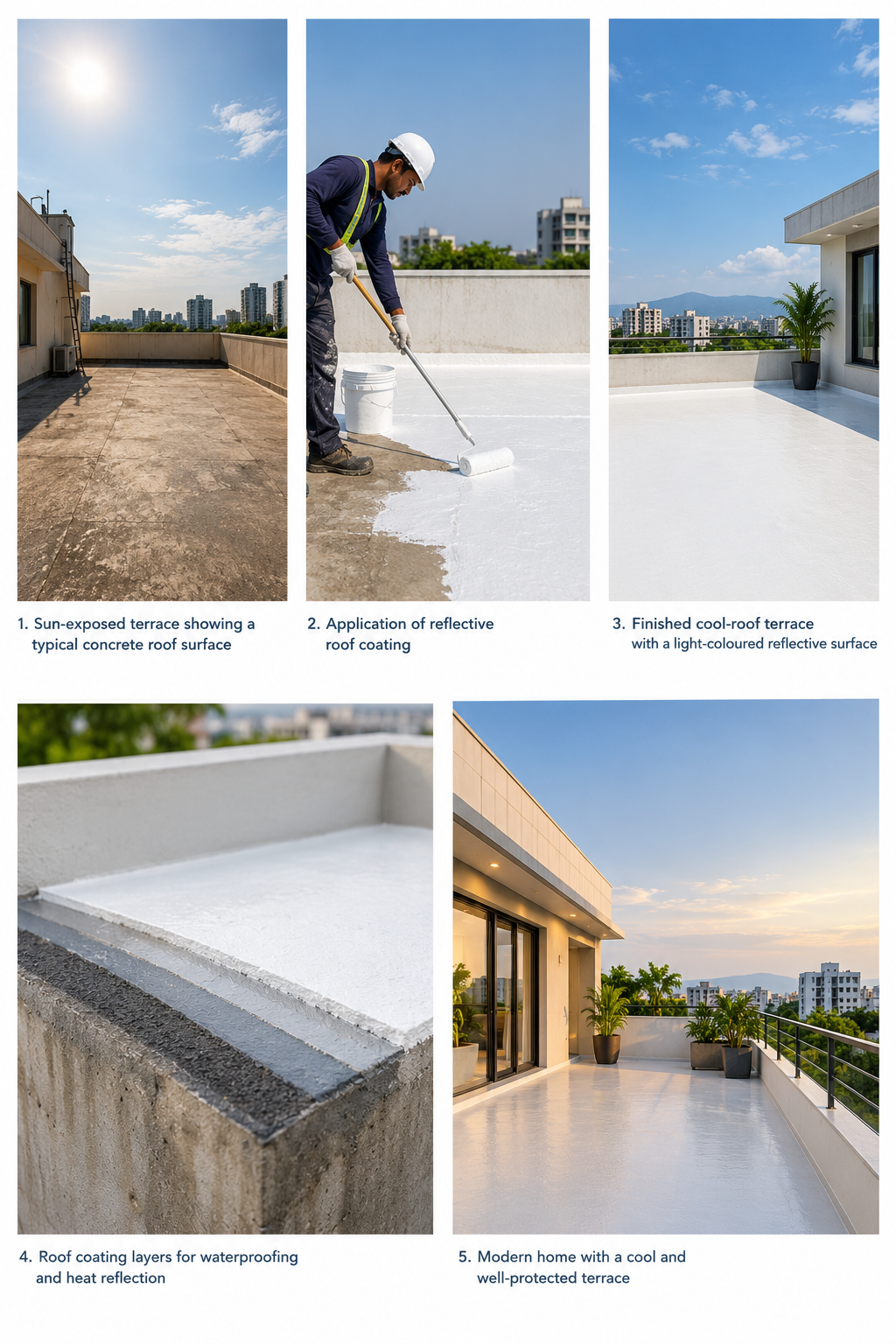
A cool-roof coating is designed to reflect more sunlight and, depending on its properties, release absorbed heat more effectively than a conventional dark surface.
Many cool-roof products use light-coloured, reflective finishes. Some are formulated specifically for roofs, while others combine reflective properties with weather-resistant or waterproofing characteristics.
Potential benefits include:
-
Lower roof-surface temperatures under suitable conditions.
-
Reduced heat transfer into the building.
-
Improved comfort in some top-floor rooms.
-
Potential reduction in cooling demand where air-conditioning is used.
-
Better protection against weather exposure when the product is also suitable for waterproofing.
The actual benefit depends on solar reflectance, thermal emittance, roof construction, product quality, application and local weather.
3. Does Cool-Roof Coating Also Waterproof the Terrace?
Not always. A reflective roof coating and a waterproofing system are not automatically interchangeable.
Some products are designed to provide both functions, but others primarily reflect sunlight or protect the surface from weathering.
Before choosing a product, confirm whether it is specifically rated for:
-
Waterproofing under the intended exposure conditions.
-
Bridging the type and size of cracks present.
-
Standing water, if ponding cannot be eliminated.
-
Compatibility with the existing roof surface.
-
Outdoor UV exposure and temperature changes.
If the terrace already leaks, the source of leakage, cracks, drainage and existing waterproofing should be assessed first. Applying a reflective coating over an unresolved defect may not stop the leak.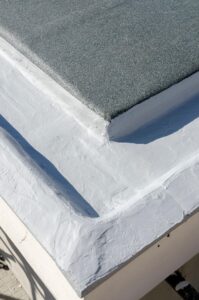
4. Cool-Roof Coating vs Waterproofing vs Thermal Insulation
These approaches serve different purposes.
| Solution | Primary purpose | Important consideration |
|---|---|---|
| Cool-roof coating | Reflect more solar radiation | Look for documented reflective performance |
| Waterproofing membrane or coating | Reduce water penetration | Must suit the roof and leakage conditions |
| Thermal insulation | Slow heat transfer through the roof | Requires suitable design and installation |
| Combined system | Address heat and moisture together | Products and layers must be compatible |
A cool coating mainly reduces the amount of solar energy absorbed at the surface. Thermal insulation slows heat transfer through the roof assembly. Waterproofing protects against water entry.
For some homes, one suitable product may perform more than one function. In other cases, a coordinated system is needed.
5. Which Roof Treatment Should You Choose?
Option 1: Reflective cool-roof coating
Consider this when the main concern is an exposed roof that becomes hot under direct sunlight. Choose a product with credible technical information about reflectance, durability and suitability for the existing surface.
Option 2: Waterproofing coating
Consider a suitable waterproofing system when the primary problem is rainwater penetration. The system should be selected after checking cracks, joints, drainage and the roof substrate.
Option 3: Thermal insulation
Where indoor overheating is a persistent problem, a properly designed insulation layer may be worth evaluating. Its suitability depends on roof construction, available height, moisture control and the proposed installation.
Option 4: A combined waterproofing and heat-reduction system
Where both leakage and heat are concerns, a compatible system designed for both purposes may be appropriate. Confirm the performance claims and installation sequence rather than assuming that every reflective product is waterproof.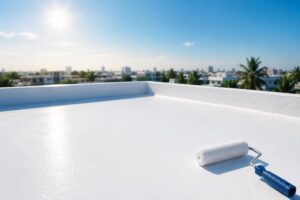
6. How Much Can Cool-Roof Coatings Reduce Heat?
There is no single temperature reduction that applies to every home.
A reflective coating can lower the temperature of a sun-exposed roof surface compared with a less reflective surface under similar conditions. However, the reduction in indoor temperature will depend on the roof slab, insulation, ventilation, ceiling construction, weather and other heat sources.
Ask the supplier for product-specific performance data and, where available, test results under relevant conditions. Be cautious of claims promising a guaranteed indoor temperature reduction for every building.
7. Factors That Affect Cost
The cost of a roof treatment depends on:
-
Total terrace area.
-
Condition of the existing waterproofing.
-
Crack repairs and surface preparation.
-
Whether old coatings must be removed.
-
Number of coats and material consumption.
-
Whether a separate insulation layer is required.
-
Drainage and slope correction.
-
Labour, access, testing and warranty terms.
For budgeting, compare complete quotations rather than the price of the coating alone. Confirm whether the proposed rate includes waterproofing, reflective performance, surface repairs and testing.
8. Common Mistakes to Avoid
-
Assuming every white roof coating is waterproof.
-
Applying a new product over a leaking or poorly prepared surface.
-
Ignoring cracks, outlets and terrace junctions.
-
Selecting a product without checking outdoor UV resistance.
-
Assuming a cool coating provides the same insulation as a dedicated insulation layer.
-
Believing advertised temperature reductions are guaranteed for every room.
-
Ignoring drainage and allowing water to collect on the terrace.
-
Accepting vague claims without technical documentation or clear warranty terms.
9. How Design Within Can Help
At Design Within, roof-related moisture and heat concerns can be considered as part of broader renovation planning. The right approach begins with understanding whether the primary issue is leakage, excessive heat or both.
For homeowners in Pune, coordinating roof treatments with drainage, ceiling design, insulation requirements and interior comfort can help avoid choosing a product that addresses only part of the problem.
If your top-floor rooms are hot in summer or your terrace leaks during the monsoon, assess the roof condition before deciding on a treatment.
Planning a home renovation? Visit Design Within to explore interior-design and renovation support.
At Design Within, we believe a beautiful interior should not only look good when it is completed — it should also perform well for years.
Before we dive into more details about designing your furniture, it might be helpful to estimate how much your interior design project could cost. Understanding your budget can help you make more informed decisions about what features to prioritize. To get a better idea, you can use our ‘interior design budget calculator’ budget calculator and start planning your dream home today.
Frequently Asked Questions
1. Does white paint on a terrace reduce heat?
A suitable light-coloured, reflective roof coating can reduce solar heat absorption compared with a darker surface. Ordinary white paint may not have the durability or performance needed for exposed roofs.
2. Can cool-roof coating stop terrace leakage?
Only if the chosen product is designed and installed as a waterproofing system suitable for the roof condition. Reflectivity alone does not guarantee waterproofing.
3. Is cool-roof coating better than thermal insulation?
They perform different functions. Reflective coatings reduce absorbed solar energy, while insulation slows heat transfer. Depending on the building, they may be alternatives for particular goals or complementary parts of a roof system.
4. Is roof heat-reduction coating suitable for Pune homes?
It may be useful for exposed terraces and top-floor homes that receive strong sunlight. Product selection should consider local weather, roof condition, drainage and the manufacturer’s application requirements.
5. Does cool-roof coating reduce electricity bills?
It may reduce cooling demand in suitable buildings, particularly where air-conditioning is used. The actual savings depend on the building and how cooling systems are operated.
6. Can a cool-roof coating be applied over existing waterproofing?
Sometimes, but only if the existing surface is sound and the products are compatible. Check the manufacturer’s instructions and have the roof inspected before application.
7. How long does a reflective roof coating last?
Durability varies with product quality, surface preparation, UV exposure, weather, water ponding and maintenance. Follow the product-specific warranty and reapplication guidance.
Final Thoughts
Cool-roof coatings can be a useful way to reduce solar heat absorption, but they should not be confused with waterproofing or thermal insulation. If your terrace has both heat and leakage problems, assess each requirement and choose a compatible system that addresses them appropriately.
For Pune homeowners, a well-planned roof treatment can help improve weather protection and potentially indoor comfort—provided the product is suitable for the roof and installed correctly.