
Introduction :
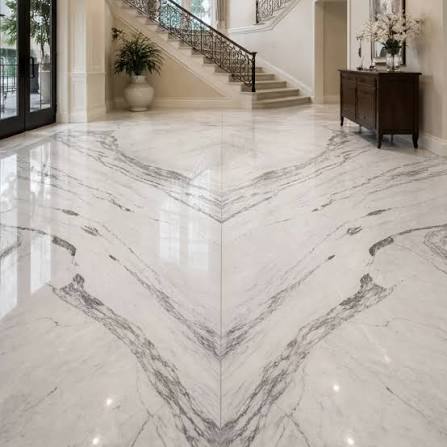
Marble flooring has been associated with luxury and timeless interiors for generations. Its natural veining, depth and variation can give a home a character that is difficult to reproduce with manufactured materials.
But marble is not simply a matter of choosing a beautiful stone.
The type of marble, finish, installation, maintenance and the way it is used in the home all affect the final result.
For Indian homeowners, the choice can range from locally available Indian marble to premium imported varieties. So, is marble the right flooring for your home?
Let’s look at what you need to know before making the decision.
Why Choose Marble Flooring?
Marble is a natural stone, and every slab has its own pattern and variation. This makes a marble floor feel more individual than a mass-produced flooring material.
It can work particularly well in interiors where the flooring itself is intended to become an important design element.
Key advantages of marble include:
- Premium and timeless appearance
- Natural veining and colour variation
- Wide range of colours and patterns
- Can be polished to a high sheen
- Long service life when properly maintained
- Can add a sense of spaciousness to large interiors
However, its beauty comes with maintenance requirements that should not be ignored.
Types of Marble Used in Indian Homes
1. Indian Marble
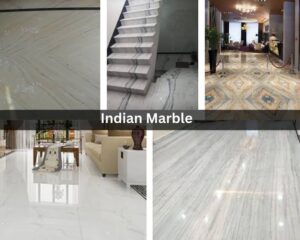
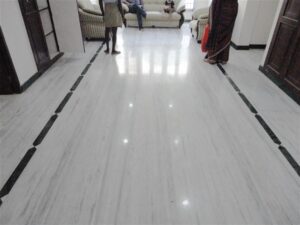
Indian marble is available in a wide range of colours, patterns and qualities.
Popular varieties include white, beige, green and other naturally patterned stones.
Advantages:
- Wide availability
- Variety of colours
- Different price points
- Suitable for many residential applications
Indian marble can be an excellent choice when you want the character of natural stone without necessarily choosing an imported variety.
2. Italian Marble
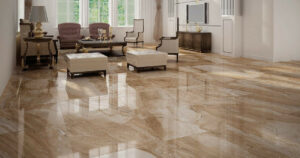
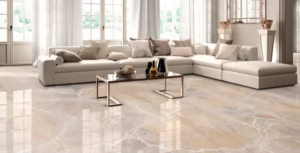
Italian marble is often selected for high-end residential interiors because of its distinctive veining and refined appearance.
Varieties such as Carrara, Statuario and Calacatta are particularly recognised for their white backgrounds and dramatic veining.
Advantages:
- Premium appearance
- Distinctive patterns
- Excellent for luxury interiors
Limitations:
- Generally higher cost
- Requires careful handling and installation
- Maintenance is important
The term “Italian marble” should not automatically be treated as a guarantee of superior quality. The actual variety, grade, slab quality and source matter.
3. Imported Marble
Apart from Italy, marble is imported from several countries and can offer a wide range of colours and patterns.
The right selection should depend on the actual stone rather than simply its country of origin.
Popular Marble Finishes
The finish changes both the appearance and practical characteristics of marble.
Polished Marble
A highly reflective finish that highlights the colour and veining of the stone.
Best for: Formal living rooms, dining areas and luxury interiors.
Honed Marble
A softer, less reflective finish with a more understated appearance.
Best for: Contemporary, minimalist and relaxed interiors.
Leathered / Textured Finishes
These provide more surface texture and a different tactile character.
Best for: Selected feature areas and interiors where a less conventional finish is desired.
For flooring, the finish should always be selected according to the room, maintenance requirements and safety considerations.
Where Can You Use Marble Flooring?
Marble can be used in many areas, but it is particularly effective where the flooring has a strong visual presence.
Living Room
One of the most popular applications. Large marble slabs can create a luxurious and visually continuous floor.
Entrance & Foyer
Marble can immediately establish the character of the home.
Dining Area
It can complement both contemporary and traditional interiors.
Bedrooms
Possible, although some homeowners prefer warmer-feeling materials such as wood or SPC.
Staircases
Marble can also be used for stair treads and risers, subject to suitable detailing and finish selection.
For bathrooms and other wet areas, marble requires additional consideration because natural stone can require more maintenance and appropriate surface treatment.
Marble Flooring Cost in India
Marble prices vary considerably.
The final cost depends on:
- Type and variety
- Origin
- Grade and quality
- Slab size
- Thickness
- Veining and appearance
- Availability
- Transportation
- Installation
- Polishing
- Sealing and finishing
As a broad market indication, Indian marble can range from approximately ₹100 to ₹400+ per sq. ft., while premium imported varieties can go considerably higher.
These are only indicative material ranges. The final installed cost can be substantially different after adding transportation, laying, wastage, polishing and other work.
Therefore, don’t compare marble with tile simply by looking at the material price per square foot.
Advantages of Marble Flooring
Natural Beauty
No two slabs are exactly identical. The natural variation is one of marble’s biggest attractions.
Premium Appearance
A well-selected marble floor can become a major feature of an interior.
Long-Term Appeal
Unlike short-lived design trends, natural stone can remain visually relevant for decades.
Can Be Refinished
Marble can generally be polished again when its surface becomes dull or scratched, provided the stone and installation allow it.
Disadvantages of Marble Flooring
Requires Maintenance
Marble is not a completely maintenance-free flooring material.
Regular cleaning and periodic professional care may be required.
Can Stain
Certain substances can penetrate or mark the stone, particularly if it is not properly sealed.
Can Scratch
Marble is softer than some other natural stones and can develop scratches with use.
Natural Variation
This is both an advantage and a challenge. Slabs may vary considerably in colour and veining.
Higher Installation Requirements
Proper levelling, laying, joint treatment, polishing and finishing are important to achieve a good result.
Marble vs Vitrified Tiles
One of the most common decisions homeowners face is whether to choose natural marble or vitrified tiles.
| Factor | Marble | Vitrified Tiles |
|---|---|---|
| Appearance | Natural & unique | Consistent & versatile |
| Maintenance | Higher | Generally lower |
| Design | Natural variation | Very wide range |
| Water resistance | Requires care | Generally very good |
| Repair | Can be polished | Damaged tile usually replaced |
| Uniformity | Lower | Higher |
| Installation | More specialised | Generally simpler |
| Luxury appeal | Very high | Can be very high |
Neither is automatically better.
Choose marble when natural character and luxury are priorities.
Choose vitrified tiles when predictable appearance, lower maintenance and design flexibility are more important.
How to Maintain Marble Flooring
Good maintenance can significantly extend the appearance and life of marble flooring.
Clean Regularly
Use a soft mop and a cleaner appropriate for natural stone.
Avoid Harsh Chemicals
Acidic or abrasive cleaning products can damage the surface.
Wipe Spills Promptly
Don’t allow potentially staining substances to remain on the surface for long periods.
Consider Sealing
Depending on the marble and application, sealing can provide additional protection.
Polish When Required
Professional polishing can restore the appearance of marble when the surface becomes dull.
Common Mistakes When Choosing Marble
Choosing only from photographs
Natural stone should ideally be viewed as full slabs rather than relying only on small samples.
Ignoring slab variation
The actual slabs can look different from the showroom sample.
Buying purely based on price
Very low pricing can indicate differences in quality, grade, thickness or selection.
Not planning the layout
Vein direction and slab placement can dramatically affect the finished appearance.
Ignoring maintenance
If you want completely maintenance-free flooring, marble may not be the most practical choice.
Is Marble Flooring Right for Your Home?
Marble can be an excellent choice if you want:
- A luxurious natural appearance
- Unique veining
- A timeless material
- A statement floor
- The possibility of future polishing and restoration
It may not be the best choice if your priorities are:
- Very low maintenance
- Completely uniform appearance
- Minimal installation complexity
- The lowest possible flooring cost
The right decision ultimately depends on your priorities.
Final Thoughts
Marble remains one of the most elegant flooring materials for Indian homes, but it should be selected with an understanding of both its beauty and its responsibilities.
A beautiful marble floor is not created simply by choosing an expensive variety. Slab selection, layout, installation, polishing, maintenance and the overall interior design all matter.
For a luxury living room, entrance or large open-plan home, marble can create a remarkable sense of character and sophistication.
For homeowners who prioritise low maintenance and predictable performance, high-quality vitrified tiles may be the more practical option.
At Design Within, flooring selection is considered alongside the complete interior scheme—so the marble, furniture, walls, lighting and other materials work together as one design.
At Design Within, we believe a beautiful interior should not only look good when it is completed — it should also perform well for years.
Before we dive into more details about designing your furniture, it might be helpful to estimate how much your interior design project could cost. Understanding your budget can help you make more informed decisions about what features to prioritize. To get a better idea, you can use our ‘interior design budget calculator’ budget calculator and start planning your dream home today.
The best marble is not necessarily the most expensive marble. It is the marble that is right for the space.
Frequently Asked Questions
Is marble flooring good for Indian homes?
Yes. Marble can work extremely well in Indian homes, particularly in living rooms, entrances and luxury interiors. However, it requires more care than many manufactured flooring options.
Which is better: Indian marble or Italian marble?
Neither is automatically better. The actual variety, grade, quality, appearance and application are more important than the country of origin.
Is marble flooring expensive?
It can be. Prices vary widely depending on the type, quality, origin and availability. Installation, polishing, transportation and wastage also affect the total cost.
Does marble flooring require maintenance?
Yes. Regular cleaning, appropriate care and occasional professional maintenance may be required.
Can marble flooring be polished again?
In many cases, yes. Professional polishing can restore the appearance of a marble surface that has become dull or developed minor surface wear.
Is marble better than vitrified tiles?
Not universally. Marble offers natural variation and luxury, while vitrified tiles generally offer easier maintenance and greater design consistency. The choice depends on your priorities.
Is white marble difficult to maintain?
White marble can show stains and dirt more visibly, so it requires careful cleaning and maintenance. Proper selection, sealing and regular care are important.