Introduction :
Vitrified Tiles: Types, Sizes, Finishes, Pros, Cons & Cost in India
Vitrified tiles have become one of the most popular flooring choices for 2BHK, 3BHK & 4BHK Indian homes. They are durable, relatively easy to maintain and available in a wide range of colours, patterns, finishes and sizes.
From a compact 2BHK apartment to a large luxury home, vitrified tiles can be used to create anything from a simple practical floor to a sophisticated marble or stone-look interior.
But vitrified tiles are not all the same.
GVT, PGVT, double-charge and full-body vitrified tiles have different characteristics and are suited to different applications.
This guide explains the main types of vitrified tiles, their sizes and finishes, advantages, limitations and indicative costs in India.
What Are Vitrified Tiles?
Vitrified tiles are manufactured using materials such as clay, silica, quartz and feldspar and fired at high temperatures. The process creates a dense tile with very low water absorption and good durability.
Their biggest advantage is versatility. They can imitate the appearance of marble, natural stone, concrete and even wood while generally requiring less maintenance than many natural materials.
Types of Vitrified Tiles
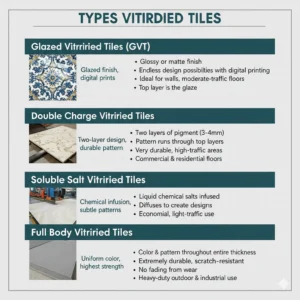
1. GVT – Glazed Vitrified Tiles
GVT stands for Glazed Vitrified Tiles.
A decorative glaze is applied to the tile surface, allowing manufacturers to create a wide range of colours, patterns and textures.
GVT is particularly popular for contemporary residential interiors because it can reproduce marble, stone and other decorative surfaces.
Best for: Living rooms, bedrooms, dining areas, kitchens and feature applications.
Why choose it: Excellent design variety with good everyday performance.
2. PGVT – Polished Glazed Vitrified Tiles
PGVT stands for Polished Glazed Vitrified Tiles.
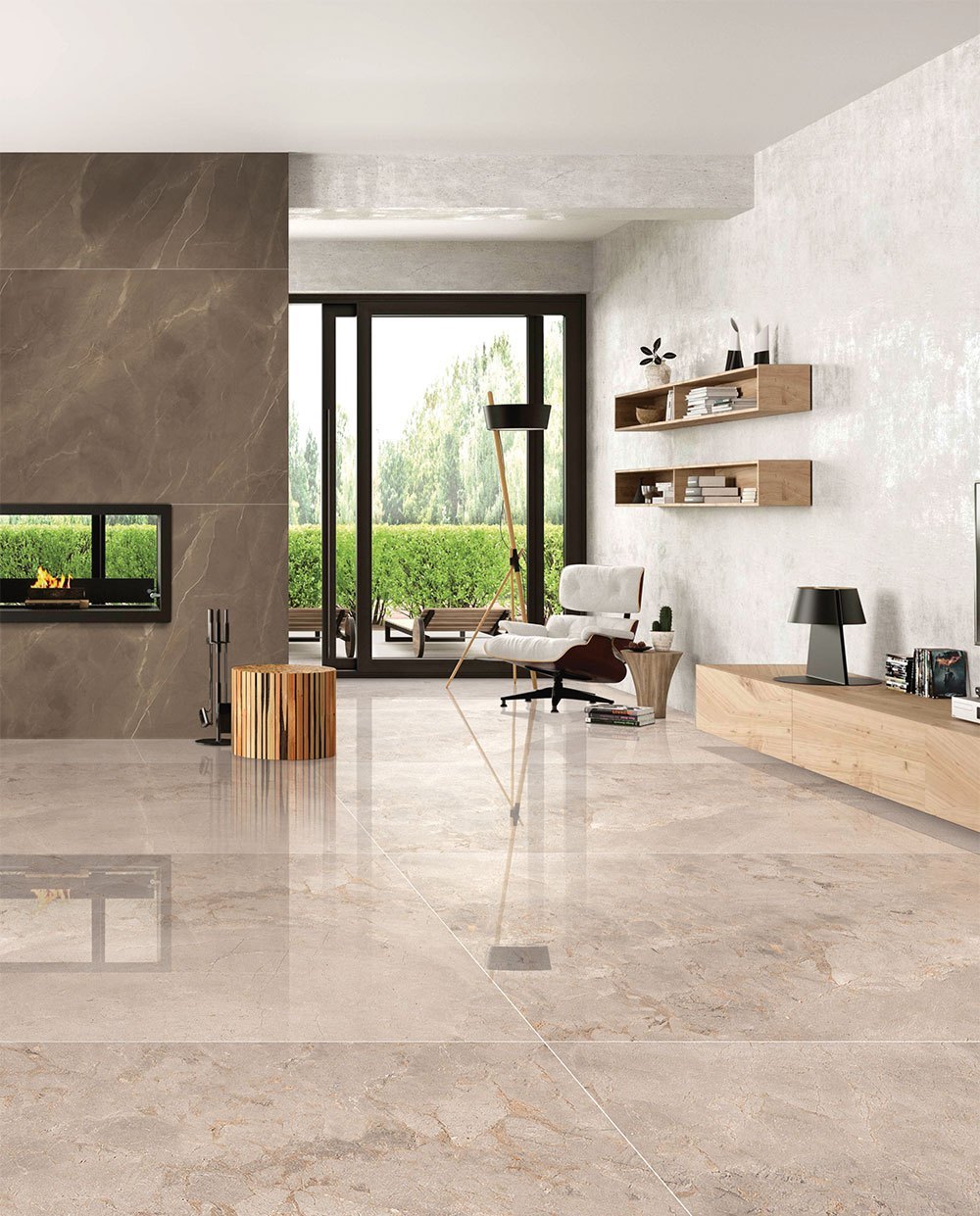
These tiles have a highly polished surface that creates a reflective, luxurious appearance.
They are commonly used for marble-look flooring and can make a room appear brighter and more visually spacious.
However, highly polished surfaces can become slippery when wet, so they should be selected carefully for areas exposed to water.
Best for: Dry living rooms, dining areas, bedrooms and premium interiors.
Avoid for: Wet floor applications unless the specific product is rated and designed for that use.
3. Double-Charge Vitrified Tiles
Double-charge vitrified tiles are manufactured with an additional layer of pigments pressed into the tile body.
This gives the design greater depth than a simple surface print and makes them suitable for areas where durability and resistance to wear are important.
Best for: Living rooms, passages, lobbies and other high-traffic dry areas.
Why choose it: Good durability with relatively straightforward designs.
4. Soluble Salt Flooring Tiles
Soluble Salt tiles are vitrified tiles in which the design is created using soluble salt-based printing technology. The pigments penetrate into the surface of the tile, creating subtle patterns and textures.
They are generally available in marble-inspired and natural stone-inspired designs and are known for their smooth finish and economical pricing. However, compared with modern digital-print vitrified tiles, they offer a more limited range of designs and patterns.
Best for: Bedrooms, living rooms, dining areas and budget-conscious residential interiors.
Why choose it: An economical flooring option with a smooth finish and simple decorative patterns.
Consider before choosing: Design variety and surface detailing are more limited compared with GVT and PGVT tiles.
5. Full-Body Vitrified Tiles
In full-body vitrified tiles, the colour and material run through the body of the tile rather than being limited to the surface.
This makes them particularly useful in areas where the edges may be visible or where heavy wear is expected.
Best for: High-traffic areas, commercial spaces, staircases and demanding applications.
Why choose it: The appearance remains more consistent even if the surface experiences wear or minor damage.
Popular Vitrified Tile Sizes
Tile size can significantly influence the appearance of a room.
Common sizes widely available in the Indian market include:
-
600 × 600 mm (2 × 2 ft)
-
600 × 1200 mm (2 × 4 ft)
-
800 × 800 mm
-
800 × 1600 mm
- 1000 x 1000mm
- 1200 x 1800mm
- 800 x 2400mm
-
Larger-format slabs and panels
-
Wood-look plank formats such as 200 × 1200 mm
The 600 × 600 mm format remains a practical choice for many residential spaces, while larger formats can create fewer grout lines and a more continuous appearance.
Which size should you choose?
Small and medium rooms: 600 × 600 mm can work well.
Large living rooms: 600 × 1200 mm or larger formats can create a more spacious visual effect.
Wood-look flooring: Plank-shaped tiles can provide a more convincing timber appearance.
The correct size also depends on the room proportions, floor levels, installation skill and availability of the selected product.
Vitrified Tile Finishes
The finish affects both appearance and performance.
Glossy / Polished
Creates a reflective, luxurious surface.
Best for: Dry interior areas.
Matte
Provides a softer, contemporary appearance with less reflection.
Best for: Living rooms, bedrooms and practical everyday flooring.
Sugar Finish
Provides a textured appearance with a subtle combination of shine and texture.
Carving / Textured Finish
Adds tactile depth and can be useful when a more natural stone-like appearance is desired.
GHR / High-Resistance Textured Finishes
Textured finishes can provide improved grip and are useful for applications where slip resistance is important.
Important: Never select a floor finish based only on appearance. Wet areas need products specifically suitable for those conditions.
Advantages of Vitrified Tiles
1. Low Maintenance
Routine cleaning is relatively simple compared with many natural stones.
2. Good Durability
Quality vitrified tiles can withstand regular residential use.
3. Wide Design Selection
They are available in marble, stone, concrete, wood and many other visual styles.
4. Low Water Absorption
Their dense construction makes them suitable for many areas where moisture resistance is important.
5. Large-Format Options
Larger tiles can reduce the number of grout joints and create a more seamless appearance.
Disadvantages of Vitrified Tiles
Vitrified tiles are practical, but they are not perfect.
Hard Surface
They are hard underfoot and may not provide the same warmth or softness as wood-based flooring.
Can Be Slippery
Highly polished surfaces can become slippery when wet.
Repairs Can Be Visible
If a tile breaks or becomes damaged, replacing the individual tile may result in a shade or batch difference.
Installation Matters
Even a high-quality tile can perform poorly if the base preparation, adhesive application or laying is inadequate.
This is particularly important for large-format tiles.
Vitrified Tile Cost in India
The price varies significantly depending on the type, size, finish, brand and design.
As an indicative 2026 market range, vitrified tiles can start around ₹25–₹40 per sq. ft. for basic products and extend beyond ₹200 per sq. ft. for premium large-format or specialised products. Current market guides show similarly broad ranges depending on category and specification.
The final flooring cost should also account for:
-
Tile wastage
-
Adhesive
-
Grout
-
Labour
-
Skirting
-
Surface preparation
-
Transportation
-
GST, where applicable
Therefore, tile price per sq. ft. should not be treated as the final flooring cost.
Which Vitrified Tile Is Best for Your Home?
| Requirement | Vitrified Tile to Consider |
|---|---|
| Everyday residential flooring | GVT / quality vitrified |
| Premium marble-look floor | PGVT / suitable polished GVT |
| High-traffic dry areas | Double-charge / full-body |
| Contemporary matte interior | Matte GVT |
| Wood-look flooring | Wood-finish GVT |
| Large luxury living room | Large-format GVT/PGVT |
| Wet areas | Suitable anti-skid floor tile rather than simply choosing a polished finish |
The exact product should always be selected according to the manufacturer’s technical specifications and the intended application.
Common Mistakes When Buying Vitrified Tiles
Choosing only from a showroom sample
The tile can look completely different under your home’s lighting and alongside your furniture.
Ignoring the batch
Tiles from different batches can have variations in shade and calibre.
Buying without checking the application
A beautiful polished tile is not automatically appropriate for every floor.
Ignoring wastage
Complex layouts, diagonal patterns and large-format installations can require additional material.
Focusing only on tile price
A cheaper tile may not necessarily result in a cheaper finished floor once installation and long-term requirements are considered.
Final Thoughts
Vitrified tiles offer one of the most versatile flooring solutions for Indian homes.
GVT provides extensive design flexibility, PGVT creates a polished premium appearance, double-charge tiles offer good wear resistance for suitable areas, and full-body vitrified tiles are useful where durability and consistent body colour are important.
But the “best” vitrified tile is not necessarily the most expensive one.
The right choice depends on where it will be used, how the space will be used, the desired appearance, maintenance expectations and overall project budget.
At Design Within, flooring selection is considered together with the complete interior palette—furniture, walls, lighting, cabinetry and materials—so that the floor becomes part of the design rather than simply a surface beneath it.
At Design Within, we believe a beautiful interior should not only look good when it is completed — it should also perform well for years.
Before we dive into more details about designing your furniture, it might be helpful to estimate how much your interior design project could cost. Understanding your budget can help you make more informed decisions about what features to prioritize. To get a better idea, you can use our ‘interior design budget calculator’ budget calculator and start planning your dream home today.
Frequently Asked Questions
Are vitrified tiles good for Indian homes?
Yes. Their durability, low water absorption, design variety and relatively easy maintenance make them suitable for many residential applications.
Which is better, GVT or PGVT?
Neither is universally better. GVT offers a wider range of finishes and can be more practical for certain applications, while PGVT provides a highly polished appearance. The choice depends on the room and intended use.
What is the most common vitrified tile size?
600 × 600 mm (2 × 2 ft) is a widely used residential format, while 600 × 1200 mm and larger formats are also popular for contemporary interiors.
Are polished vitrified tiles suitable for bathrooms?
A highly polished surface should not automatically be assumed to be suitable for bathroom floors. For wet areas, select a product specifically designed and rated for the required slip-resistance conditions.
How much do vitrified tiles cost in India?
Prices vary widely by type, size, finish, brand and location. A broad indicative range is approximately ₹25 to ₹200+ per sq. ft., with premium large-format products potentially costing more.
Are large-format vitrified tiles better?
Not necessarily. They can create fewer grout lines and a more seamless appearance, but they require accurate floor preparation and skilled installation. The room size, layout and installation conditions should be considered before selecting them.