Introduction:
A false ceiling can completely transform a room, but poor planning or execution can lead to unnecessary costs, maintenance problems and a disappointing final result.
Whether you are installing a ceiling in a living room, bedroom or entire home, avoiding a few common mistakes can make a significant difference.
Here are 15 false ceiling mistakes you should avoid before starting your project.
1. Not Checking the Existing Ceiling Height
A beautiful ceiling design may not be suitable for a room with limited height.
Always check the existing slab-to-floor height before finalising the design.
2. Designing Without Considering Furniture
The ceiling should relate to the furniture layout.
Lighting and ceiling features should align with elements such as the sofa, bed, dining table and TV unit.
3. Using Too Many Layers
More levels do not automatically mean a more luxurious ceiling.
Excessive drops can make a room feel smaller and visually heavy.
4. Planning Lighting Too Late
Electrical and lighting requirements should be finalised before the ceiling is closed.
Changing wiring or light positions later can result in unnecessary rework.
5. Using Too Many Downlights
A ceiling filled with downlights can look cluttered and may create excessive brightness.
Use a combination of ambient, functional and accent lighting where appropriate.
6. Ignoring Cove Lighting Requirements
Cove lighting requires sufficient space for the LED strip, wiring and detailing.
It should be incorporated into the ceiling design from the beginning.
7. Choosing Materials Only by Price
The cheapest quotation is not always the best value.
Compare the material specification, framework, finishing, labour and inclusions rather than looking only at the per-square-foot rate.
8. Using the Same Material Everywhere
Different rooms may have different requirements.
A home could use:
Gypsum → main living areas
Plywood + veneer → feature areas
Plywood + laminate → selected decorative sections
PVC → suitable utility or moisture-prone areas
The material should suit the space.
9. Forgetting Service Access
Electrical connections, drivers and other services may require future maintenance.
Provide suitable access wherever necessary instead of permanently sealing everything above the ceiling.
10. Poor Framework Installation
A false ceiling is only as good as its supporting framework.
Incorrect spacing, poor anchoring or inadequate levelling can result in uneven surfaces and other problems.
11. Poor Joint Finishing
Visible joints, screw marks and uneven finishing can become obvious after painting.
Proper joint treatment and surface preparation are essential for a seamless appearance.
12. Ignoring AC, Fan & Other Services
Fan positions, AC units, ducts, electrical wiring and other services should be coordinated before installation.
Otherwise, modifications may become difficult once the ceiling is complete.
13. Mixing Too Many Finishes
Gypsum, veneer, laminate, wallpaper, profiles and decorative elements can work together—but only when there is a clear design concept.
Too many unrelated finishes can make the ceiling look chaotic.
14. Not Checking What the Quotation Includes
Always clarify whether the quotation includes:
- Framework
- Gypsum/POP/PVC
- Finishing
- Painting
- Electrical wiring
- LED strips
- Drivers
- Profile lights
- Decorative fixtures
- Plywood
- Veneer or laminate
Two quotations with the same per-square-foot rate may have completely different scopes.
15. Starting Work Before Finalising the Design
This is perhaps the biggest mistake.
The ceiling design should be finalised along with the furniture, lighting, electrical and service planning before installation begins.
Making major design changes during execution can increase both cost and timeline.
How to Avoid False Ceiling Problems
Good planning can prevent most common problems.
Before starting work, make sure you have:
Final design
↓
Confirmed ceiling height
↓
Lighting & electrical layout
↓
Material specification
↓
Detailed quotation
↓
Installation plan
This simple sequence can significantly reduce rework.
What About Plywood, Veneer, Laminate & Wallpaper?
Modern false ceilings can use much more than gypsum or POP.
Plywood can be finished with natural veneer or laminate, while gypsum can be combined with plywood or finished with wallpaper.
These materials can create excellent feature ceilings, but their installation and finishing requirements should be decided during the design stage.
Do not add them halfway through the project without considering their effect on the ceiling structure, detailing and budget.
How Design Within Helps Avoid These Mistakes
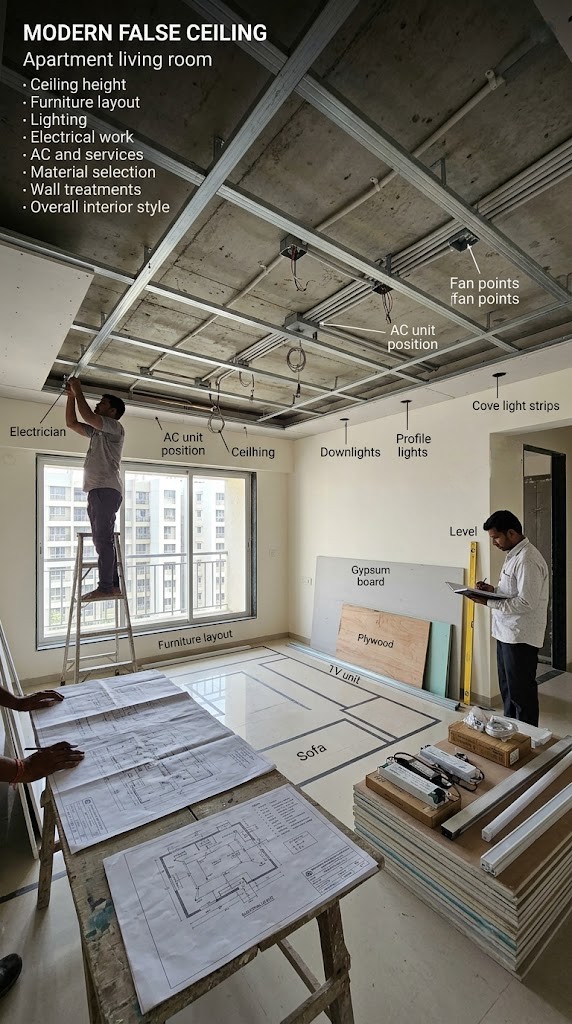
At Design Within, the false ceiling is coordinated with the complete interior design.
The planning considers:
- Ceiling height
- Furniture layout
- Lighting
- Electrical work
- AC and services
- Material selection
- Wall treatments
- Overall interior style
This helps ensure that the ceiling is not designed in isolation and that important requirements are considered before execution begins.
Final Thoughts
A successful false ceiling is not simply about choosing a beautiful design.
It requires proper planning, suitable materials, accurate execution and coordinated lighting.
The biggest mistakes usually happen when homeowners:
design first and plan later.
Before starting your ceiling work, finalise the design, height, lighting, materials and complete scope of work.
A little planning at the beginning can prevent significant cost, rework and maintenance issues later.
If you are planning a false ceiling as part of your home interior in Pune, Design Within can help coordinate the ceiling design, materials, lighting and execution as part of the complete interior.
At Design Within, we believe a beautiful interior should not only look good when it is completed — it should also perform well for years.
Before we dive into more details about designing your furniture, it might be helpful to estimate how much your interior design project could cost. Understanding your budget can help you make more informed decisions about what features to prioritize. To get a better idea, you can use our ‘interior design budget calculator’ budget calculator and start planning your dream home today.
Frequently Asked Questions
What is the most common false ceiling mistake?
One of the most common mistakes is starting installation before finalising the ceiling design, lighting and electrical requirements.
How can I avoid false ceiling problems?
Check the ceiling height, use appropriate materials, plan lighting and services in advance, and ensure the framework and finishing are executed properly.
Should electrical work be completed before the false ceiling?
Electrical wiring and service requirements should be planned and positioned before the ceiling is closed.
Can too many ceiling lights be a problem?
Yes. Excessive downlights can make the ceiling look cluttered and may create unnecessarily bright lighting.
Is the cheapest false ceiling quotation the best?
Not necessarily. Always compare the complete specification, materials, finishing, labour and inclusions rather than only the quoted rate per square foot.
Can different materials be combined in a false ceiling?
Yes. Gypsum can be combined with plywood, veneer, laminate, wallpaper and other finishes to create customised feature ceilings.