Introduction : Types of Flooring for Indian Homes: A Complete Guide
Choosing the right flooring for 2BHK, 3BHK or 4BHK is one of the most important decisions when designing or renovating a home. Flooring covers a large part of the visual area of a room, but its importance goes beyond appearance.
The right flooring should suit your lifestyle, budget, maintenance expectations, room usage and the overall design of your home.
In Indian homes, homeowners can choose from several options including vitrified tiles, marble, granite, wooden flooring, laminate, SPC and vinyl flooring. Each material has its own advantages and limitations.
This guide explains the most common flooring options for Indian homes and where each one works best.
What Should You Consider Before Choosing Flooring?
Before selecting a flooring material, consider more than just its colour or appearance.
1. Durability
Flooring is expected to last for many years. Areas such as living rooms, passages and kitchens generally experience more traffic than bedrooms.
2. Maintenance
Some flooring materials require regular polishing, sealing or special cleaning, while others are relatively easy to maintain.
3. Water Resistance
Bathrooms, kitchens, balconies and utility areas need flooring that can handle moisture and water exposure.
4. Comfort
Bedrooms and living spaces may benefit from flooring that feels warmer and more comfortable underfoot than hard stone surfaces.
5. Budget
The actual cost includes more than the material itself. Installation, adhesive, skirting, wastage, surface preparation and finishing can also affect the final cost.
6. Design
Flooring should complement the walls, furniture, cabinetry and overall interior style rather than being selected independently.
Popular Types of Flooring for Indian Homes
1. Vitrified Tile Flooring
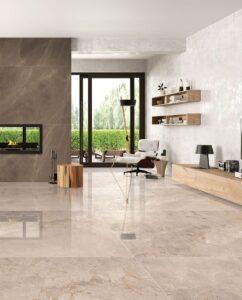
Vitrified tiles are among the most commonly used flooring options in Indian homes.
They are available in a wide range of colours, patterns, textures, sizes and finishes. Modern options can replicate the appearance of marble, stone and wood.
Advantages
-
Durable and hard-wearing
-
Low maintenance
-
Available in many designs
-
Suitable for most areas of the home
-
Available in large formats
Limitations
-
Can feel hard and cold underfoot
-
Damaged tiles may need replacement
-
Very glossy surfaces can show dirt and scratches more easily
Best suited for: Living rooms, dining areas, kitchens, passages and general residential flooring.
2. Marble Flooring
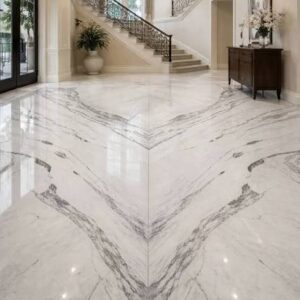
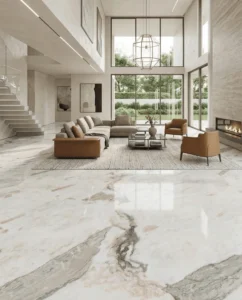
Marble remains a popular choice for homeowners looking for a natural and luxurious appearance.
Every marble slab has natural variations, which gives the floor a distinctive character. Indian and imported marbles are available in different colours and patterns.
Advantages
-
Natural and premium appearance
-
Unique patterns and veining
-
Can be polished to a high finish
-
Long-lasting when properly maintained
Limitations
-
Can stain if not properly maintained
-
Requires periodic polishing and care
-
Some varieties are relatively expensive
-
Natural variation makes exact shade matching difficult
Best suited for: Living rooms, entrance areas, dining spaces and luxury residences.
3. Granite Flooring
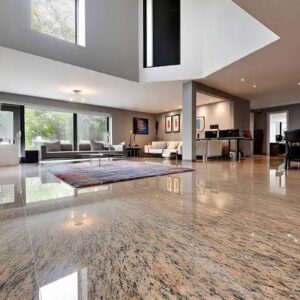
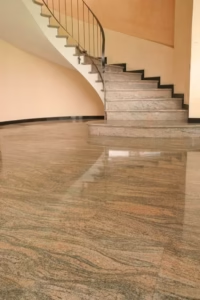
Granite is a hard natural stone known for its durability.
It is particularly useful where resistance to heavy use is important. It is available in several colours and patterns.
Advantages
-
Very durable
-
Resistant to heavy wear
-
Relatively easy to maintain
-
Suitable for high-traffic areas
Limitations
-
Less uniform than manufactured tiles
-
Some varieties can look visually heavy
-
Limited design flexibility compared with tiles
Best suited for: High-traffic areas, entrances, staircases and selected residential applications.
4. Wooden Flooring
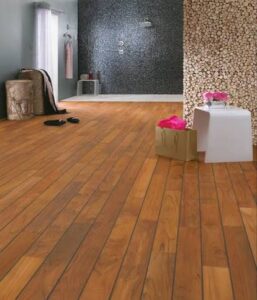
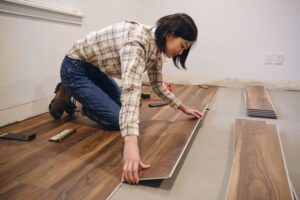
Wooden flooring brings warmth and a natural character to interiors.
Depending on the product, homeowners can choose from solid wood, engineered wood and other wood-based flooring systems.
Advantages
-
Warm and comfortable appearance
-
Adds natural character
-
Works particularly well with contemporary and minimalist interiors
Limitations
-
Requires more care than ceramic or vitrified tiles
-
Moisture can be a concern depending on the product
-
Generally costs more than basic tile flooring
Best suited for: Bedrooms, studies and premium residential interiors.
5. Laminate Flooring
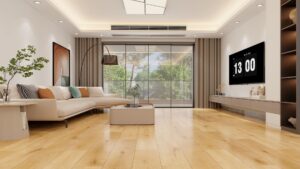
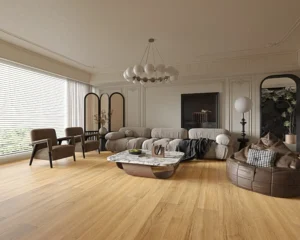
Laminate flooring is designed to provide the appearance of wood or other materials at a generally lower cost than natural wood.
It is available in many colours and patterns and can be relatively quick to install.
Advantages
-
Wood-like appearance
-
Wide design selection
-
Relatively easy installation
-
Generally more affordable than many natural wood options
Limitations
-
Quality varies significantly between products
-
Water exposure can damage some products
-
Cannot be refinished like solid wood
Best suited for: Bedrooms, studies and selected dry areas.
6. SPC Flooring
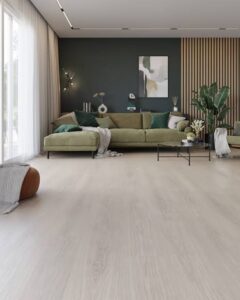
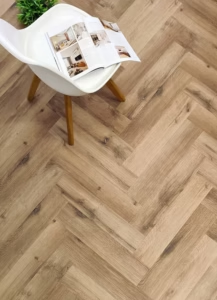
SPC, or Stone Plastic Composite flooring, has become increasingly popular for modern residential interiors.
It usually consists of a rigid core with a decorative surface designed to replicate materials such as wood or stone.
Advantages
-
Water-resistant characteristics
-
Wood and stone-look designs
-
Relatively quick installation
-
Comfortable compared with some hard flooring surfaces
-
Useful for renovation projects
Limitations
-
Quality varies between manufacturers
-
Subfloor preparation is important
-
Not every product is suitable for every application
Best suited for: Bedrooms, living spaces, offices and renovation projects where a wood-look floor is desired.
7. Vinyl Flooring
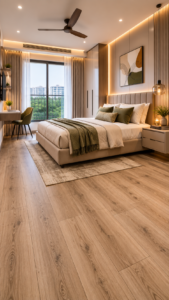
Vinyl flooring is another practical option available in sheet, tile and plank formats.
Modern vinyl products can reproduce wood, stone and other patterns.
Advantages
-
Easy to clean
-
Comfortable underfoot
-
Available in many designs
-
Suitable for selected moisture-prone applications depending on the product
Limitations
-
Quality varies considerably
-
Can be damaged by sharp objects or heavy impact
-
Premium products can be significantly more expensive than basic vinyl
Best suited for: Bedrooms, children’s rooms, offices and renovation applications.
Which Flooring Is Best for Different Rooms?
There is no single flooring material that is ideal for every room.
| Area | Flooring Options to Consider |
|---|---|
| Living Room | Vitrified tiles, marble, large-format tiles |
| Bedroom | Wooden flooring, SPC, laminate, vitrified tiles |
| Kitchen | Vitrified tiles, granite |
| Bathroom | Anti-skid tiles |
| Passage | Vitrified tiles, marble, granite |
| Balcony | Outdoor/anti-skid tiles |
| Study | Wood, laminate, SPC |
| Entrance | Marble, granite, vitrified tiles |
The final choice should depend on the specific project, usage and maintenance requirements.
Flooring Comparison at a Glance
| Flooring | Durability | Maintenance | Appearance | Typical Position |
|---|---|---|---|---|
| Vitrified Tile | High | Low | Very versatile | Practical |
| Marble | High | Medium–High | Premium | Luxury |
| Granite | Very High | Low–Medium | Natural | Heavy-use |
| Wood | Medium–High* | Medium | Warm & premium | Premium |
| Laminate | Medium | Low | Wood-look | Budget–Mid |
| SPC | High* | Low | Wood/stone-look | Mid–Premium |
| Vinyl | Medium | Low | Versatile | Budget–Mid |
*Performance depends heavily on product quality, installation and application.
So, Which Flooring Should You Choose?
The answer depends on what matters most to you.
If you want low maintenance:
Vitrified tiles are a practical choice.
If you want a luxurious natural material:
Marble can be an excellent option.
If durability is your biggest priority:
Granite is worth considering for suitable areas.
If you want warmth and a wood-like appearance:
Wood, laminate or SPC may be considered depending on the room and budget.
If you are renovating and want faster installation:
SPC, laminate or vinyl can be worth evaluating.
The mistake is choosing flooring based only on what looks good in a showroom.
A flooring material should be evaluated in the context of how the room will be used, how much maintenance you are willing to undertake, your budget and the overall interior design.
Final Thoughts
Flooring is not simply a finishing material. It influences the appearance, comfort, maintenance and long-term usability of your home.
For Indian homes, vitrified tiles, marble, granite, wooden flooring, laminate, SPC and vinyl each have a place. The best choice is the one that balances aesthetics, performance, maintenance and budget for your particular home.
At Design Within, flooring selection is considered as part of the overall interior design rather than as an isolated material decision. The flooring needs to work with the furniture, walls, lighting, cabinetry and lifestyle of the family.
A well-designed home is not about choosing the most expensive flooring. It is about choosing the right flooring for the right space.
At Design Within, we believe a beautiful interior should not only look good when it is completed — it should also perform well for years.
Before we dive into more details about designing your furniture, it might be helpful to estimate how much your interior design project could cost. Understanding your budget can help you make more informed decisions about what features to prioritize. To get a better idea, you can use our ‘interior design budget calculator’ budget calculator and start planning your dream home today.
Frequently Asked Questions
Which flooring is most popular for Indian homes?
Vitrified tiles remain one of the most widely used options because they offer durability, design flexibility and relatively easy maintenance.
Which flooring is easiest to maintain?
Vitrified tiles are generally among the easier residential flooring options to maintain.
Is marble better than vitrified tile?
Not universally. Marble offers natural beauty and variation, while vitrified tiles generally offer more predictable performance and easier maintenance. The right choice depends on the project.
Is SPC flooring suitable for Indian homes?
SPC can be suitable for many Indian residential applications, particularly bedrooms and other dry areas, provided the product quality, installation and subfloor are appropriate.
Which flooring is best for bedrooms?
Wood, SPC, laminate and vitrified tiles can all work. The choice depends on the desired appearance, comfort, maintenance and budget.
Should flooring be selected before furniture and interiors?
Ideally, flooring should be considered early in the design process because its colour, pattern, size and finish influence the overall material palette of the home.