Introduction :
Best Flooring for Indian Homes: Which Flooring Should You Choose?
Choosing the best flooring for your home is not simply about selecting the most expensive or visually attractive option.
The right flooring should match your lifestyle, room usage, maintenance expectations, budget, climate and overall interior design.
Indian homes use a wide range of flooring materials, from vitrified tiles and natural marble to wooden flooring, laminate and newer options such as SPC. Each has its own advantages and limitations.
So, which flooring is actually best for your home?
The answer depends on what you need from it.
What Makes a Flooring Material “Best”?
Before comparing different options, consider these factors:
1. Durability
Living rooms, passages and kitchens experience more foot traffic than bedrooms. High-use areas need flooring that can withstand regular wear.
2. Maintenance
A beautiful floor that requires constant care may not be practical for every family. Consider how easily the surface can be cleaned and maintained.
3. Water & Moisture Resistance
Bathrooms, kitchens, balconies and utility areas require flooring designed to handle moisture and water exposure.
4. Comfort
Hard surfaces such as stone and tiles are durable, while wood-look and resilient flooring can provide a warmer and softer feel.
5. Budget
Don’t consider only the price per square foot. Installation, wastage, skirting, adhesives, surface preparation and finishing can affect the final cost.
6. Design
Flooring occupies a large visual area. Its colour, pattern, size and finish should work with your furniture, walls, kitchen, doors and overall design style.
Best Flooring Options for Indian Homes
1. Vitrified Tiles — Best All-Rounder
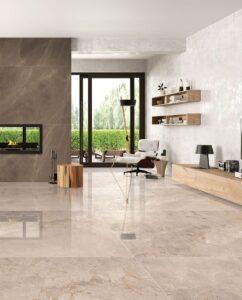
For many Indian homes, vitrified tiles are one of the most practical choices.
They are available in countless colours, patterns, textures, sizes and finishes. Marble-look, wood-look and stone-look tiles can also create premium interiors without using natural materials.
Advantages:
- Durable
- Easy to clean
- Low maintenance
- Large variety of designs
- Suitable for most rooms
Best for: Living rooms, dining areas, kitchens, passages and general residential use.
Choose vitrified tiles if: You want a practical flooring solution with plenty of design flexibility.
2. Marble — Best for Luxury Interiors
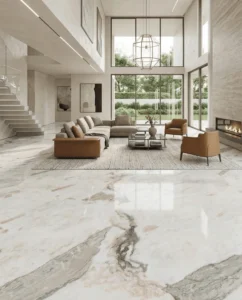
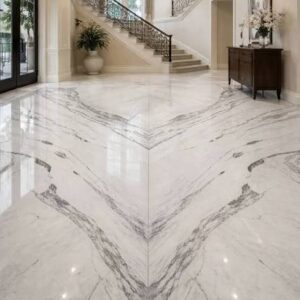
Natural marble offers something manufactured flooring cannot completely reproduce: natural variation.
Its unique veining and depth can give a home a sophisticated and luxurious character.
Advantages:
- Premium appearance
- Natural patterns and variation
- Excellent for luxury interiors
- Can be polished and restored
Limitations:
- Requires more maintenance
- Can stain
- Periodic polishing may be required
- Quality and price vary considerably
Best for: Living rooms, entrance areas, dining spaces and luxury homes.
Choose marble if: Appearance and natural character are more important to you than low maintenance.
3. Granite — Best for Durability
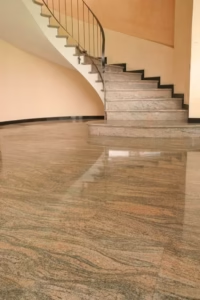
Granite is a strong natural stone and can be a practical choice for areas exposed to heavy use.
Advantages:
- Highly durable
- Resistant to heavy wear
- Relatively easy to maintain
- Suitable for high-traffic areas
Limitations:
- Can appear visually heavy
- Fewer design possibilities than modern tiles
- Natural variation can make matching difficult
Best for: Entrances, staircases and high-traffic areas.
Choose granite if: Durability is one of your highest priorities.
4. Wooden Flooring — Best for Warmth
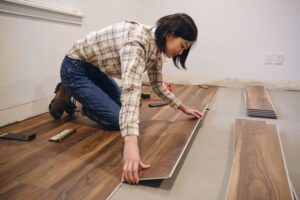
Wooden flooring brings warmth and a natural feel to interiors.
It works particularly well in bedrooms, studies and sophisticated contemporary interiors.
Advantages:
- Warm and comfortable appearance
- Natural character
- Works well with minimalist and contemporary designs
Limitations:
- Requires appropriate maintenance
- Moisture needs to be considered
- Premium products can be expensive
Best for: Bedrooms, studies and selected premium interiors.
Choose wood if: You want warmth and a genuine natural-material feel.
5. SPC Flooring — Best Wood-Look Alternative
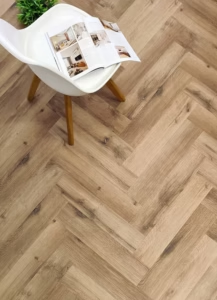
SPC flooring has become an increasingly popular option for contemporary homes.
It can provide a wood or stone appearance while offering a rigid construction and relatively quick installation.
Advantages:
- Wide range of designs
- Water-resistant characteristics
- Quick installation
- Useful for renovation projects
- Wood-look options available
Limitations:
- Product quality varies
- Subfloor preparation is important
- Not every SPC product is suitable for every application
Best for: Bedrooms, living spaces, offices and renovation projects.
Choose SPC if: You want a contemporary wood-look floor with relatively easy installation.
6. Laminate Flooring — Best for Budget-Friendly Wood Looks
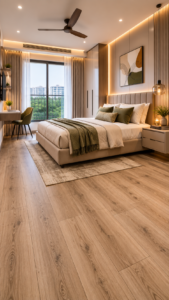
Laminate flooring can recreate the appearance of wood at a generally lower cost than many natural wood options.
Advantages:
- Attractive wood-look designs
- Wide variety of patterns
- Relatively quick installation
- Generally more affordable than natural wood
Limitations:
- Moisture can be a concern
- Quality varies between products
- Damaged sections may need replacement
Best for: Bedrooms, studies and other relatively dry areas.
Choose laminate if: You want the appearance of wood while keeping the budget under control.
Which Flooring Is Best for Each Room?
There is no single flooring material that is ideal throughout an entire home.
| Room | Flooring Options to Consider | Why |
|---|---|---|
| Living Room | Vitrified tiles, marble, large-format tiles | Appearance + durability |
| Bedroom | Wood, SPC, laminate, vitrified tiles | Comfort + aesthetics |
| Kitchen | Vitrified tiles, granite | Easy maintenance |
| Bathroom | Anti-skid tiles | Safety + moisture resistance |
| Entrance | Marble, granite, vitrified tiles | Durability + appearance |
| Study | Wood, SPC, laminate | Warm and comfortable feel |
| Balcony | Outdoor/anti-skid tiles | Weather + slip resistance |
| Passage | Vitrified tiles, marble, granite | High traffic |
Best Flooring Based on Your Priority
Instead of asking “Which flooring is the best?”, ask “What is most important to me?”
If you want low maintenance
Vitrified tiles are a strong choice.
If you want luxury
Marble is difficult to beat for natural character.
If durability is the priority
Granite or vitrified tiles are worth considering.
If you want warmth
Wooden flooring can create a more comfortable visual and tactile experience.
If you want a wood-look floor
SPC or laminate can be considered depending on the room and budget.
If you are renovating an existing home
SPC or laminate may offer installation advantages, depending on the existing floor and product system.
Flooring Comparison
| Flooring | Durability | Maintenance | Design Flexibility | Best Use |
|---|---|---|---|---|
| Vitrified Tile | High | Low | Very High | Most areas |
| Marble | High | Medium–High | High | Luxury interiors |
| Granite | Very High | Low–Medium | Medium | High-traffic areas |
| Wood | Medium–High* | Medium | High | Bedrooms & studies |
| SPC | High* | Low | High | Modern interiors |
| Laminate | Medium* | Low | High | Dry areas |
*Performance depends on product quality, installation and usage.
Should You Use the Same Flooring Throughout Your Home?
Not necessarily.
Using one flooring material throughout a home can create visual continuity and make spaces feel more cohesive. However, different rooms may have different functional requirements.
For example:
Living + Dining: Large-format vitrified tiles or marble
Bedrooms: Wood, SPC or laminate
Kitchen: Practical vitrified tiles
Bathrooms: Anti-skid tiles
Balcony: Outdoor-rated anti-skid flooring
The goal should not be to use the same flooring everywhere. The goal is to create a cohesive material palette while selecting the right flooring for each space.
Common Flooring Mistakes to Avoid
Choosing only by appearance
A floor may look beautiful in a showroom but perform poorly for your particular room.
Ignoring maintenance
Natural materials may require more maintenance than manufactured flooring.
Selecting the cheapest option
Low initial cost does not necessarily mean low overall cost. Installation, repairs and maintenance also matter.
Ignoring the room’s usage
A bedroom and a kitchen do not have the same flooring requirements.
Choosing flooring too late
Flooring should be considered alongside furniture, wall finishes, cabinetry and lighting—not as an afterthought.
Final Thoughts
There is no universally “best flooring” for every Indian home.
For many homeowners, vitrified tiles offer the best overall balance of durability, maintenance and design flexibility. Marble works beautifully when luxury and natural character are priorities. Wood brings warmth, while SPC and laminate provide practical alternatives for wood-look interiors.
The best flooring is ultimately the one that fits your room, your lifestyle, your budget and your design requirements.
At Design Within, flooring is considered as part of the complete interior design—not as an isolated material selection. The right floor should complement the furniture, lighting, wall finishes and lifestyle of the family.
Because the best flooring isn’t necessarily the most expensive flooring. It is the flooring that works best for your home.
At Design Within, we believe a beautiful interior should not only look good when it is completed — it should also perform well for years.
Before we dive into more details about designing your furniture, it might be helpful to estimate how much your interior design project could cost. Understanding your budget can help you make more informed decisions about what features to prioritize. To get a better idea, you can use our ‘interior design budget calculator’ budget calculator and start planning your dream home today.
Frequently Asked Questions
Which flooring is best for Indian homes?
There is no single answer. Vitrified tiles are a practical all-round option, while marble, wood, SPC, laminate and granite can be better suited to specific requirements.
Which flooring requires the least maintenance?
Vitrified tiles are generally among the easiest residential flooring options to maintain.
Is marble better than vitrified tiles?
Not necessarily. Marble offers natural beauty and variation, while vitrified tiles generally provide easier maintenance and greater consistency. The right choice depends on your priorities.
Is SPC flooring good for Indian homes?
SPC can be a suitable option for many residential applications, particularly dry areas, provided the product, subfloor and installation are appropriate.
Which flooring is best for bedrooms?
Wood, SPC, laminate and vitrified tiles can all work well. The choice depends on comfort, aesthetics, maintenance and budget.
Should the whole house have the same flooring?
Not necessarily. Using a consistent flooring palette can create continuity, but different rooms can use different materials based on their functional requirements.