Introduction

When planning your home interiors, choosing the right finish can be just as important as choosing the right plywood or board underneath.
You may come across four popular options:
Laminate, Veneer, Acrylic and PU Finish.
Each offers a different combination of appearance, durability, maintenance and cost.
So which one is best?
The answer depends on where you are using it and what you expect from the finish.
Laminate vs Veneer vs Acrylic vs PU: Quick Comparison


| Feature | Laminate | Veneer | Acrylic | PU Finish |
|---|---|---|---|---|
| Appearance | Versatile | Natural wood | High-gloss / modern | Premium & seamless |
| Design options | Excellent | Natural wood patterns | Good | Almost unlimited colors |
| Maintenance | Easy | Moderate | Moderate | Moderate |
| Scratch visibility | Depends on texture | Can show marks | Gloss can show scratches | Depends on finish |
| Moisture resistance | Generally good surface resistance | Needs more care | Generally good | Depends on coating/system |
| Cost | ₹ 50-100 per sq ft. | ₹ 100-400 per sq ft | ₹100-600 per sq.ft. | ₹200 – 1000 per sq.ft. |
| Best for | Everyday furniture | Natural wood look | Modern kitchens | Premium/custom furniture |
Actual performance varies with product quality, substrate, application and workmanship.
1. Laminate Finish


Laminate is one of the most practical and widely used furniture finishes.
It is available in a huge variety of:
- Colors
- Wood grains
- Textures
- Matt finishes
- Gloss finishes
- Stone and marble patterns
Advantages
- Wide design variety
- Easy to clean
- Generally durable
- Relatively easy to maintain
- Available across different price ranges
- Good choice for high-use furniture
Best suited for:
Kitchens, wardrobes, TV units, storage and everyday furniture.
If practicality and easy maintenance are your priorities, laminate is often a very sensible choice.
2. Veneer Finish


Veneer is a thin layer of natural wood applied over a suitable substrate.
Unlike a printed wood-look laminate, veneer gives you the actual character and variation of natural timber.
Every veneer sheet can have differences in:
- Grain
- Color
- Texture
- Pattern
This is what gives veneer furniture its natural and premium appearance.
Advantages
- Genuine natural wood appearance
- Unique grain patterns
- Warm and sophisticated
- Can be polished or refinished depending on the system
- Excellent for statement furniture
Best suited for:
TV units, feature furniture, living rooms, bedrooms, wall panels and premium furniture pieces.
Veneer does require more care than many laminate surfaces, particularly where the furniture is exposed to moisture or heavy daily wear.
3. Acrylic Finish

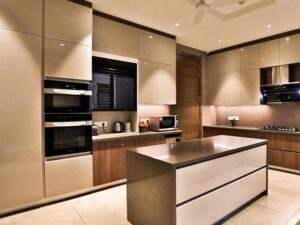


Acrylic is known for its smooth, high-gloss and contemporary appearance.
It can create a sleek, reflective look that works particularly well in modern kitchens and furniture.
Advantages
- High-gloss premium appearance
- Modern and clean aesthetic
- Available in attractive colors
- Easy to wipe clean
- Can make smaller spaces feel visually brighter
Things to consider
Glossy surfaces can make fingerprints, dust and scratches more noticeable.
Therefore, acrylic may require more frequent cleaning than a textured or matte laminate.
Best suited for:
Modern kitchens, wardrobe shutters and contemporary furniture.
4. PU Finish


PU stands for Polyurethane.
Unlike laminate or veneer, PU is a coating system applied to the furniture surface.
It can create a smooth, premium appearance with a wide choice of colors and sheen levels.
Depending on the system, you can achieve:
- Matt
- Satin
- High-gloss
- Solid colors
- Custom shades
Advantages
- Premium seamless appearance
- Extensive color customization
- Excellent for contemporary and luxury interiors
- Works well with detailed furniture designs
- Can create sophisticated matt or glossy surfaces
Things to consider
The final result depends heavily on:
- Surface preparation
- Primer
- Paint system
- Application technique
- Curing
- Workmanship
So PU is one finish where execution quality matters enormously.
Best suited for:
Premium kitchens, wardrobes, TV units, designer furniture and custom interiors.
Which Finish Is Best for a Kitchen?

There is no single answer.
Choose Laminate if:
You want durability, practicality and easy maintenance.
Choose Acrylic if:
You want a modern, high-gloss appearance.
Choose PU if:
You want a premium, seamless and highly customized finish.
Choose Veneer if:
You want a natural wood aesthetic and are comfortable with additional care.
For a busy Indian kitchen, practical maintenance should be considered alongside appearance.
Which Finish Is Best for Wardrobes?
Wardrobes are used every day, so both appearance and maintenance matter.
Laminate → Excellent practical option.
Acrylic → Good for modern, glossy wardrobes.
PU → Excellent for premium customized wardrobes.
Veneer → Ideal when you want a natural wood character.
The choice should depend on the overall bedroom design and how much maintenance you are comfortable with.
Which Finish Looks Most Premium?
This depends on your definition of premium.
If you prefer natural luxury, veneer can be extremely elegant.
If you prefer seamless luxury and custom colors, PU can create a sophisticated result.
If you prefer modern high-gloss luxury, acrylic can work beautifully.
And premium laminates can also create remarkably sophisticated interiors with much easier maintenance.
Premium does not always mean expensive.
The design, detailing, hardware, proportions and workmanship all contribute to the final appearance.
Which Finish Is Easiest to Maintain?
For most everyday furniture, laminate is generally one of the easiest finishes to maintain.
Acrylic is also relatively easy to wipe clean, although fingerprints and scratches can be more visible on glossy surfaces.
Veneer usually needs more care, particularly around moisture.
PU finishes require appropriate cleaning and care to preserve the coating.
The exact maintenance requirement depends on the product and finish specification.
Which Finish Should You Choose?
A simple way to decide:
Choose Laminate
If practicality and easy maintenance are your priorities.
Choose Veneer
If you want genuine natural wood character.
Choose Acrylic
If you want a sleek, modern high-gloss appearance.
Choose PU
If you want premium custom colors and a seamless painted finish.
Don’t Choose Finish Only by Price
When comparing interior quotations, don’t just ask:
“Which finish is cheaper?”
Ask:
- What exact finish is being used?
- What is the substrate?
- What brand/product is specified?
- What thickness or specification applies?
- Is the finish factory-applied or site-applied?
- What surface preparation is included?
- How are edges treated?
- What maintenance is required?
Two quotations may both say “PU finish” or “acrylic finish” while offering very different products and workmanship.
Final Verdict
There is no universal winner in the laminate vs veneer vs acrylic vs PU comparison.
Each finish has a different strength.
Laminate → Practical & versatile
Veneer → Natural & warm
Acrylic → Modern & glossy
PU → Premium & customizable
The smartest choice is not necessarily the most expensive finish.
It is the finish that matches your lifestyle, design, maintenance expectations and budget.
At Design Within, we believe a good interior isn’t created by choosing expensive materials everywhere.
It is created by choosing the right material and finish for the right application — and combining it with thoughtful design and good workmanship.
At Design Within, we believe a beautiful interior should not only look good when it is completed — it should also perform well for years.
Before we dive into more details about designing your furniture, it might be helpful to estimate how much your interior design project could cost. Understanding your budget can help you make more informed decisions about what features to prioritize. To get a better idea, you can use our ‘interior design budget calculator’ budget calculator and start planning your dream home today.
If you want to know more about best plywood for furniture then https://designwithin.in/best-plywood-for-furniture/