Introduction:
False Ceiling Designs for Bedroom: 20 Modern & Elegant Ideas
The ceiling is often overlooked when designing a bedroom, but the right false ceiling can completely change the atmosphere of the space.
A well-designed bedroom ceiling can integrate lighting, conceal services and add architectural detail without making the room feel heavy.
From simple gypsum ceilings and soft cove lighting to wooden features, wallpaper and elegant profile lighting, there are many ways to design a bedroom ceiling.
Here are 20 modern and elegant false ceiling ideas for bedrooms.
1. Simple Gypsum False Ceiling
A clean gypsum ceiling with minimal detailing is one of the most timeless options for a bedroom.
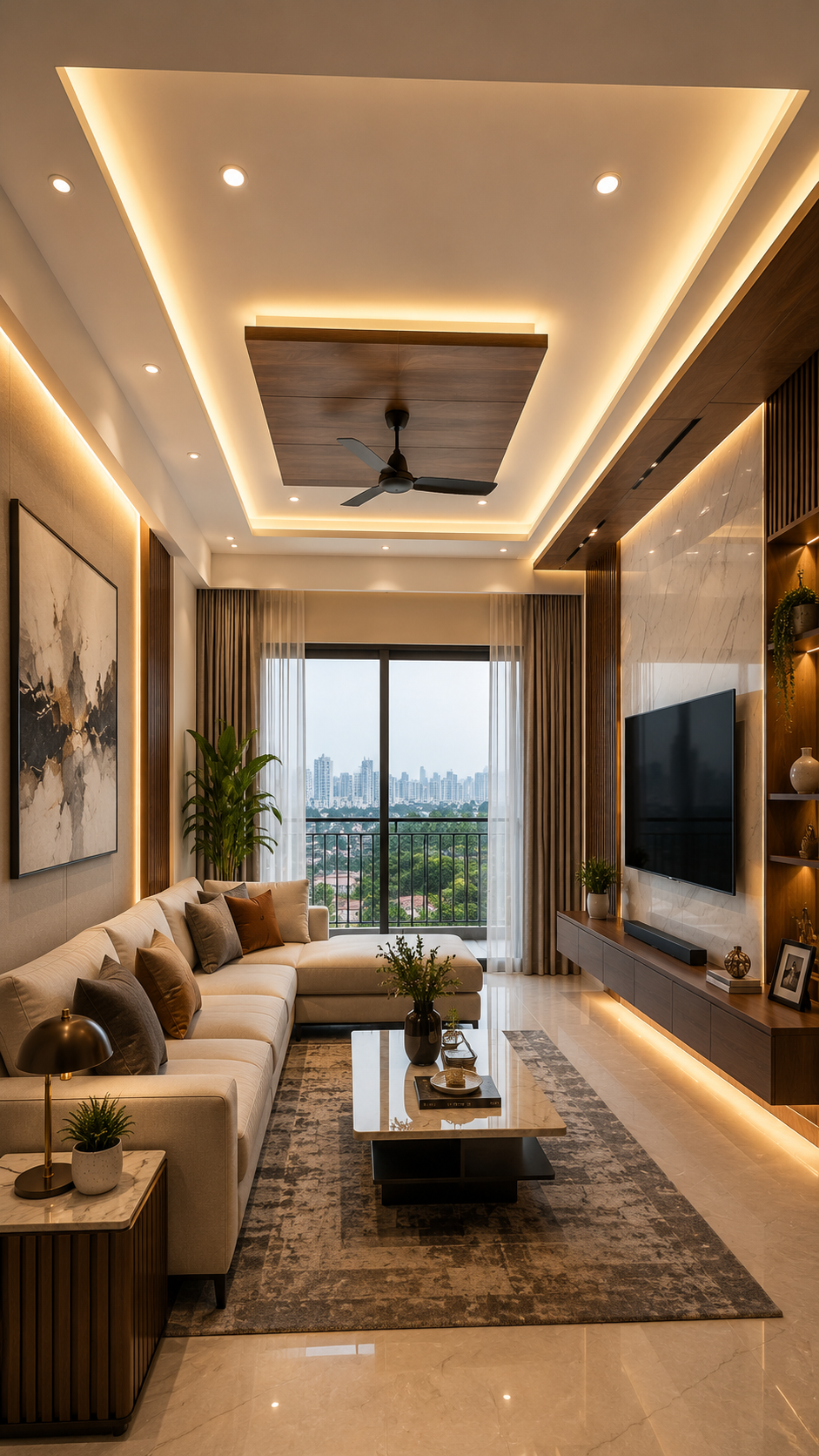
It works particularly well in modern and minimalist interiors where the ceiling should remain subtle.
2. Gypsum Ceiling With Cove Lighting
A concealed LED strip inside a ceiling recess creates a soft glow around the room.
Warm cove lighting is particularly effective for creating a relaxed bedroom atmosphere.
3. Minimal Perimeter Cove
Instead of creating multiple ceiling levels, use a simple recessed perimeter detail with concealed lighting.
This creates depth while keeping the ceiling visually light.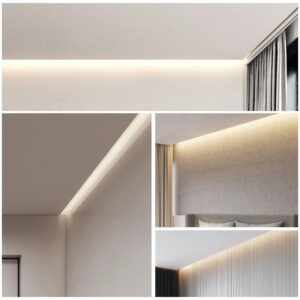
4. Floating False Ceiling
A recessed section can create the appearance of a floating ceiling.
With concealed LED lighting around the edges, the ceiling appears visually separated from the surrounding architecture.
5. False Ceiling With Profile Lighting
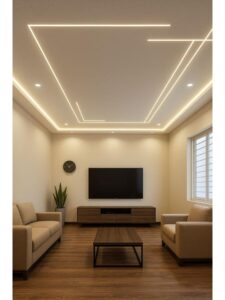
Slim LED profile lights can create clean architectural lines across a bedroom ceiling.
They work especially well in contemporary and minimalist interiors.
6. Gypsum + Wooden Feature
Combine a simple gypsum ceiling with a small plywood feature finished in veneer or laminate.
This introduces warmth without covering the entire ceiling with wood.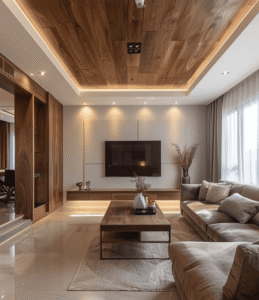
7. Plywood + Veneer Ceiling
For a luxury bedroom, plywood finished with natural veneer can create a rich and warm ceiling feature.
Natural wood grain works particularly well with warm lighting and neutral interiors.
8. Plywood + Laminate Ceiling
Laminate provides a wide range of wood-look, textured and solid-colour finishes.
It can be used to create a contemporary feature ceiling while offering greater consistency in appearance.
9. Gypsum + Wallpaper Ceiling
Wallpaper can turn the ceiling into a decorative feature.
A properly finished gypsum surface can be covered with wallpaper to introduce pattern, texture or colour into the bedroom.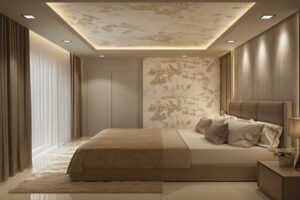
10. Layered Gypsum Ceiling
A two-level gypsum ceiling can introduce depth and provide separate areas for ambient and functional lighting.
The number of levels should be kept proportional to the room’s ceiling height.
11. Headboard-Aligned Ceiling Design
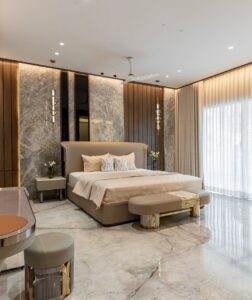
The ceiling can be visually connected to the bed’s headboard wall.
For example, a ceiling recess or feature can align with the bed and continue the same material or design language.
This creates a stronger connection between the ceiling and the bedroom furniture.
12. Ceiling With a Central Feature
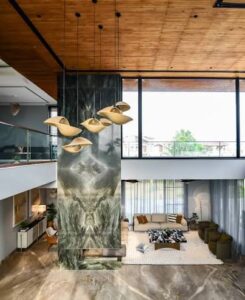
A simple central ceiling detail can provide a visual focal point above the bed.
This could incorporate:
-
Cove lighting
-
Profile lighting
-
A decorative fixture
-
A geometric feature
13. Linear False Ceiling
Long, clean ceiling lines can make a bedroom feel more contemporary.
Linear details can also visually reinforce the direction of the room.
14. Geometric False Ceiling
Geometric ceiling details can create a stronger design statement.
Squares, rectangles and intersecting lines can be incorporated using gypsum or other suitable materials.
The design should remain controlled so that the ceiling does not compete with the rest of the bedroom.
15. False Ceiling With a Statement Pendant
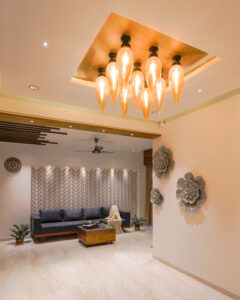
A simple false ceiling can be paired with a decorative pendant above the bedside or central bedroom area.
This works particularly well when the pendant is intended to be the main visual feature.
16. Cove + Downlight Combination
Cove lighting provides soft ambient illumination while recessed downlights provide functional light.
Using both allows the lighting intensity to be adjusted depending on the time and activity.
17. Warm Wood + Warm Lighting
Wood-finished ceiling elements paired with warm LED lighting can create a particularly comfortable bedroom atmosphere.
This combination works well with veneer, wooden furniture and warm-toned fabrics.
18. Minimal Ceiling for a Small Bedroom
Small bedrooms do not necessarily need elaborate ceiling designs.
A shallow gypsum detail with carefully positioned lighting can make the space feel more open and uncluttered.
In smaller rooms, simplicity is often the better design choice.
19. Luxury Multi-Material Ceiling
A premium bedroom can combine several materials, such as:
Gypsum + veneer + profile lighting + cove lighting
The key is to maintain a clear visual hierarchy.
Not every material needs to dominate the ceiling.
20. Soft Minimalist Bedroom Ceiling
One of the most elegant approaches is to keep the ceiling extremely simple.
A clean gypsum surface, subtle perimeter detailing and warm indirect lighting can create a sophisticated result without unnecessary decoration.
How to Choose the Right Bedroom False Ceiling Design
Before choosing a design from a photograph, consider your actual bedroom.
Ceiling height
If the ceiling is relatively low, avoid excessive drops and multiple layers.
Bedroom size
Large bedrooms can accommodate stronger ceiling features. Smaller rooms generally benefit from simpler designs.
Bed position
The ceiling can be aligned with the bed and headboard to create visual balance.
Lighting
Decide where you need ambient, task and accent lighting before finalising the ceiling.
Interior style
The ceiling should complement the furniture, flooring, wall treatments and overall material palette.
What Is the Best False Ceiling for a Bedroom?
For most modern bedrooms, gypsum is one of the most versatile choices.
It can be kept completely minimal or combined with:
-
Cove lighting
-
Profile lighting
-
Wallpaper
-
Plywood
-
Veneer
-
Laminate
-
Decorative lighting
For a warm luxury bedroom, a gypsum + veneer feature can work beautifully.
For a minimalist bedroom, a simple gypsum ceiling with concealed warm lighting may be all that is required.
There is no need to make the ceiling complicated just because it is a bedroom renovation.
What Colour Light Is Best for a Bedroom Ceiling?
Warm white lighting, typically around 2700K–3000K, is commonly preferred for bedrooms because it creates a softer and more relaxing atmosphere.
Cove lighting can provide the ambient glow, while selected recessed lights can provide additional illumination when required.
Avoid using excessively bright or cool lighting throughout the bedroom unless there is a specific design or functional reason.
Common Bedroom False Ceiling Mistakes
Making the ceiling too complicated
Multiple layers and decorative elements can make a bedroom feel visually heavy.
Using too many downlights
Bedrooms generally do not need a grid of bright lights.
Ignoring ceiling height
A design that looks beautiful in a high-ceiling bedroom may not work in a standard apartment.
Poor lighting placement
Lights should relate to the bed, wardrobes, dressing area and other functional zones.
Choosing the ceiling separately from the interior
The ceiling should complement the furniture, wall finishes and lighting design.
How Design Within Approaches Bedroom False Ceiling Design
At Design Within, bedroom ceilings are planned as part of the complete interior rather than as an isolated decorative element.
The ceiling is coordinated with:
-
Bed and headboard
-
Wardrobes
-
Lighting
-
Electrical planning
-
Wall finishes
-
Flooring
-
AC and other services
-
Overall material palette
Depending on the design, this may mean a minimal gypsum ceiling, a gypsum-and-veneer feature, a wallpaper finish, or a carefully integrated lighting design.
The objective is to create a bedroom that feels calm, balanced and cohesive.
Final Thoughts
The best bedroom false ceiling design is not necessarily the most elaborate one.
A simple gypsum ceiling with warm cove lighting can create a beautifully calm atmosphere.
A gypsum + veneer feature can add warmth and luxury.
A profile-lit ceiling can give a contemporary bedroom a clean architectural character.
And a wallpaper-finished ceiling can introduce pattern and personality.
The right choice depends on your bedroom’s size, ceiling height, furniture layout, lighting requirements, interior style and budget.
If you are planning a bedroom interior in Pune, Design Within can help you design the ceiling, lighting, furniture and finishes as one coordinated interior.
At Design Within, we believe a beautiful interior should not only look good when it is completed — it should also perform well for years.
Before we dive into more details about designing your furniture, it might be helpful to estimate how much your interior design project could cost. Understanding your budget can help you make more informed decisions about what features to prioritize. To get a better idea, you can use our ‘interior design budget calculator’ budget calculator and start planning your dream home today.
Frequently Asked Questions
Which false ceiling is best for a bedroom?
Gypsum is one of the most versatile choices because it works well with cove lighting, downlights, profile lights, wallpaper and wood-finished features.
Which false ceiling is best for a small bedroom?
A simple, shallow gypsum ceiling with minimal detailing is generally a better choice than a heavily layered design.
Is cove lighting good for bedrooms?
Yes. Concealed cove lighting can provide soft, indirect illumination that works particularly well in bedrooms.
Can veneer be used on a bedroom ceiling?
Yes. Plywood finished with natural veneer can be used as a feature element, especially in premium bedroom interiors.
Can wallpaper be applied to a false ceiling?
Yes. Wallpaper can be applied over a properly prepared gypsum surface and can create a distinctive decorative ceiling.
What colour light is best for a bedroom?
Warm white lighting around 2700K–3000K is commonly preferred for a comfortable bedroom atmosphere.
Does a false ceiling reduce bedroom height?
Yes. A false ceiling occupies some vertical space. The amount depends on the ceiling design, services and required lighting integration.
Is a simple false ceiling better for a bedroom?
In many cases, yes. Bedrooms generally benefit from calm, uncluttered ceiling designs rather than excessive decorative detailing.