Introduction : Cementitious vs Liquid Waterproofing Membrane: Which Is Better for Indian Homes?
Choosing the right waterproofing system is important when building or renovating a home. Two common options are cementitious waterproofing coatings and liquid-applied waterproofing membranes.
Both can help protect buildings against water penetration, but they differ in composition, flexibility, application requirements and suitability for particular locations.
For homeowners in Pune, understanding these differences can help when planning bathroom waterproofing, terrace repairs and other moisture-protection work.
1. What Is Cementitious Waterproofing?
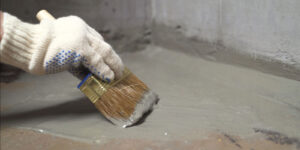
Cementitious waterproofing uses cement-based formulations combined with suitable polymers or other additives, depending on the product. It is applied to a prepared surface to create a protective waterproofing layer.
These products are commonly used in selected bathrooms, wet areas, water-retaining structures and other applications specified by the manufacturer.
Potential advantages:
-
Suitable for many mineral substrates, such as concrete and cement plaster.
-
Can be compatible with tile adhesive and tiled finishes when specified for that system.
-
Generally straightforward to apply with the correct preparation and technique.
-
Available in different formulations for different exposure conditions.
Limitations to consider:
-
Not every formulation accommodates significant crack movement.
-
Surface preparation and curing remain important.
-
Active cracks and movement joints may need separate detailing.
-
Suitability for exposed terraces or standing water must be confirmed for the exact product.
2. What Is a Liquid-Applied Waterproofing Membrane?
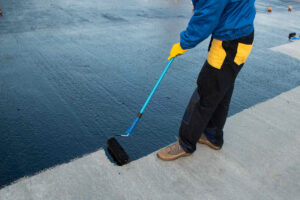
A liquid-applied membrane is installed as a liquid coating that cures or dries into a continuous waterproofing layer. Products may be acrylic, polyurethane, polymer-based or formulated using other technologies.
Their properties differ significantly, so the term “liquid waterproofing” does not describe one uniform product category.
Potential advantages:
-
Can create a continuous layer over suitably prepared surfaces.
-
May simplify detailing around corners, outlets and penetrations when used with the specified accessories.
-
Some formulations offer flexibility and crack-bridging capability.
-
Certain products are designed for exposed roofs, while others are intended for areas beneath tiles or protective finishes.
Limitations to consider:
-
Required thickness, number of coats and curing conditions vary by product.
-
Some products require primers or reinforcement at specific details.
-
UV exposure, standing water and compatibility with tile adhesives must be checked.
-
Application errors can leave thin spots, pinholes or weak areas.
3. Cementitious vs Liquid Waterproofing: Key Differences
| Feature | Cementitious system | Liquid-applied membrane |
|---|---|---|
| Composition | Cement-based formulation | Liquid polymer or other membrane formulation |
| Flexibility | Depends on formulation; some systems are relatively rigid | Varies; some products are highly flexible |
| Typical applications | Suitable bathrooms, wet areas and specified structures | Bathrooms, roofs, terraces and other approved areas |
| Crack movement | May need separate crack and joint treatment | Depends on documented crack-bridging performance |
| Application | Usually applied by brush, trowel or other specified method | Often applied by brush, roller or spray, as specified |
| Under-tile use | Only when approved for the tile assembly | Only when approved for the tile assembly |
| Exposed terrace use | Product-specific | Product-specific |
| Main selection factor | Substrate compatibility and intended exposure | Flexibility, exposure resistance and system compatibility |
Neither category is automatically superior. The exact formulation, installation quality and suitability for the site are more important than the category name alone.
4. Which Is Better for Bathroom Waterproofing?
For a bathroom that will be tiled, either a suitable cementitious system or a suitable liquid-applied membrane may be appropriate.
The choice depends on the substrate, floor and wall junctions, drain details, plumbing penetrations, expected movement and compatibility with the tile adhesive.
Before tiling:
-
Repair defective substrate and plumbing.
-
Treat corners and pipe penetrations as specified.
-
Apply the membrane at the required thickness.
-
Allow the specified curing time.
-
Conduct the required waterproofing test before concealing the work.
Remember that tile grout is not a substitute for the waterproofing layer beneath the tiles.
5. Which Is Better for Terrace Waterproofing?
An exposed terrace faces sunlight, temperature changes, rainfall, drainage conditions and possible standing water. These factors make product selection particularly important.
Some liquid-applied membranes are designed for exposed roofs. Certain cementitious systems are intended for specific applications but may not be suitable as a permanently exposed finish.
Before choosing, check:
-
UV and weather resistance.
-
Compatibility with the existing concrete or coating.
-
Crack-bridging performance.
-
Drainage and ponding limitations.
-
Required protective screed or topcoat.
-
Maintenance and warranty conditions.
Do not select a system solely because it is described as flexible or waterproof.
6. What About Exterior Walls and Dampness?
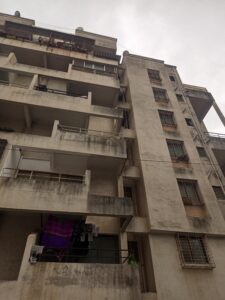
Exterior walls may need a different solution depending on whether the problem is rain penetration, cracks, defective window junctions, rising moisture or concealed plumbing.
A waterproofing membrane may be appropriate for certain surfaces, while a compatible exterior coating, crack repair system or other intervention may be needed elsewhere.
If the wall is already damp, investigate the source before applying a new coating. Painting over moisture without addressing its cause can lead to peeling, blistering and recurring stains.
7. Which System Costs More?
There is no universal cost winner. The total price depends on the product, coverage, number of coats, surface condition, preparation, reinforcement, labour, protection layers and testing.
A meaningful quotation should specify:
-
The exact product and manufacturer.
-
Surface preparation and repairs.
-
Primer and reinforcement requirements.
-
Application thickness and number of coats.
-
Curing and testing.
-
Any protective screed or finishing layer.
-
Warranty terms and exclusions.
Compare complete systems rather than comparing only the price per kilogram or litre.
8. Common Waterproofing Mistakes to Avoid
-
Choosing based on product category alone.
-
Using an interior product on an exposed terrace without approval.
-
Ignoring active cracks and movement joints.
-
Applying the coating over a weak or contaminated surface.
-
Failing to achieve the specified thickness.
-
Skipping curing or required testing.
-
Assuming every liquid membrane is UV-resistant.
-
Assuming cementitious waterproofing is always rigid or always flexible.
Always follow the technical data sheet for the exact product being installed.
9. How Design Within Can Help
At Design Within, waterproofing selection is considered alongside plumbing, tiling, surface preparation and interior finishing. Coordinating these stages helps ensure that the chosen system is appropriate for the application and is tested before it is concealed.
For homeowners in Pune, a well-defined scope can help reduce avoidable rework during bathroom renovation, terrace repairs and broader home-improvement projects.
Planning a renovation? Visit Design Within to explore interior-design and renovation support.
At Design Within, we believe a beautiful interior should not only look good when it is completed — it should also perform well for years.
Before we dive into more details about designing your furniture, it might be helpful to estimate how much your interior design project could cost. Understanding your budget can help you make more informed decisions about what features to prioritize. To get a better idea, you can use our ‘interior design budget calculator’ budget calculator and start planning your dream home today.
Frequently Asked Questions
1. Is cementitious waterproofing better than liquid waterproofing?
Neither is universally better. Cementitious and liquid-applied systems have different properties, and suitability depends on the substrate, exposure, flexibility requirements and manufacturer’s specifications.
2. Which waterproofing is suitable beneath bathroom tiles?
A cementitious coating or liquid-applied membrane may be suitable if the exact product is approved for under-tile wet-area use and is compatible with the tile installation system.
3. Can liquid waterproofing be used on an exposed terrace?
Some products are designed for exposed terraces, but others require a protective layer or are intended for use beneath finishes. Confirm UV resistance, ponding limitations and application requirements.
4. Does waterproofing stop cracks from leaking?
Some membranes can bridge limited cracks within their specified performance range. Active structural cracks and movement joints require appropriate assessment and detailing rather than simply coating over them.
5. How long should waterproofing cure before tiling?
Curing and waiting times vary by product, temperature, humidity and application thickness. Follow the manufacturer’s technical data sheet and complete the required testing before tiling.
6. Can waterproofing be applied over old waterproofing?
Sometimes, but only if the existing layer is sound and compatible with the proposed system. The surface may need testing, preparation or removal of failed material.
7. What matters most for long-lasting waterproofing?
Correct diagnosis, suitable product selection, surface preparation, detailing, proper application, curing and testing all contribute to performance.
Final Thoughts
Cementitious waterproofing and liquid-applied membranes can both be useful when selected for the right application. The best choice depends on the building condition, water exposure, movement requirements and the complete installation system.
For homeowners in Pune, focus on the suitability of the specific product and the quality of the work—not simply whether the quotation says “cementitious” or “liquid waterproofing.”