Introduction
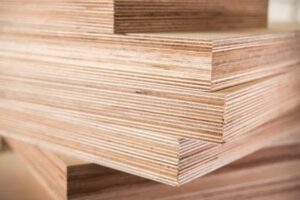
When planning home interiors, one of the most important decisions is choosing the right plywood grade.
You may have heard terms like MR, BWR and BWP plywood, but do you really need the same grade throughout your home?
Not necessarily.
The right plywood depends mainly on where it is being used and how much moisture the furniture is likely to encounter.
For this article, let’s focus on two of the most commonly discussed grades for interiors: BWR and BWP plywood, especially for kitchens and wardrobes.
What Do BWR and BWP Mean?
The terms describe the plywood’s resistance to water and moisture, particularly the performance of the adhesive bond.
BWR – Boiling Water Resistant
BWR stands for Boiling Water Resistant.
It is designed to provide better moisture resistance than standard moisture-resistant plywood and is suitable for many general interior applications.
BWR can be considered for areas such as:
- Wardrobes
- Bedroom furniture
- Living room storage
- TV units
- General furniture
- Kitchen areas with limited direct water exposure
However, the actual performance depends on the product specification, manufacturing quality and installation.
The terms describe the plywood’s resistance to water and moisture, particularly the performance of the adhesive bond.
BWP – Boiling Water Proof
BWP stands for Boiling Water Proof.
It is intended for applications where plywood is likely to experience higher moisture or water exposure.
BWP plywood is commonly considered for:
- Kitchen cabinets
- Sink units
- Utility areas
- High-moisture applications
- Areas where accidental water exposure is more likely
BWP is generally the more appropriate choice when moisture protection is a higher priority.
BWR vs BWP: Quick Comparison
| Feature | BWR Plywood | BWP Plywood |
|---|---|---|
| Water resistance | Good | Higher |
| Moisture exposure | Moderate | High |
| Kitchen use | Suitable for selected areas | Preferred for high-moisture areas |
| Wardrobes | Very suitable | Suitable but may be unnecessary |
| Cost | Generally lower | Generally higher |
| Best use | General interior furniture | Moisture-prone furniture |
Important: Always verify the plywood’s applicable BIS standard, grade, manufacturer certification and product specifications rather than relying only on the name printed on a quotation.
Which Plywood Is Best for a Modular Kitchen?
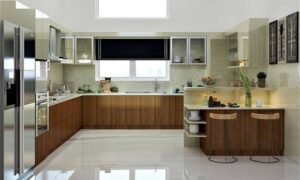
The kitchen is one place where plywood selection deserves extra attention.
Think about what happens in a typical Indian kitchen:
- Water near the sink
- Steam from cooking
- Oil and cleaning
- Frequent wiping
- Humidity
- Accidental spills
But even within the kitchen, every cabinet does not necessarily face the same amount of moisture.
For sink and high-moisture areas
BWP plywood is generally the safer choice.
The area below the sink is particularly vulnerable because occasional leakage or water accumulation can happen.
For other kitchen cabinets
BWR may be suitable for applications where direct and prolonged water exposure is unlikely, depending on the product specification and construction.
However, if your priority is maximum moisture protection, BWP can be specified more broadly.
Our practical recommendation
For a premium kitchen:
High moisture exposure → BWP
Moderate moisture exposure → BWR can be considered
But don’t forget that edge sealing, laminate application, joints and installation quality also influence the long-term performance of kitchen furniture.
Which Plywood Is Best for Wardrobes?
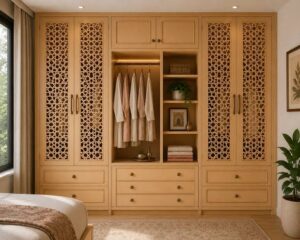
Wardrobes are generally exposed to much less water than kitchen cabinets.
Therefore, BWP is not automatically necessary for every wardrobe.
BWR can be a practical choice for:
- Bedroom wardrobes
- Walk-in wardrobes
- Living room storage
- Dry-area cabinets
However, consider upgrading the specification if the wardrobe is:
- Against an external wall
- Near a bathroom
- In an area with dampness
- Exposed to significant humidity
The location matters as much as the furniture itself.
Should You Use BWP Plywood Everywhere?
This is one of the biggest misconceptions.
More water resistance does not automatically mean better value everywhere.
If a wardrobe is located in a dry bedroom, using a premium moisture-resistant grade may provide little practical benefit compared with using the appropriate BWR specification.
Instead, the better approach is:
Use higher-grade plywood where the risk demands it.
This can give you a better balance between:
Performance + Durability + Cost
Which Is Best for Painted Furniture?
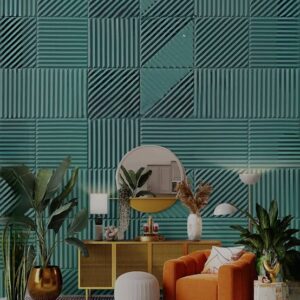
If you want a smooth painted finish, MDF and HDHMR can be excellent choices.
They work particularly well for:
- Fluted designs
- CNC patterns
- Decorative panels
- Painted shutters
- Wall moldings
But remember, the final finish also depends on surface preparation, primer, paint quality and workmanship.
What About MR Plywood?
MR stands for Moisture Resistant.
It is intended for relatively dry interior applications where there is no significant water exposure.
For example, depending on the project specification, MR plywood may be considered for:
- Dry bedroom furniture
- Decorative furniture
- Shelves
- TV units
- Living room storage
However, for kitchen cabinets and areas exposed to regular moisture, a more moisture-resistant grade may be more appropriate.
Don’t Judge Plywood Only by BWR or BWP
The grade is important, but it isn’t the whole story.
When selecting plywood for your interiors, also check:
1. BIS standard and certification
Don’t rely only on terms like “waterproof” or “premium.”
Check the relevant standard and certification.
2. Thickness
The correct thickness should be selected according to the furniture design and structural requirement.
3. Core quality
Look for consistent construction without excessive gaps or defects.
4. Termite treatment
Check whether the plywood has the required treatment and manufacturer specification.
5. Manufacturer
Choose a reliable manufacturer and verify the product rather than relying only on a quotation.
6. Workmanship
Even good-quality plywood can perform poorly if edges, joints and installation are not properly executed.
BWR vs BWP: Our Practical Recommendation
If you’re designing a home and want a simple rule:
Kitchen
Sink area / high moisture exposure → BWP
Other kitchen areas → BWR or BWP depending on exposure and specification
Wardrobes
Normal dry bedroom → BWR can be sufficient
Damp-prone location → Consider BWP or another appropriate higher moisture-resistant specification
The goal is not to use the most expensive plywood everywhere.
The goal is to use the right plywood grade in the right place.
Final Verdict
BWR and BWP are not simply “good plywood” and “better plywood.”
They are grades intended for different levels of moisture exposure.
BWR → Suitable for many general interior applications and moderate moisture conditions.
BWP → Better suited where higher moisture resistance is required.
For kitchens, especially areas close to the sink, BWP is generally the safer specification.
For wardrobes in dry rooms, BWR can be a practical choice without unnecessarily increasing the budget.
It is about understanding where the material will be used, what conditions it will face and what level of performance is actually required.
The right material in the right place is what creates a durable interior.
At Design Within, we believe a beautiful interior should not only look good when it is completed — it should also perform well for years.
Before we dive into more details about designing your furniture, it might be helpful to estimate how much your interior design project could cost. Understanding your budget can help you make more informed decisions about what features to prioritize. To get a better idea, you can use our ‘interior design budget calculator’ budget calculator and start planning your dream home today.
If you want to know more about best plywood for furniture then click https://designwithin.in/best-plywood-for-furniture/
If you want to know more about MDF vs HDF vs HDHMR vs Plywood: Which Is Best for Your Furniture? then click https://designwithin.in/mdf-vs-hdf-vs-hdhmr-vs-plywood-which-is-best/