Introduction

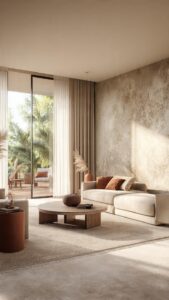
Sustainable interior design is no longer limited to expensive materials or highly specialized homes. For Indian homeowners, it can simply mean designing a home that uses resources responsibly, consumes less energy, creates healthier indoor spaces and lasts longer.
An eco-friendly interior does not have to look rustic or compromise on comfort. Modern sustainable interiors can be minimalist, luxurious, contemporary or traditional.
The important thing is to make smarter decisions about materials, lighting, ventilation, furniture and long-term maintenance.
What Is Sustainable Interior Design?
Sustainable interior design considers the environmental impact of a home throughout its life—from material selection and manufacturing to installation, maintenance and eventual replacement.
A sustainable interior generally focuses on:
-
Durable materials
-
Responsible sourcing
-
Lower energy consumption
-
Better indoor air quality
-
Natural light and ventilation
-
Reduced material wastage
-
Reuse and recycling
-
Long-lasting furniture and finishes
The goal is not to make every element “green.” It is to create a home that uses resources more intelligently.
1. Choose Durable Materials
One of the simplest ways to make an interior more sustainable is to choose materials that last.
Frequently replacing wardrobes, furniture, flooring or finishes creates additional material waste and expense.
When selecting materials, consider:
-
Expected lifespan
-
Maintenance requirements
-
Repairability
-
Replacement availability
-
Quality of installation
-
Environmental impact
A slightly more durable product can sometimes be the more sustainable choice if it avoids premature replacement.
2. Choose Wood and Boards Responsibly
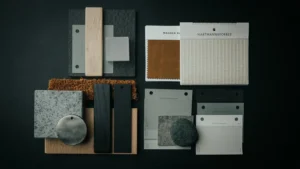
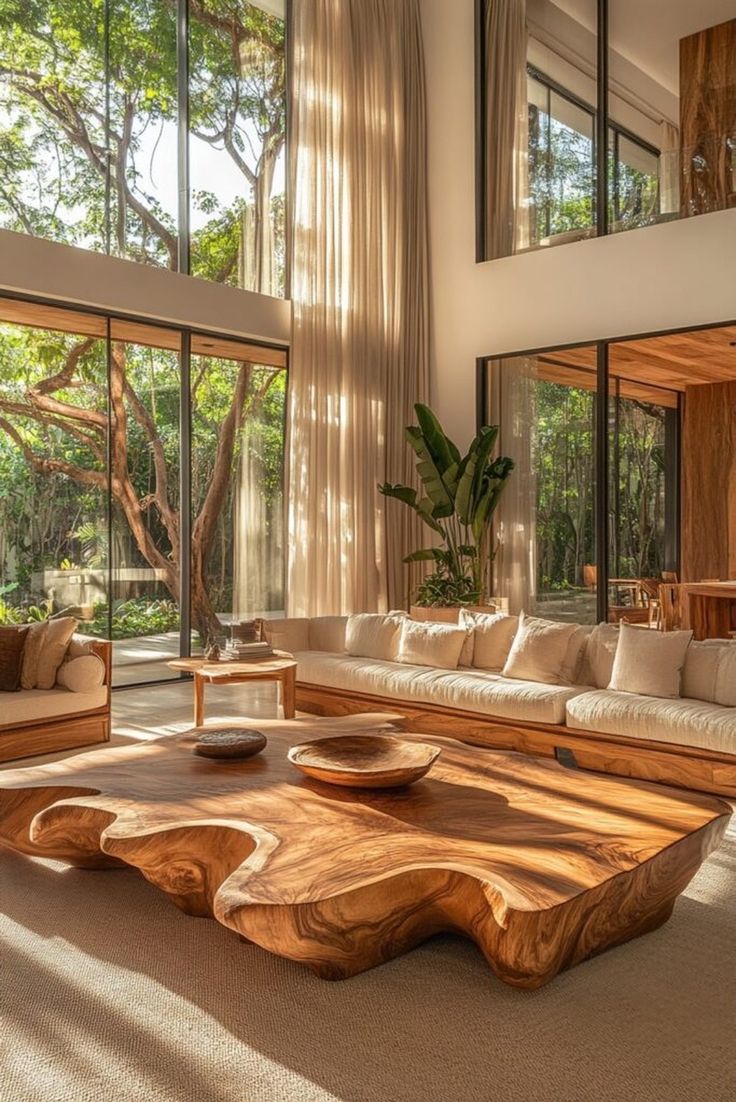
Wood can be a good interior material, but the source matters.
Where possible, consider products from responsible or certified sources and select materials appropriate for their application.
For modular furniture, engineered boards can also be useful because they allow efficient use of wood-based resources.
Don’t assume that a material is sustainable simply because it is natural. Consider its sourcing, manufacturing, transportation, durability and eventual disposal.
3. Use Low-VOC Paints and Finishes
Paints, adhesives and certain finishes can contribute to indoor air pollutants through volatile organic compounds, commonly known as VOCs.
For healthier interiors, consider:
-
Low-VOC or appropriately certified paints
-
Low-emission adhesives
-
Proper ventilation during application
-
Adequate curing time before occupying the space
This is particularly relevant for bedrooms, children’s rooms and other frequently occupied areas.
4. Maximize Natural Light
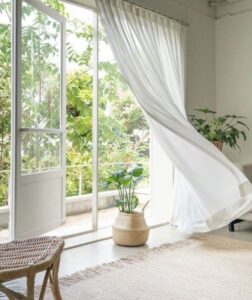
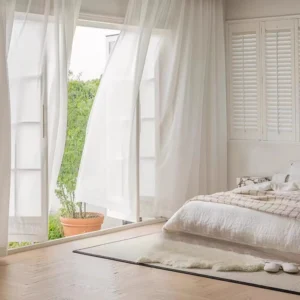
Natural daylight can reduce dependence on artificial lighting during the day.
Plan interiors to make better use of existing windows and openings.
For example:
-
Avoid unnecessarily blocking windows with tall furniture
-
Use lighter surfaces where appropriate
-
Position work areas near available daylight
-
Use curtains that provide privacy without unnecessarily eliminating daylight
Good daylighting can improve both energy efficiency and the overall feeling of a home.
5. Improve Natural Ventilation
Indian homes experience very different climatic conditions—from hot and humid coastal regions to dry and hot interiors and cooler northern climates.
Interior planning should respond to the local climate.
Where the building design permits, use:
-
Cross ventilation
-
Operable windows
-
Appropriate window treatments
-
Shading
-
Ceiling fans
-
Outdoor-to-indoor airflow
Furniture should also be planned so that it does not unnecessarily obstruct important ventilation paths.
6. Choose Energy-Efficient Lighting
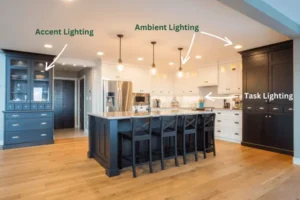

Lighting can have a significant effect on household electricity consumption.
LED lighting is generally a practical choice because it provides efficient illumination and is available in a wide range of colour temperatures and formats.
A well-designed lighting system should combine:
Ambient lighting for general illumination.
Task lighting for activities such as cooking and studying.
Accent lighting for decorative purposes.
This prevents the need to illuminate the entire room when only one area is being used.
7. Use Smart Lighting Controls
Sustainability isn’t only about the light source. It is also about how lighting is used.
Depending on the space, consider:
-
Motion sensors
-
Timers
-
Dimmers
-
Smart switches
-
Separate lighting circuits
These controls can reduce unnecessary electricity consumption while making the home more convenient.
8. Choose Furniture That Can Last
Cheap furniture that needs frequent replacement is not necessarily sustainable.
Look for furniture that:
-
Is structurally durable
-
Can be repaired
-
Has replaceable components where practical
-
Uses appropriate materials
-
Can adapt to changing requirements
For example, a well-made table or storage unit that remains useful for many years may have a lower environmental impact than repeatedly replacing inexpensive furniture.
9. Reuse and Repurpose Wherever Practical

Not everything in a renovation needs to be replaced.
Before discarding existing items, ask whether they can be:
-
Repaired
-
Refinished
-
Reupholstered
-
Reconfigured
-
Relocated
-
Repurposed
An existing solid-wood table, for example, may be worth restoring rather than replacing.
However, reuse should be practical. Keeping an unsuitable or damaged product simply because it already exists is not automatically sustainable.
10. Use Local Materials Where Appropriate
Sourcing materials and products closer to the project can potentially reduce transportation requirements while supporting local manufacturers and craftspeople.
India has a wide variety of locally available materials and traditional crafts, including:
-
Stone
-
Terracotta
-
Cane
-
Bamboo
-
Handcrafted wood products
-
Local textiles
-
Traditional craft elements
Local sourcing does not automatically make a product sustainable, but it can be one factor when evaluating the overall environmental impact.
11. Consider Natural and Renewable Materials
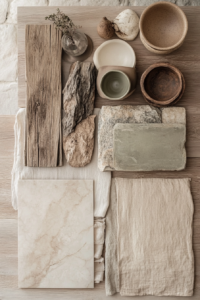
Depending on the application, materials such as bamboo, cane, natural fabrics, responsibly sourced wood and certain natural finishes can contribute to an eco-conscious interior.
But don’t select a material solely because it is labelled “natural.”
Evaluate:
-
Durability
-
Maintenance
-
Availability
-
Manufacturing process
-
Transportation
-
Suitability for the Indian climate
A sustainable material that performs poorly in its intended location may ultimately need replacement sooner.
12. Reduce Material Waste During Execution
Interior projects can generate considerable waste through cutting, packaging, demolition and replacement.
Waste can be reduced by:
-
Accurate measurements
-
Better design planning
-
Optimized cutting
-
Reusing suitable offcuts
-
Avoiding unnecessary demolition
-
Ordering materials carefully
-
Separating recyclable waste
Good project planning is therefore a sustainability strategy in itself.
13. Design for Easy Maintenance
An interior that requires excessive cleaning, refinishing or replacement may consume more resources over its lifetime.
Choose finishes according to where they will be used.
For high-use areas, prioritize:
-
Durability
-
Easy cleaning
-
Moisture resistance where required
-
Repairability
-
Availability of replacement parts
The most sustainable interior is often one that continues performing well for many years.
14. Design According to the Indian Climate
There is no single sustainable-interior formula for every Indian city.
For example, a home in a humid coastal climate has different requirements from one in a hot and dry region.
Consider:
-
Sun exposure
-
Humidity
-
Natural ventilation
-
Heat gain
-
Window orientation
-
Shading
-
Air-conditioning requirements
Interior design should work with the building’s climate rather than constantly fighting it.
15. Don’t Confuse Sustainable Design With Expensive Design
One of the biggest misconceptions is that eco-friendly interiors are automatically expensive.
Some sustainable decisions can actually reduce long-term costs.
Examples include:
-
Efficient lighting
-
Reduced unnecessary construction
-
Durable furniture
-
Better daylight utilization
-
Natural ventilation
-
Repairing existing furniture
-
Reducing material wastage
Sustainability is primarily about better decisions, not simply buying premium “eco-friendly” products.
Common Mistakes in Sustainable Interior Design
Choosing a product only because it says “eco-friendly”
Look beyond marketing claims and consider durability, sourcing, manufacturing and maintenance.
Replacing everything unnecessarily
Existing furniture and finishes should be evaluated before being discarded.
Ignoring energy consumption
Material selection is only one part of sustainability. Lighting, cooling and ventilation also matter.
Using natural materials without considering maintenance
Natural does not automatically mean suitable for every location.
Designing without considering climate
A beautiful interior can still perform poorly if it ignores heat, humidity and ventilation.
Focusing only on initial cost
A cheaper product that needs frequent replacement may be more expensive and less sustainable over time.
Sustainable Interior Design Checklist
Before finalizing your interiors, consider:
-
Durable materials
-
Responsible material sourcing
-
Low-VOC paints and finishes
-
Maximum practical use of natural light
-
Good ventilation
-
Energy-efficient LED lighting
-
Smart lighting controls where useful
-
Durable and repairable furniture
-
Reuse of suitable existing items
-
Local materials where appropriate
-
Reduced construction waste
-
Easy-to-maintain finishes
-
Climate-appropriate design
-
Long-term rather than only initial cost
Final Thoughts
Sustainable interior design is not about filling a home with expensive “green” products.
It is about making better decisions throughout the design and execution process.
Use durable materials, reduce unnecessary construction, make better use of daylight and ventilation, choose efficient lighting, reuse what still has value and design according to the local climate.
For Indian homes, the most effective sustainable interior is one that combines comfort, functionality, durability and responsible resource use.
The best sustainable design is not necessarily the one with the most eco-friendly products.
It is the one that uses less, wastes less and lasts longer.
At Design Within, we believe homeowners should understand what goes behind their interiors — not just what they see on the surface. Because a beautiful finish may catch your eye, but good material selection and construction are what help an interior perform well for years.
At Design Within, we believe a beautiful interior should not only look good when it is completed — it should also perform well for years.
Before we dive into more details about Sustainable & Eco-Friendly Interior Design, it might be helpful to estimate how much your interior design project could cost. Understanding your budget can help you make more informed decisions about what features to prioritize. To get a better idea, you can use our ‘interior design budget calculator’ budget calculator and start planning your dream home today.
Frequently Asked Questions
1. What is sustainable interior design?
Sustainable interior design focuses on reducing environmental impact through responsible material selection, energy efficiency, durability, waste reduction, reuse and healthier indoor environments.
2. How can I make my home interiors more eco-friendly?
Start with practical changes such as durable materials, low-VOC finishes, LED lighting, natural daylight, good ventilation, efficient appliances and furniture that can be repaired or reused.
3. Is sustainable interior design expensive?
It does not necessarily have to be. Some sustainable choices, such as LED lighting, reducing unnecessary construction, reusing furniture and improving daylight utilization, can reduce long-term costs.
4. Which materials are best for sustainable interiors?
There is no single best material. Consider responsibly sourced wood, suitable engineered boards, bamboo, cane, natural fabrics and locally available materials where appropriate. Durability, sourcing, maintenance and environmental impact should all be considered.
5. Are low-VOC paints better for home interiors?
Low-VOC or low-emission paints can help reduce exposure to certain indoor air pollutants. Proper ventilation during and after painting is also important.
6. How can interior design reduce electricity consumption?
Maximize useful daylight, use energy-efficient LED lighting and divide lighting into separate ambient, task and accent circuits. Sensors, timers and dimmers can further reduce unnecessary usage.
7. Can existing furniture be part of sustainable interior design?
Yes. Repairing, refinishing, reupholstering or repurposing suitable existing furniture can reduce the need for new materials and prevent usable products from being discarded.
8. How does climate affect sustainable interior design in India?
Different Indian regions have different heat, humidity and ventilation requirements. A sustainable interior should respond to local climate, sun exposure, natural airflow and cooling needs rather than using the same approach everywhere.
9. How can I reduce waste during an interior project?
Accurate measurements, better planning, optimized material cutting, reuse of suitable offcuts, careful procurement and responsible disposal can significantly reduce project waste.
10. What is the simplest way to start sustainable interior design?
Start with the basics: use what you already have where practical, choose durable materials, reduce unnecessary work, improve daylight and ventilation, and use energy-efficient lighting. Sustainability becomes more effective when these principles are incorporated from the beginning of the design.