

Introduction to Compact Living Areas
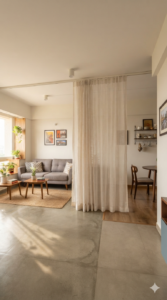
Curtain room divider ideas are becoming increasingly popular in modern Indian homes where space optimization is essential. Whether you live in a compact apartment, a 2BHK flat, or a studio home, floor-to-ceiling curtains offer an elegant way to divide spaces while maintaining natural light, privacy, and visual openness. These space-saving solutions are stylish, affordable, and ideal for creating multifunctional living areas.
The use of floor-to-ceiling curtains can be an effective way to create separate zones within a compact living area. For example, in a 2BHK apartment, you can use a floor-to-ceiling curtain to separate the living area from the dining area. This can help create a sense of separation without blocking the natural light or making the room feel smaller.
In addition to separating different areas, floor-to-ceiling curtains can also be used to add a touch of style and elegance to a room. You can choose from a wide range of fabrics, patterns, and colors to match your interior design theme. For instance, you can use a sheer curtain to allow natural light to filter in or a blackout curtain to block out the light and create a cozy atmosphere.
Benefits of Using Floor-to-Ceiling Curtains
There are several benefits to using floor-to-ceiling curtains in a compact living area. One of the main advantages is that they can help create a sense of separation without making the room feel cramped. Additionally, floor-to-ceiling curtains can also help to reduce noise levels and create a more peaceful atmosphere. This can be especially beneficial in homes with multiple family members or in areas with high foot traffic.
Another benefit of using floor-to-ceiling curtains is that they can help to add a touch of style and elegance to a room. You can choose from a wide range of fabrics, patterns, and colors to match your interior design theme. For example, you can use a bold patterned curtain to add a pop of color to a room or a sheer curtain to create a sense of lightness and airiness.
In Indian homes, floor-to-ceiling curtains can also be used to create a sense of privacy. For instance, you can use a floor-to-ceiling curtain to separate the living area from the bedroom or to create a private area for reading or relaxation.
Design Considerations for Floor-to-Ceiling Curtains
When it comes to designing floor-to-ceiling curtains, there are several factors to consider. One of the most important things to consider is the length of the curtain. The curtain should be long enough to reach the floor, but not so long that it gets in the way. You should also consider the width of the curtain and the type of fabric used.
In addition to the length and width of the curtain, you should also consider the type of hardware used. For example, you can use a ceiling-mounted track or a floor-mounted rod to hang the curtain. You should also consider the type of fabric used and whether it is suitable for the climate and lifestyle of the homeowner.
For instance, in Indian homes, it is common to use fabrics that are breathable and easy to clean, such as cotton or linen. You can also use thermal or blackout curtains to block out the light and heat during the summer months.
Before you start designing your floor-to-ceiling curtain, it’s essential to estimate your project budget. You can use our budget calculator to get an idea of the costs involved. Click on interior design budget calculator to get started and plan your project accordingly.
Conclusion and Final Thoughts
In conclusion, floor-to-ceiling curtains can be a great solution for dividing compact living areas in Indian homes. They can help create a sense of separation, add style and elegance, and even help to reduce noise levels. By considering the design factors and using the right type of fabric and hardware, you can create a beautiful and functional floor-to-ceiling curtain that meets your needs and budget.
Whether you’re looking to separate the living area from the dining area or create a private area for relaxation, floor-to-ceiling curtains can be a great solution. With the right design and installation, you can create a beautiful and functional space that enhances the overall aesthetic of your home.
In Indian homes, floor-to-ceiling curtains can be especially beneficial in creating a sense of privacy and separation. By using the right type of fabric and hardware, you can create a beautiful and functional curtain that meets your needs and budget.